
The Physical Stocktaking Procedure That Actually Reconciles
A once-a-year count that never reconciles is wasted effort. Here's a physical stocktaking procedure — prep, freeze, blind-count, reconcile — that produces a stock figure you can actually trust.
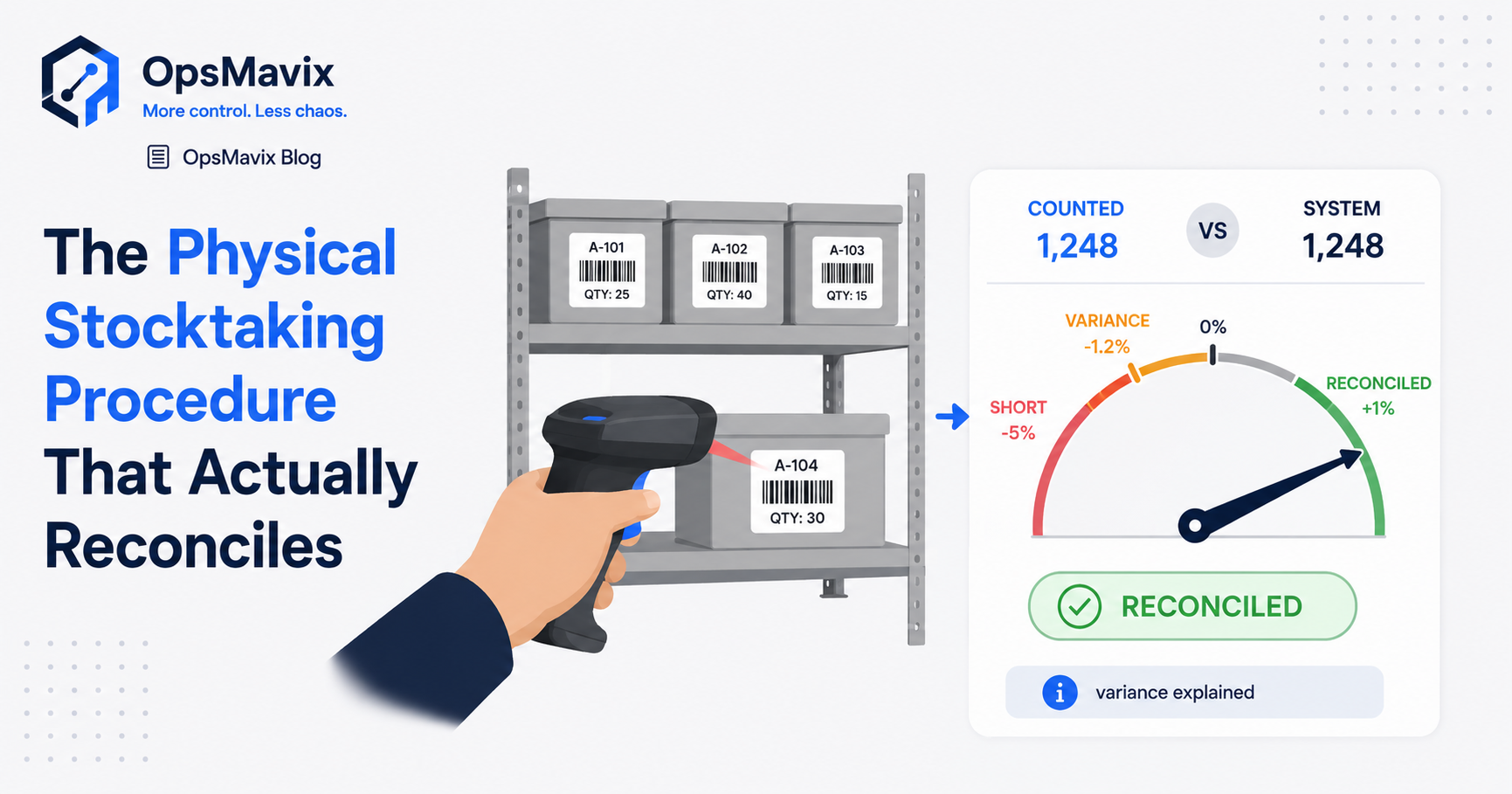
A physical stocktaking procedure that actually reconciles is more than counting everything once. It’s a sequence — prepare, freeze movement, count blind, investigate every variance, then true up the system — that leaves you with a stock figure you trust afterwards, not just a tidy spreadsheet for the auditors. Most stocktakes fail at the reconciling part, and it’s rarely because the counting was sloppy. It’s because the prep and the follow-up were skipped.
If your spreadsheet counts “wind up being off, sometimes wildly so,” counting harder for one weekend a year won’t fix it. The procedure below is built to give you the one thing the shelf-versus-system war keeps stealing: a number you trust enough to promise on a call. And because a once-a-year count drifts the moment stock moves, the last section covers how to keep it true the rest of the year.
Key Takeaways
- A stocktake only reconciles if you prep properly: a clean cut-off, frozen movement, and a snapshot of the system figure to count against.
- Count blind — counters shouldn’t see the expected number, or they’ll unconsciously “find” it. Re-count anything that disagrees.
- A count only trues up if every movement is captured — returns, write-offs, samples, transfers — not just sales.
- Investigate variance, don’t overwrite it — the cause is the leak; the number is only the symptom.
- A once-a-year count drifts immediately. Cycle counting between stocktakes keeps the figure trustworthy, so the next stocktake isn’t a fire drill.
1Why a Once-a-Year Count Usually Fails to Reconcile
The full annual count feels rigorous: shut the warehouse, count everything, true up the books. The problem is what happens around the count. Teams count without freezing movement, so stock shifts mid-count. They count “open,” seeing the system figure and quietly confirming it. They adjust the obvious gaps and never ask why. The result is a number that ties out on paper but is stale the next time stock moves — and tells you nothing about which week, which SKU, or which process created the drift.
It also does nothing for the day-to-day pain. The operations manager drowning in “a million messy spreadsheets for the warehouse” doesn’t need one count that reconciles in March. He needs to trust the figure on Tuesday, when a customer asks if it’s in stock. A procedure that reconciles is one that produces a trustworthy number and a list of causes to fix.
2Before the Count: The Prep That Makes It Reconcile
Most of whether a stocktake reconciles is decided before anyone counts a thing.
- Set a cut-off and freeze movement. Stop receiving and dispatch for the count window, or record an exact cut-off time so in-flight stock — goods-in not yet put away, picks not yet shipped — isn’t double-counted or missed.
- Snapshot the system figure at that cut-off. That frozen number is what you reconcile against; counting against a figure that’s still moving guarantees phantom variances.
- Tidy and locate. Every item in a known bin, nothing loose on the floor, returns processed, goods-in put away. You can’t count what you can’t find.
- Ready the tools. Count sheets or scanners, a clear zone map, and two-person teams assigned to areas so nothing is counted twice or skipped.
- Brief the team on the method: what “counted” means, how to flag damages and stock with no location, and that they re-count rather than guess.
3The Count Itself: Count Blind, Double-Check Disagreements
The single biggest accuracy upgrade is the blind count: don’t show counters the system quantity. The moment someone sees “expected: 50,” they stop counting and start confirming — and a wrong number sails straight through. Hand them an empty count field and let the shelf speak for itself.
Work zone by zone, marking each location as counted so there are no gaps or overlaps. Then compare to the frozen system figure. Anything that disagrees by more than your tolerance gets a second, independent count before you trust either number — a surprising share of “variances” are just miscounts. Only once a discrepancy survives a re-count is it a real variance worth investigating.
4The Procedure Only Reconciles If Every Movement Is Captured
Here’s the part most stocktaking advice skips. You can count flawlessly and still never reconcile, because the system you’re counting against is missing movements. The sale gets recorded; it’s tied to money. The return, the damaged unit written off, the sample sent to a buyer, the transfer between vans or sites — those slip through. Each one is a permanent gap between shelf and system.
This is why “phantom stock” feels like a curse rather than a bug. Numbers seem to “change for no reason” because the reasons were never logged. A count can only true up to a record that records everything. Before you blame the counters, ask whether the system even has a place to capture every way stock leaves a shelf.
5Reconcile the Cause, Not Just the Number
The most damaging stocktaking habit is the silent overwrite. The shelf says 47, the system says 50, so you set it to 47 and move on. You’ve fixed the symptom and hidden the leak. Next time it’s off again, because the process that created the gap is still running.
A procedure that actually reconciles treats every surviving variance as a question. Where did three units go? Pick error, theft, an unrecorded return, a receiving mistake? Log the count, log the adjustment, log the suspected cause. Over a few counts the patterns surface, and you fix the process, not the spreadsheet. That’s the difference between stock that never matches the system and a number you stop double-checking.
6Between Stocktakes: Keep the Number Honest
Even a perfect stocktake goes stale the moment stock moves again. A full count is the periodic audit — it proves the figure on the day. What keeps it true the rest of the year is counting a small slice continuously, so drift never compounds into a year-end surprise. That’s the inventory cycle count method, and it’s where the real day-to-day accuracy comes from: ABC tiers, count frequency, and triggers are all covered in that guide. Run cycle counts well and your next physical stocktake reconciles on the first pass, because nothing was ever allowed to drift far.
The OpsMavix View: Stop Recounting What You Should Be Tracking
Most stocktaking pain is a tracking problem wearing a counting costume. You don’t oversell because your team can’t count. You oversell because nothing keeps the figure live between counts, so the count is the only moment the number is ever true.
Our position is blunt. You shouldn’t need a £100k warehouse management system to get a stock number you trust, and you shouldn’t be renting one a vendor can sunset “with a banner on the website” either. The fix is a system built around your actual flow — receiving, pick, dispatch, returns — where every movement updates one owned figure the moment it happens. Then the physical stocktake stops being a rescue mission: you freeze, count blind, and most bins match on the first pass. A connected inventory system makes the trustworthy number the default; the count just verifies it.
FAQ
What is a physical stocktaking procedure?
It’s the defined process for counting your actual stock and reconciling it against the recorded figure. A good one is a sequence, not a single act: prep and freeze movement, snapshot the system figure, count (ideally blind), capture every movement, investigate variances to root cause, then true up the system. The goal is a number you trust afterwards — not just a completed count.
How do you make a stocktake actually reconcile?
Three things most stocktakes skip. A clean cut-off so in-flight stock isn’t miscounted; blind counting so counters don’t simply confirm the expected figure; and investigating every surviving variance to root cause instead of overwriting it. Without those, you produce a number that’s either stale or unexplained.
How often should you do a full physical stocktake?
Many businesses do one annually for the accounts, sometimes twice a year. But a once-a-year count drifts the moment stock moves. Running cycle counts between stocktakes keeps the figure accurate day to day, so the full count becomes a quick confirmation rather than a rescue mission.
Why does my stocktake never reconcile?
Usually because the system you’re counting against is missing movements: returns, write-offs, samples and transfers that were never recorded. The count can only true up to a record that captures everything. If movements slip through, you’ll keep producing variances that look like “phantom stock.”
Should I just overwrite the system to match my count?
No. Overwriting hides the cause and guarantees the gap returns. Log the variance, make the adjustment, and record the suspected reason. Patterns across counts reveal the broken process — pick errors, untracked returns, receiving mistakes — so you can fix the leak rather than the number.
How OpsMavix Can Help
OpsMavix builds custom inventory systems where every movement — sales, receipts, transfers, returns and write-offs — updates one live stock figure, so the physical stocktake confirms the number instead of recreating it. No more closing the warehouse for a weekend to produce a figure that’s stale by Monday. No more “let me check and call you back.” You own the system outright: no per-seat fees, no support queue holding your data hostage, no vendor switching it off.
If your stock figure never matches the shelf, that’s a measurable operational leak — in oversold orders, dead stock, and hours lost recounting. Book an Operations Leak Audit and we’ll map where your stocktaking breaks down, and what the drift is costing you.