
Where operations quietly leak — and how to fix it.
Field notes for businesses too messy for spreadsheets, not ready for a full ERP. Inventory, orders, production, reporting — the practical system layer.
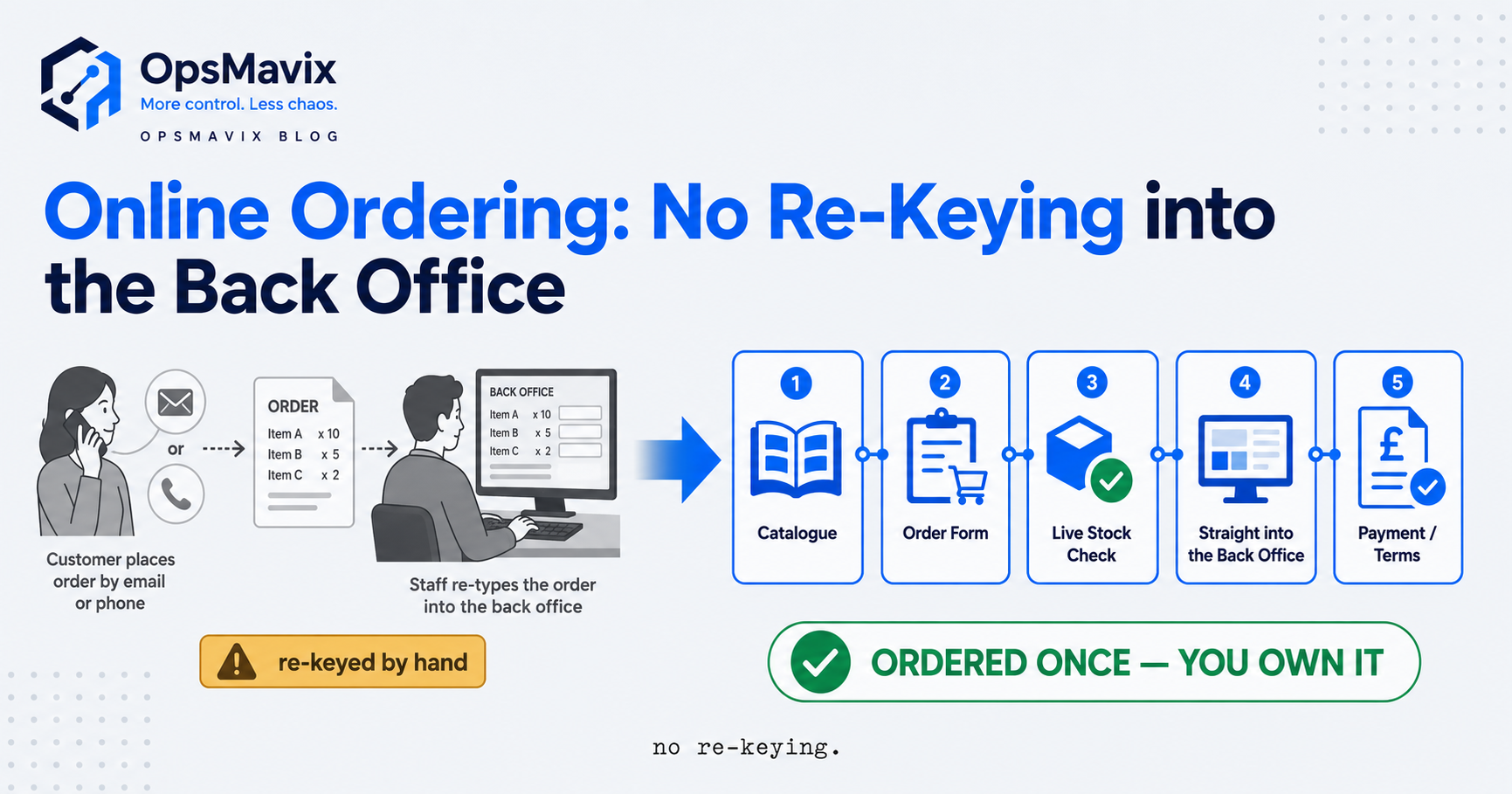
How to Create an Online Ordering System (Step by Step)
Creating an online ordering system means assembling five parts — a product catalogue, an order flow, a live stock check, capture straight into your back-office without re-keying, and payment or account terms. Here's each step, what each part actually has to do, and the honest build-vs-buy-vs-custom call at the end.
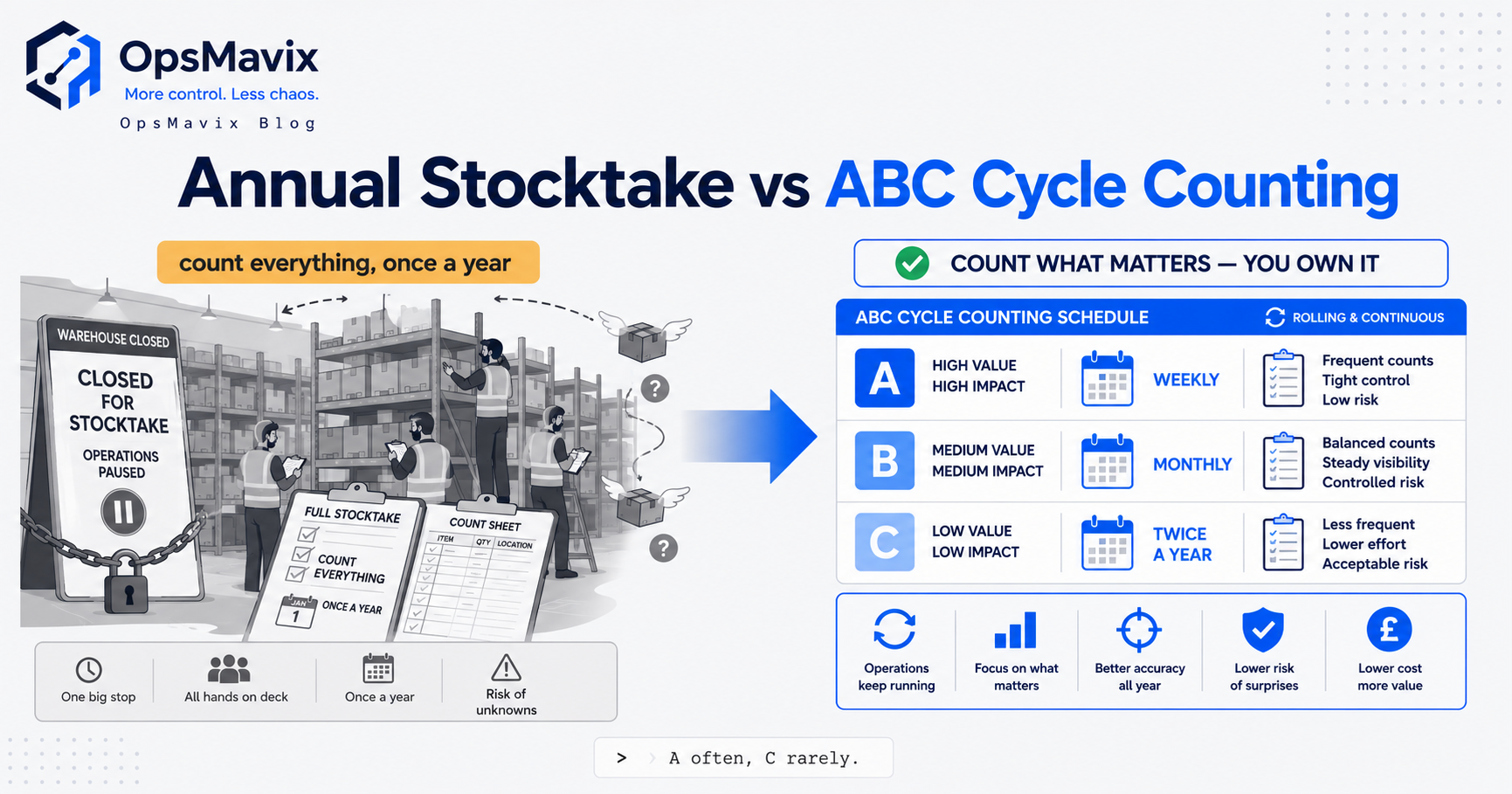
ABC Cycle Counting: Count What Matters, More Often
ABC cycle counting applies ABC classification to your rolling stock counts — A items counted often, C items rarely — so effort lands where the value and the risk are. Here's how to classify, set frequencies per class, run the rota and avoid the classic mistakes.
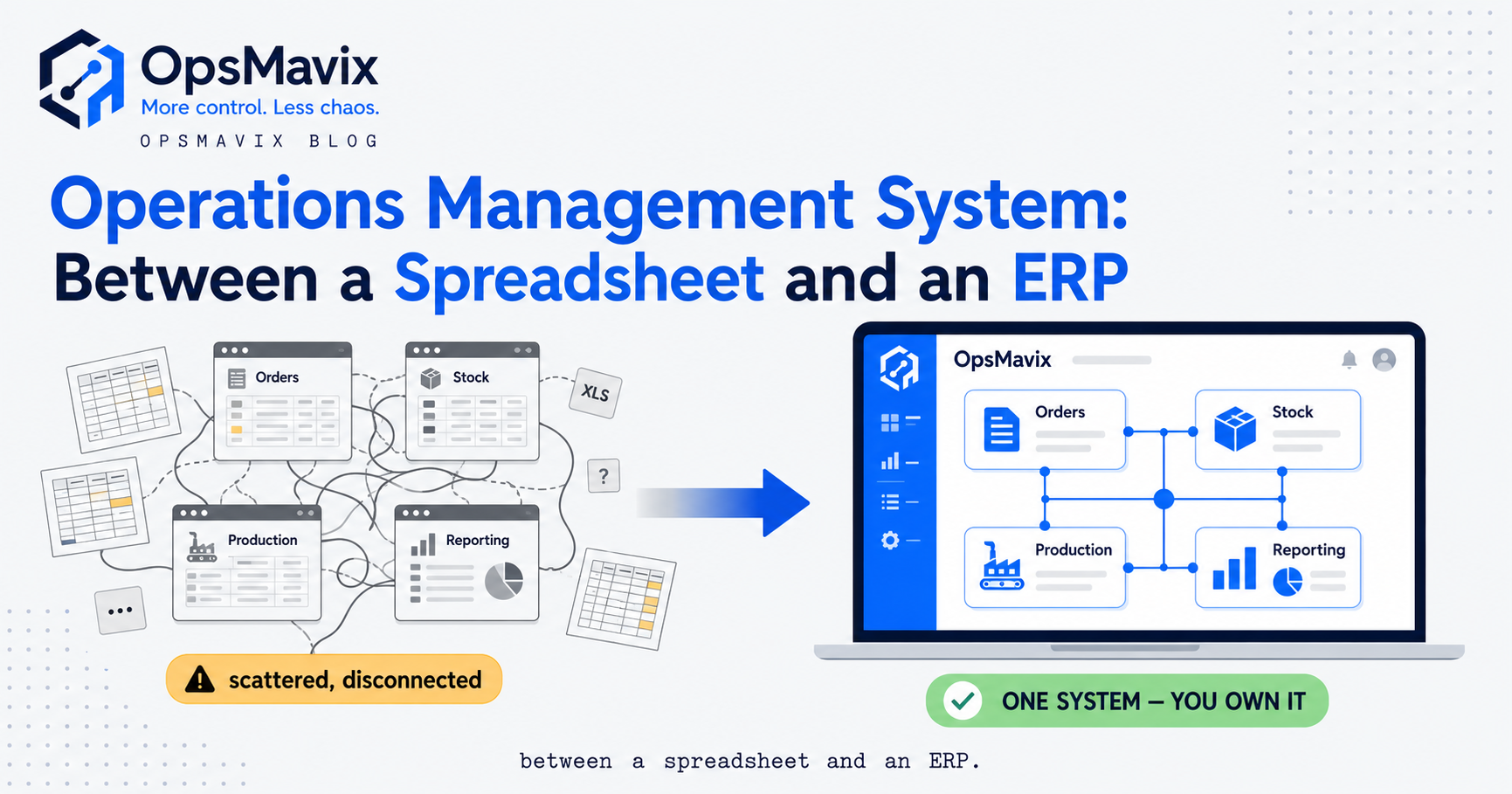
Operations Management System: What It Is and How to Choose One
An operations management system is the software that actually runs your day-to-day operations — orders, stock, production and reporting — in one place, instead of scattered across spreadsheets and apps that don't talk. This post is about choosing one: what it should cover, where the line sits against a full ERP, and how to pick a right-sized system without over-buying.
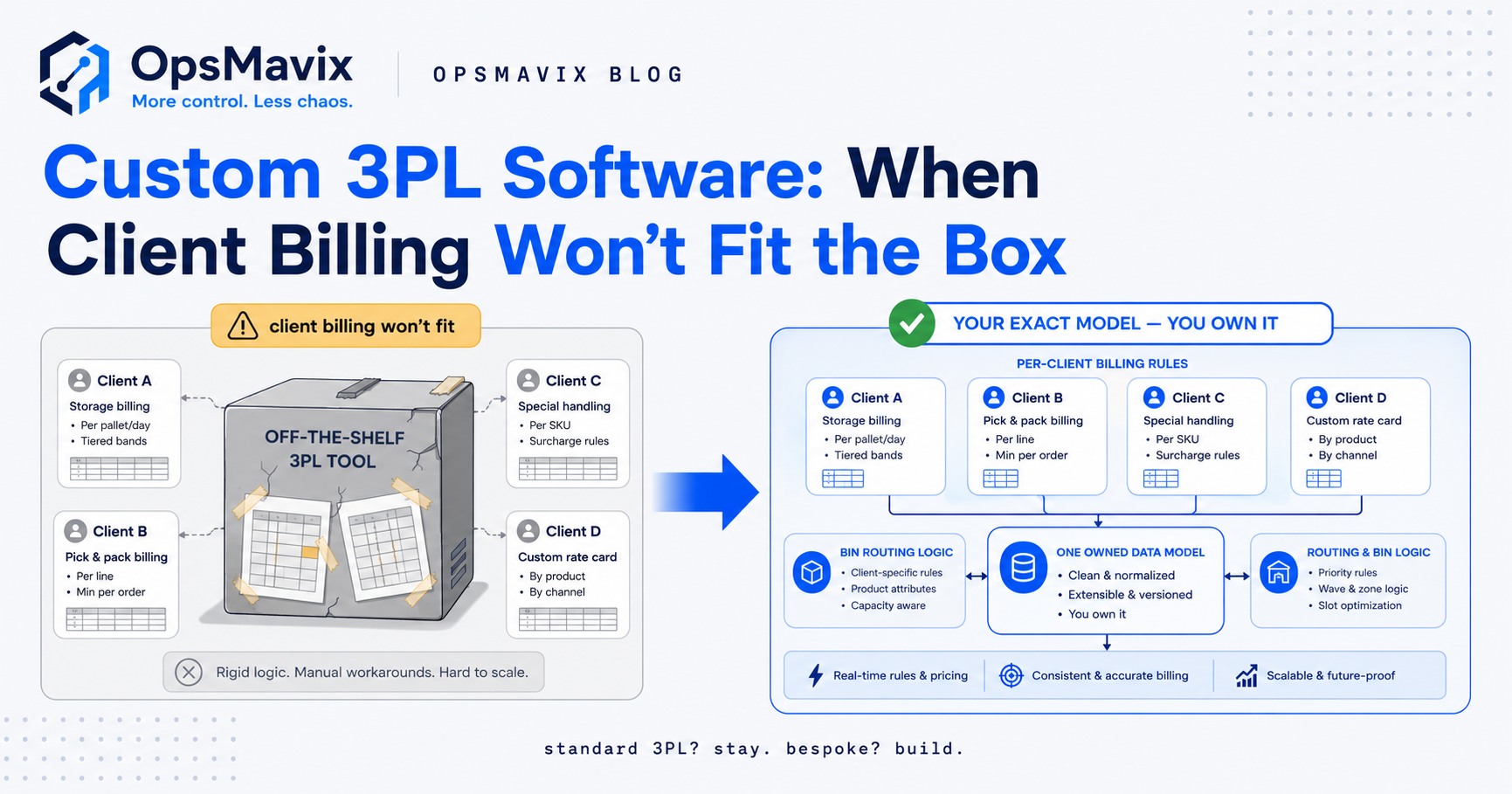
Mintsoft for 3PL: Where It Fits, and Where 3PLs Outgrow It
Mintsoft is built for 3PL and fulfilment work, and for a standard multi-client operation it fits well. The strain shows when a growing 3PL has client-billing rules the tool can't model, per-order costs that bite at volume, or reporting a client wants that won't come out. Here's where Mintsoft is genuinely the right call, and where owning your exact billing and bin logic wins instead.
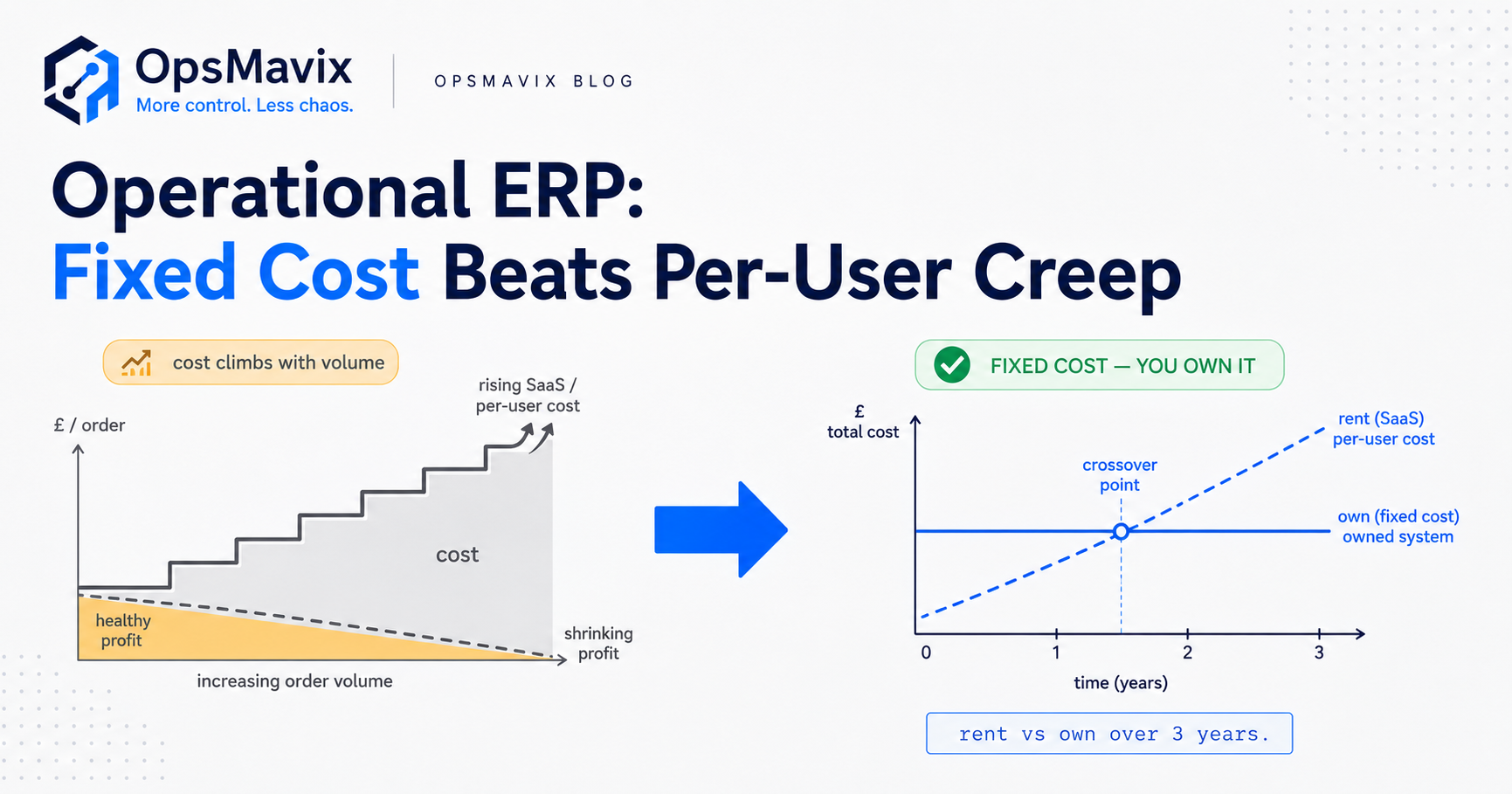
Mintsoft Pricing: What It Really Costs as You Scale
Mintsoft pricing is built around throughput — priced by order volume, banded tiers and paid modules rather than a flat licence — so the model stays cheap at low, steady volume and quietly turns a growing 3PL's success into a rising bill. Here's how the pricing structure actually works, the costs that never show on the headline quote, why per-order pricing fights a fulfilment operation as it scales, and the three-year point where a fixed-cost system you own becomes the cheaper answer than the one you rent.
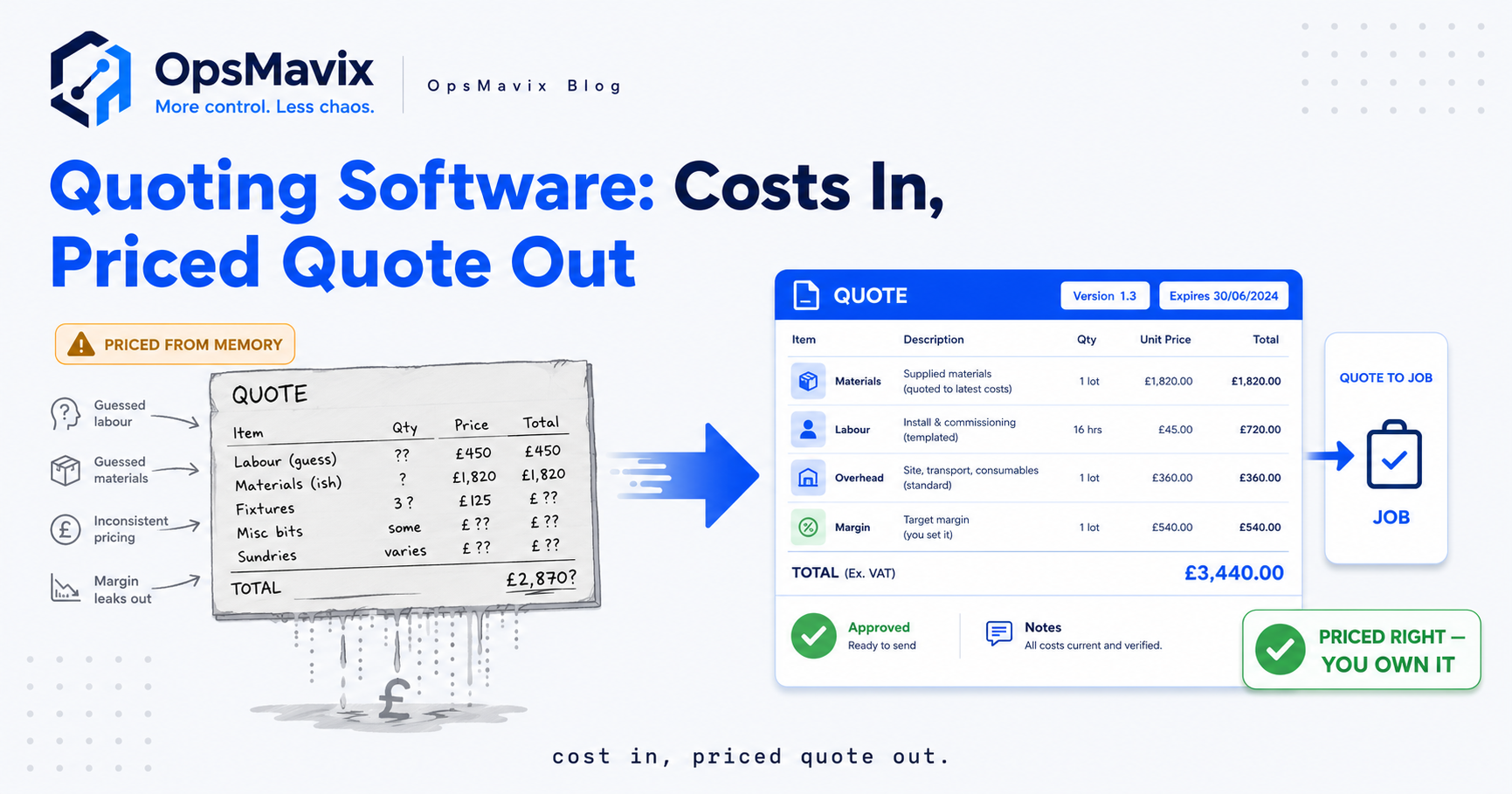
What Is Quoting Software? What It Does and Who Needs It
What is quoting software? It's the tool that turns your real costs and catalogue into consistent, priced quotes, controls versions, expiry and discount approvals, and hands the won quote straight to the job without re-keying. Here's what it does, how it differs from estimating, and who actually needs it over a spreadsheet.
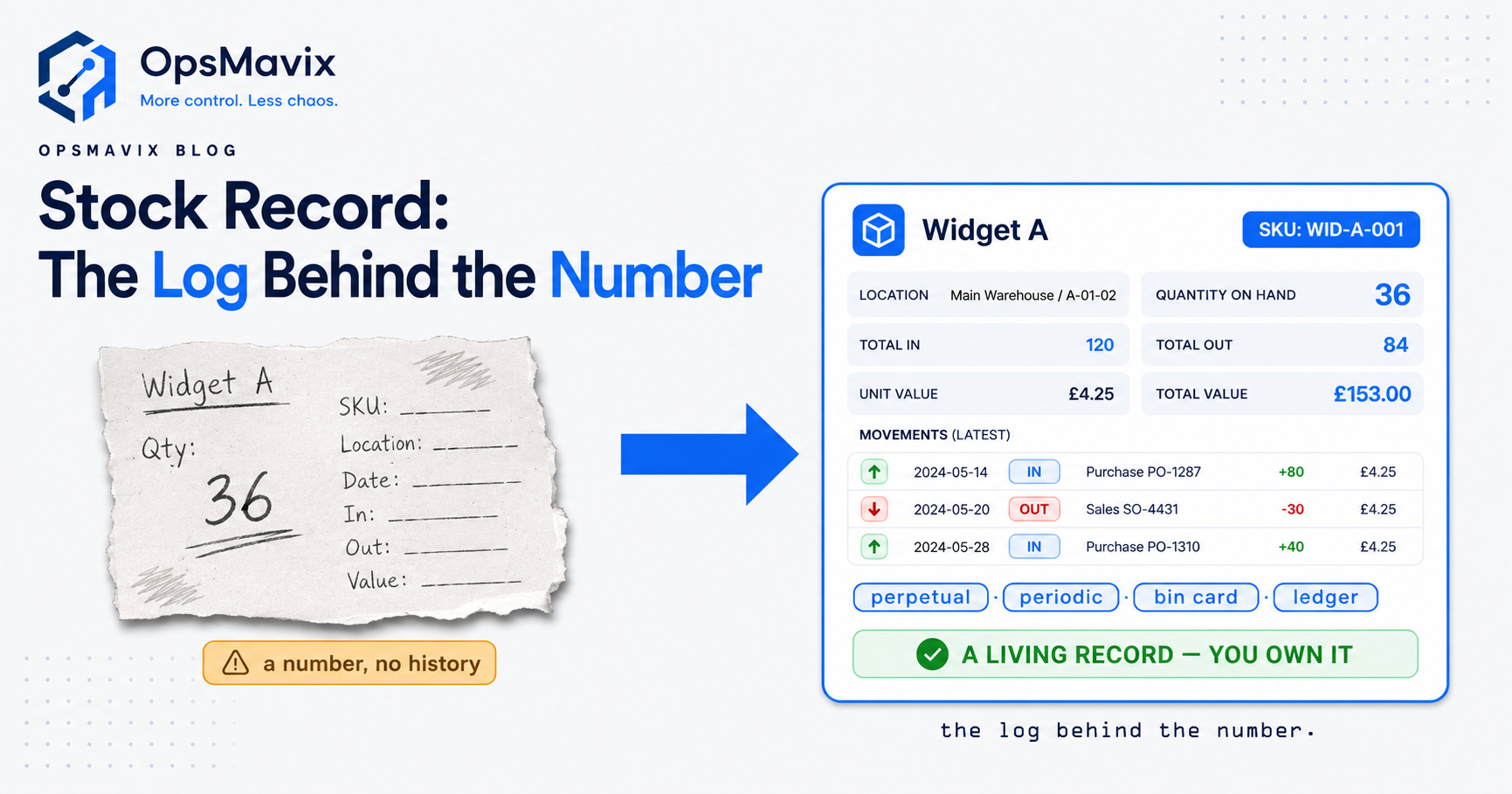
What Is a Stock Record? Contents, Types and Why It Matters
What is a stock record? It's the per-item log of what you hold, how it has moved, and what it's worth. Here's what a good stock record contains, the main types — perpetual vs periodic, bin card, stock ledger — and where most fall short of the shelf.
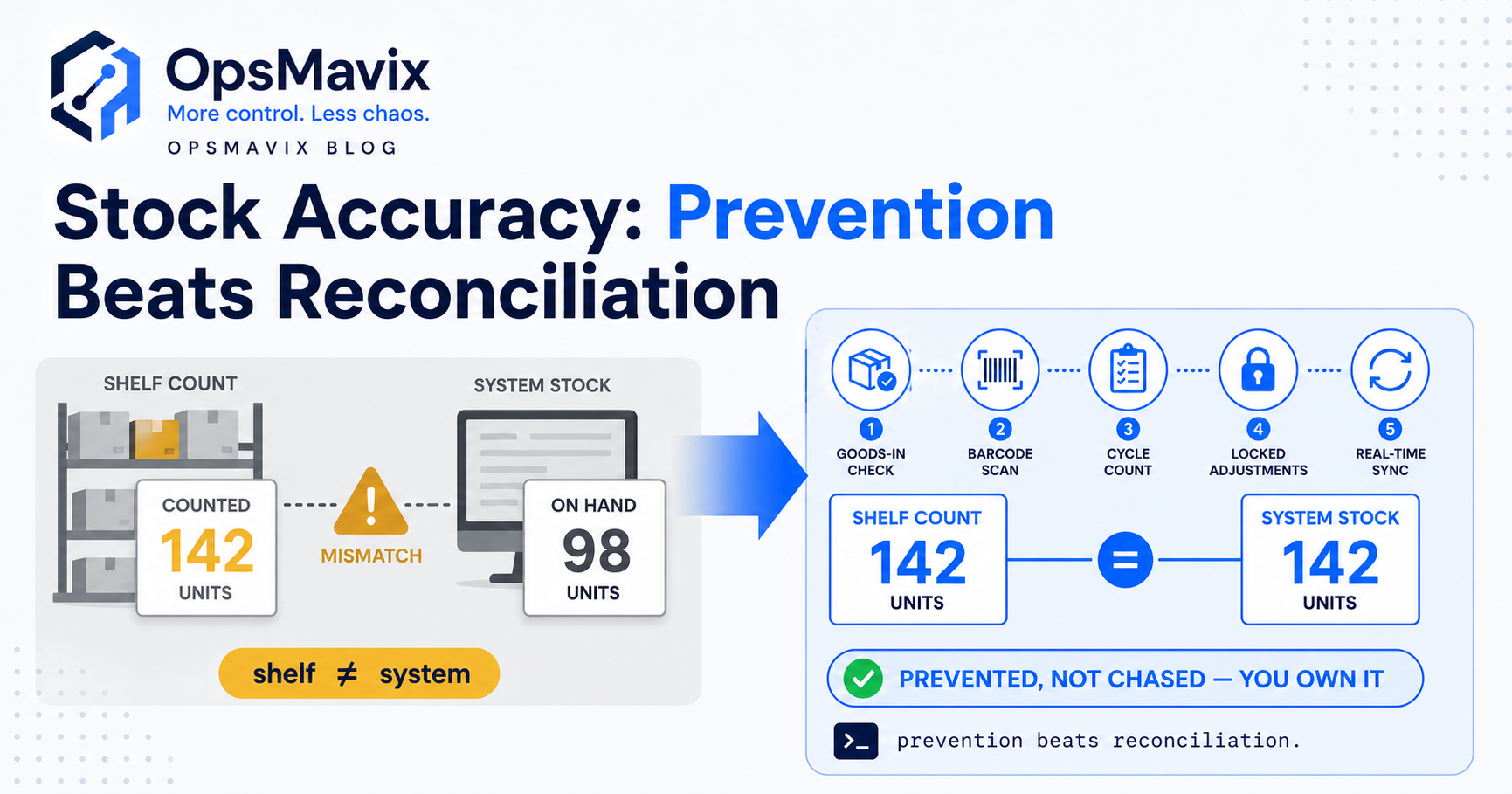
How to Prevent Stock Discrepancies Before They Cost You
Prevention beats reconciliation. This is the practical playbook for how to prevent stock discrepancies — accurate goods-in, scan capture instead of manual entry, cycle counting to catch drift early, locked-down adjustments, and one real-time source of truth. It covers why a spreadsheet structurally can't do it, and the honest exception where a tiny operation still can.
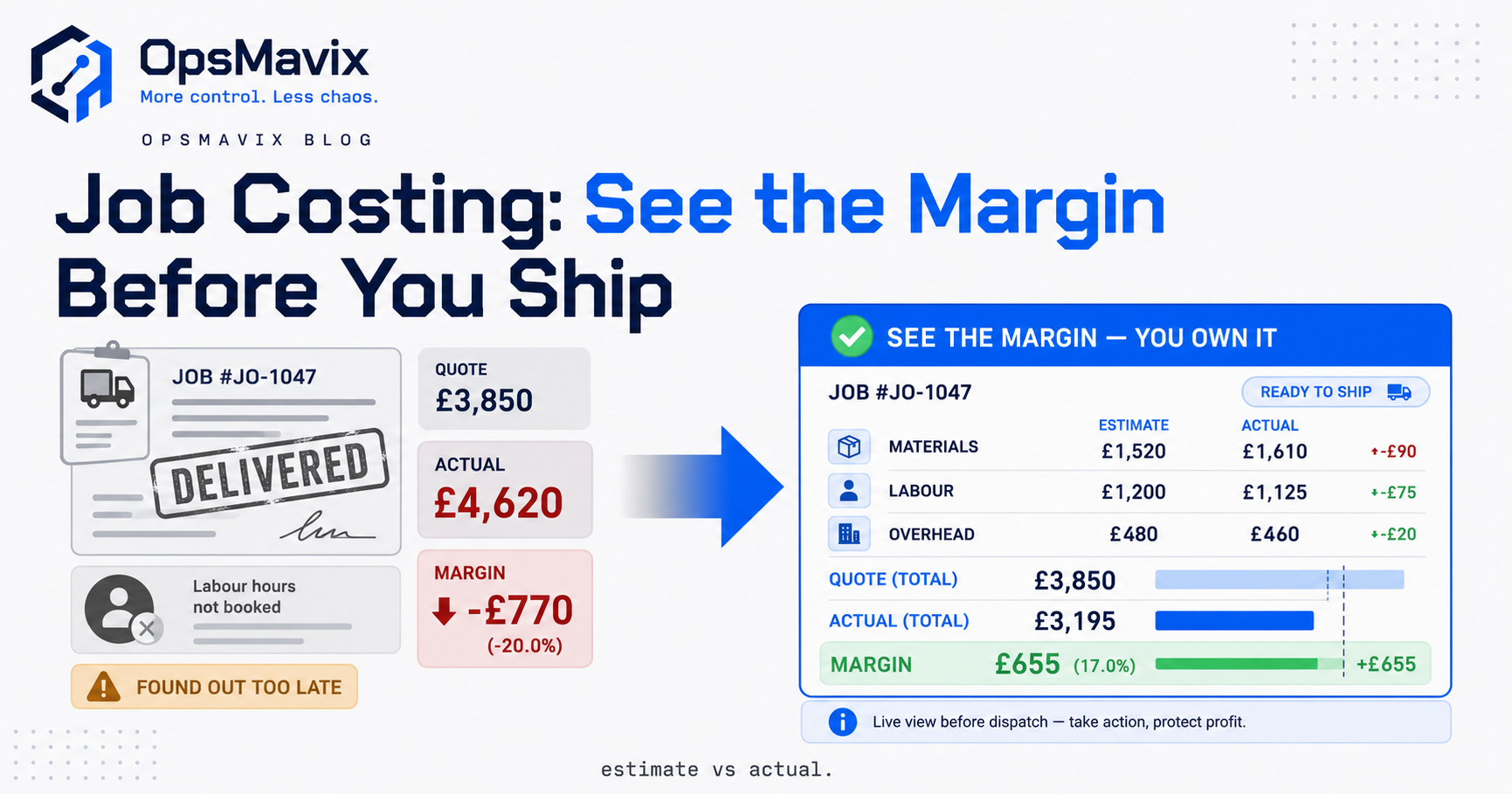
What Is Job Costing? Tracking the True Cost of Every Job
What is job costing? It's tracking the actual cost of one specific job — its direct materials, direct labour and share of overhead — so you can hold what the job really cost against what you quoted. Here's the concept, the three cost components, and why the estimate-vs-actual gap is the whole point.