
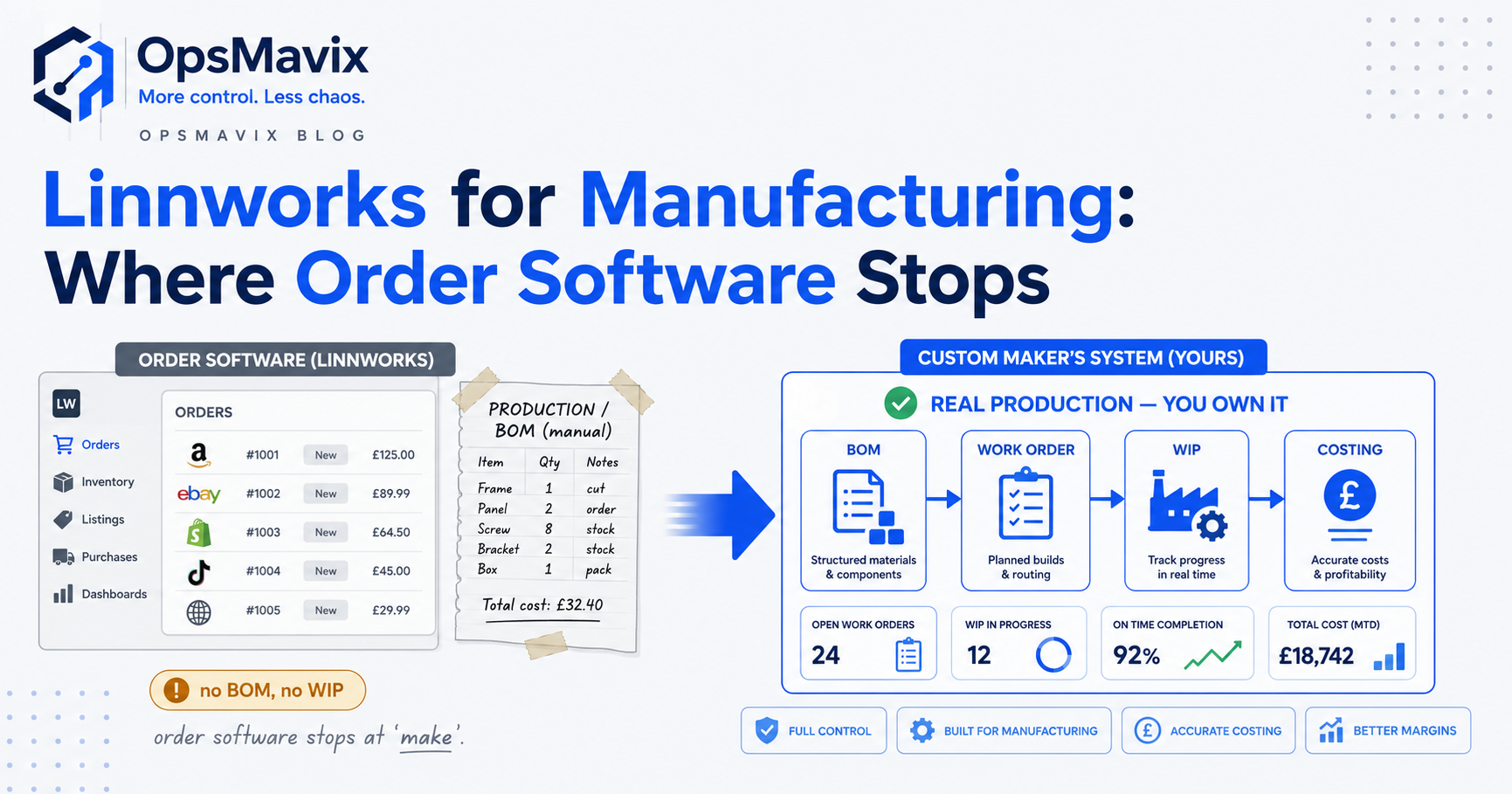
Linnworks for Manufacturing: Where Order Software Stops
Linnworks for manufacturing runs into a wall the moment you stop selling stock and start making it. The platform is strong at multichannel orders, inventory sync and warehouse fulfilment, and its kitting handles bundles — but there's no true multi-level BOM, no work orders, no WIP and no material costing. Here's exactly where order software stops, why makers end up running production on a spreadsheet beside it, and how to tell whether light kitting is enough or you need a system shaped to how you make things.
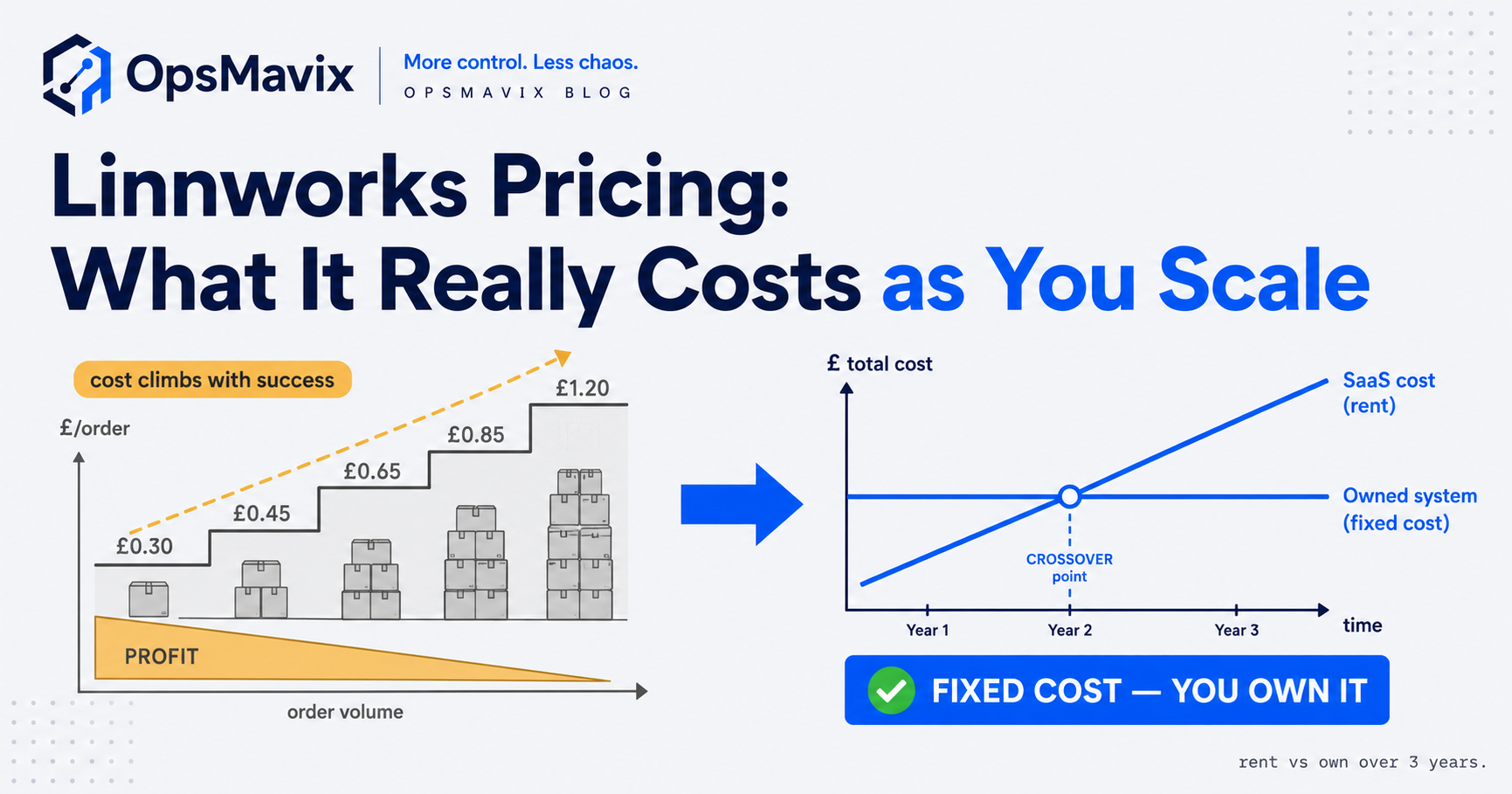
Linnworks Pricing: What It Really Costs as You Scale
Linnworks pricing is built around your monthly order volume, with paid add-ons for listings, warehouse and forecasting stacked on top and overage charges when you cross a tier. That model stays cheap while your volume is low and predictable — and quietly turns your own growth into a rising bill. Here's how the pricing structure works, the costs that don't show on the headline quote, and the point where a fixed-cost system you own becomes the cheaper answer over three years.
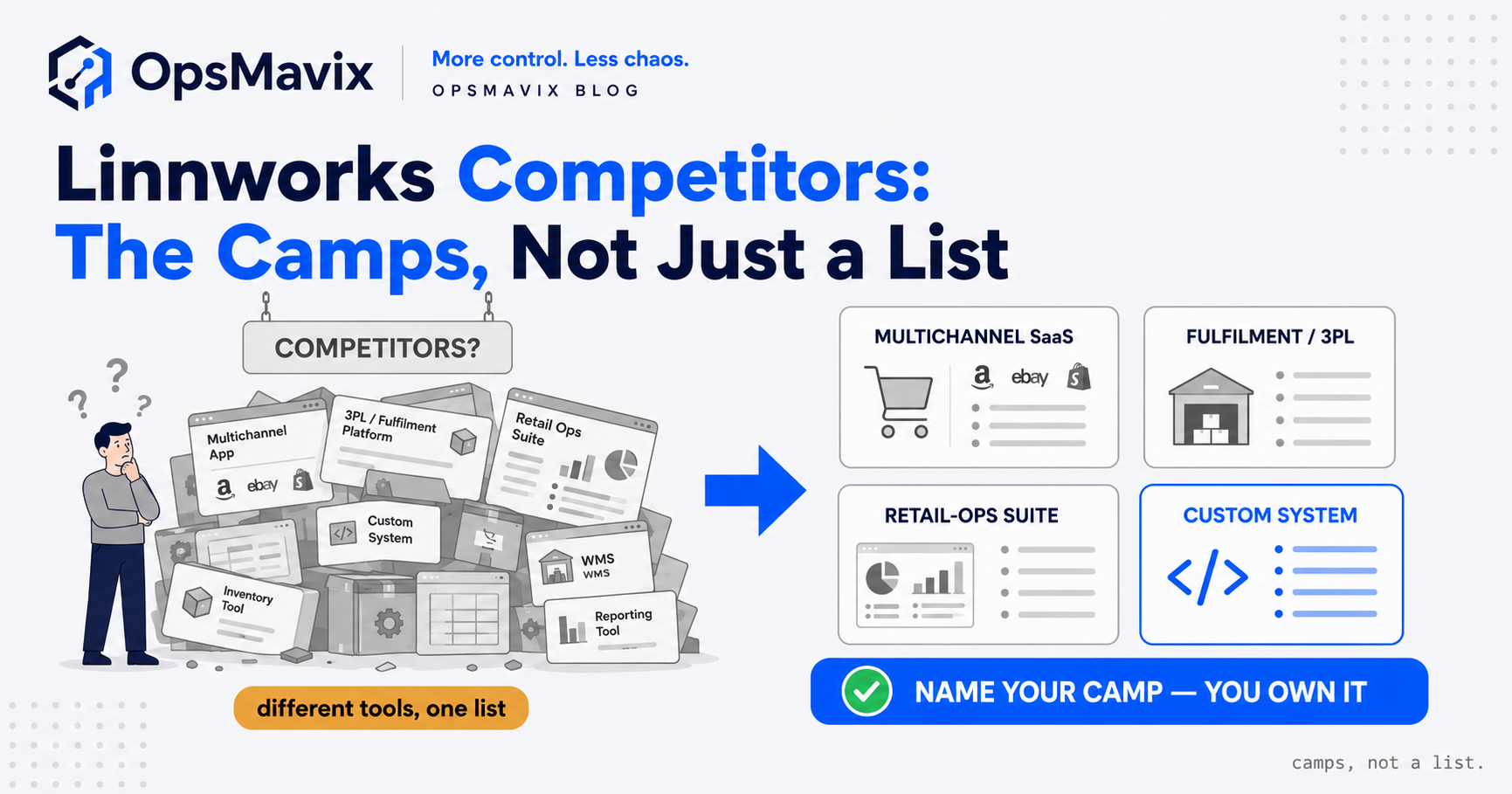
Linnworks Competitors: The Camps, Not Just a List
Search "Linnworks competitors" and you get a flat list that mixes four different kinds of tool — a shipping-led multichannel app, a British desktop store platform, a 3PL warehouse system and a full retail operating suite. They don't compete on the same axis, so ranking them head-to-head is meaningless. Here's the honest way to read the field: sort the rivals into camps, add the custom camp, and pick your camp before you pick a product.
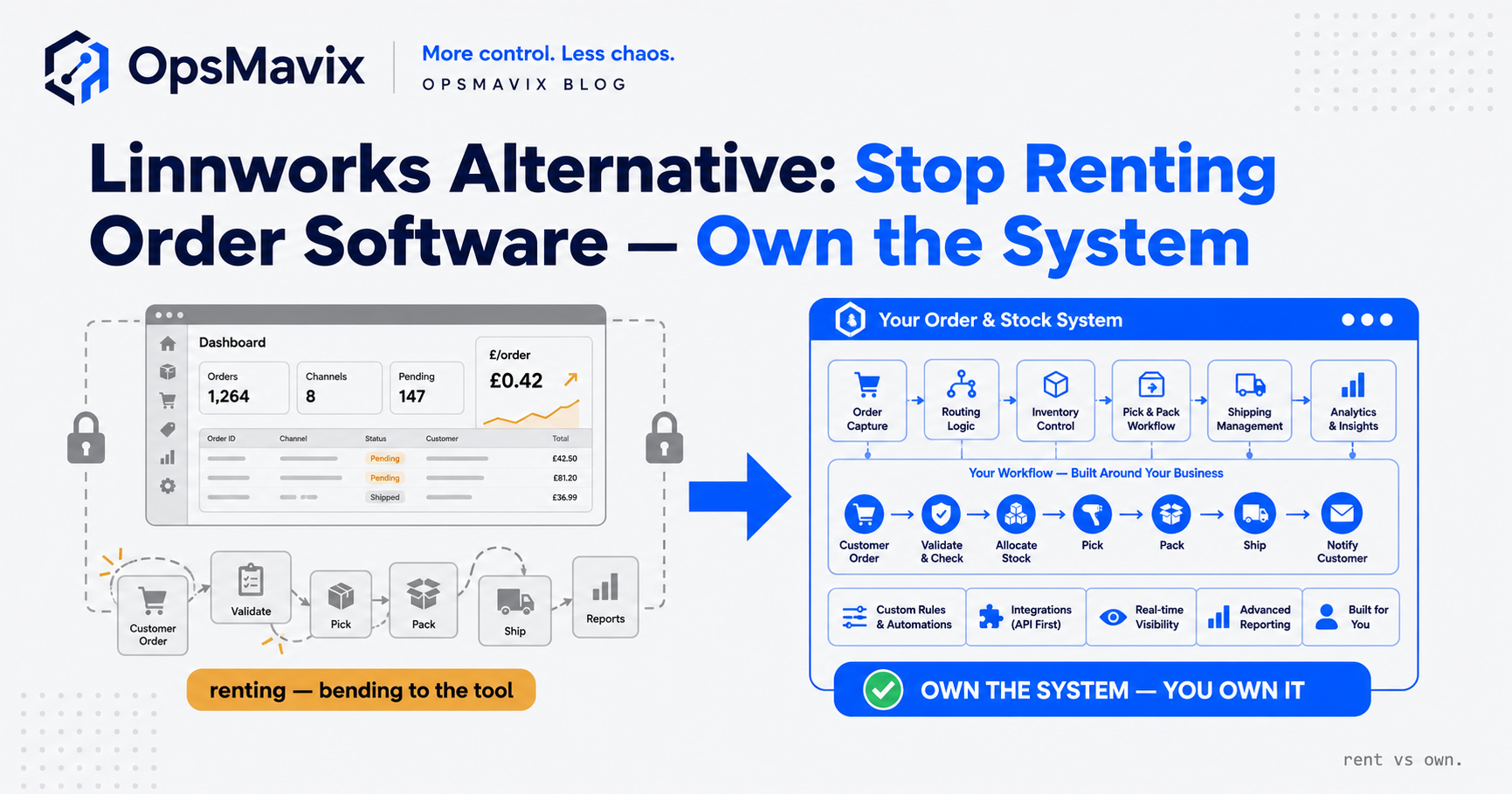
Linnworks Alternative: When to Stop Renting Order Software and Own the System
Linnworks is solid multichannel order software — until you're bending your process to fit it and paying more per order the better you do. This is the honest guide to when a Linnworks alternative makes sense, and why the real alternative to renting order software isn't another subscription but a system built around your exact flow that you own outright.
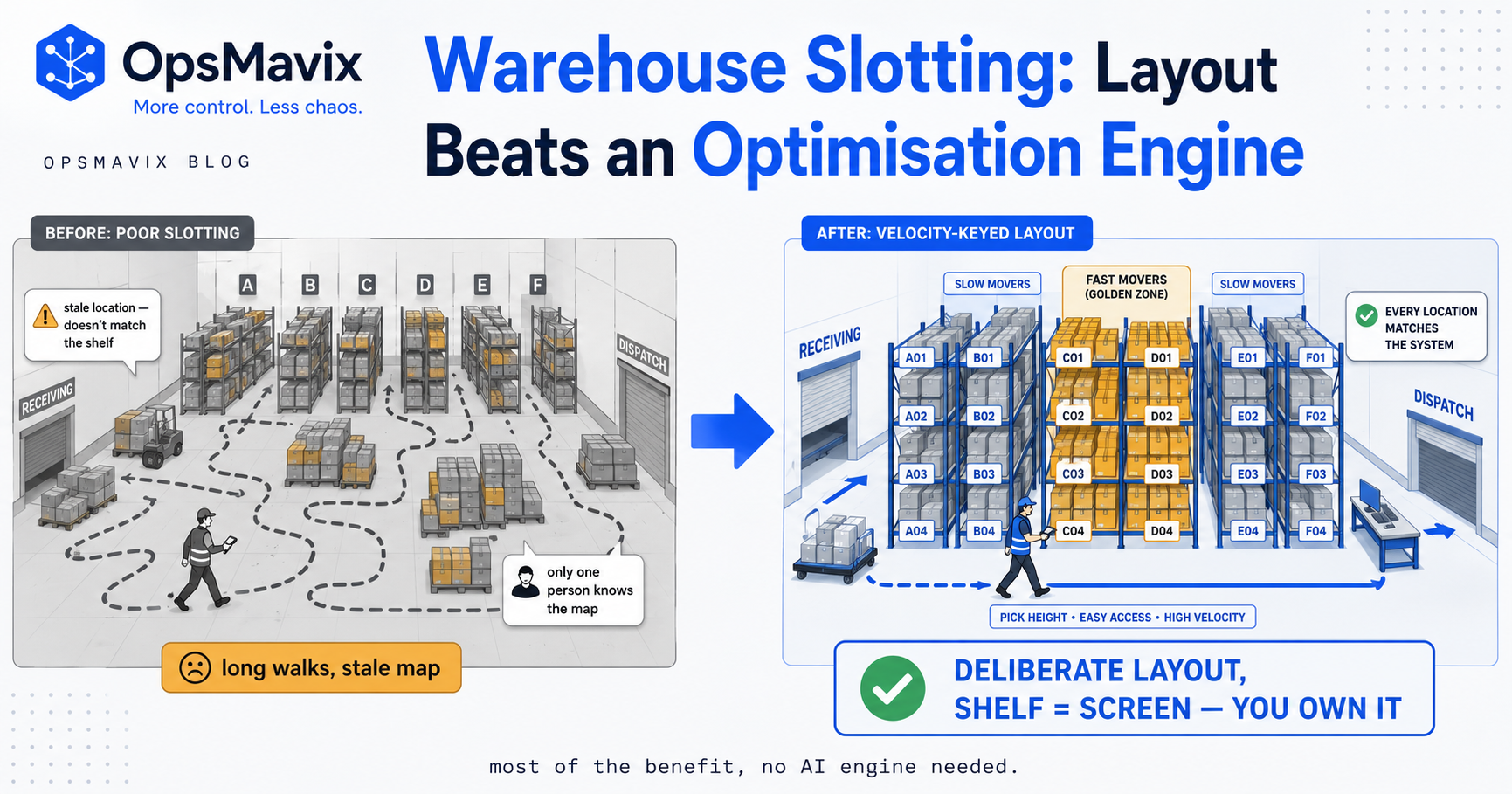
Warehouse Slotting: Do You Actually Need Slotting Optimisation?
Warehouse slotting is the practice of deciding where each SKU lives so pickers walk less, work stays balanced, and fast movers sit within easy reach. This post explains the principles behind it, how enterprise WMS vendors sell slotting as an AI optimisation engine, and the honest line for a growing warehouse: most of the benefit comes from a deliberate location layout keyed to real pick frequency — no dedicated slotting module required.
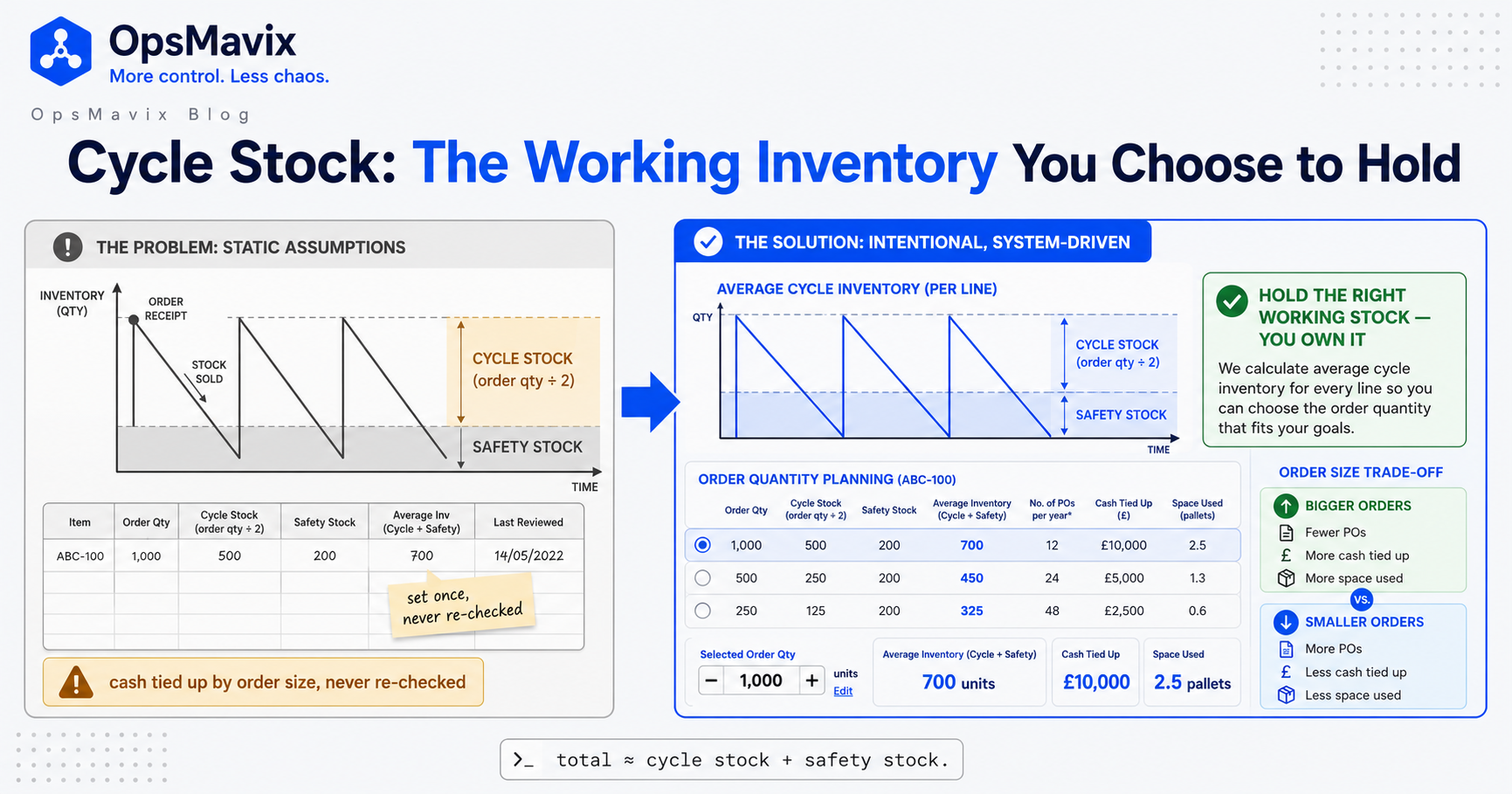
Cycle Stock: The Working Inventory Between Replenishments (and How to Calculate It)
Cycle stock is the portion of your inventory you cycle through and sell down between one replenishment and the next — the working stock, not the buffer. This post gives you the cycle stock calculation plainly (average cycle inventory = order quantity ÷ 2), separates it from safety stock, and shows why it's the cash you choose to tie up via order size. It also explains why a spreadsheet quietly stops re-deriving it as demand and order quantities drift, and how a system computes average cycle inventory per line.
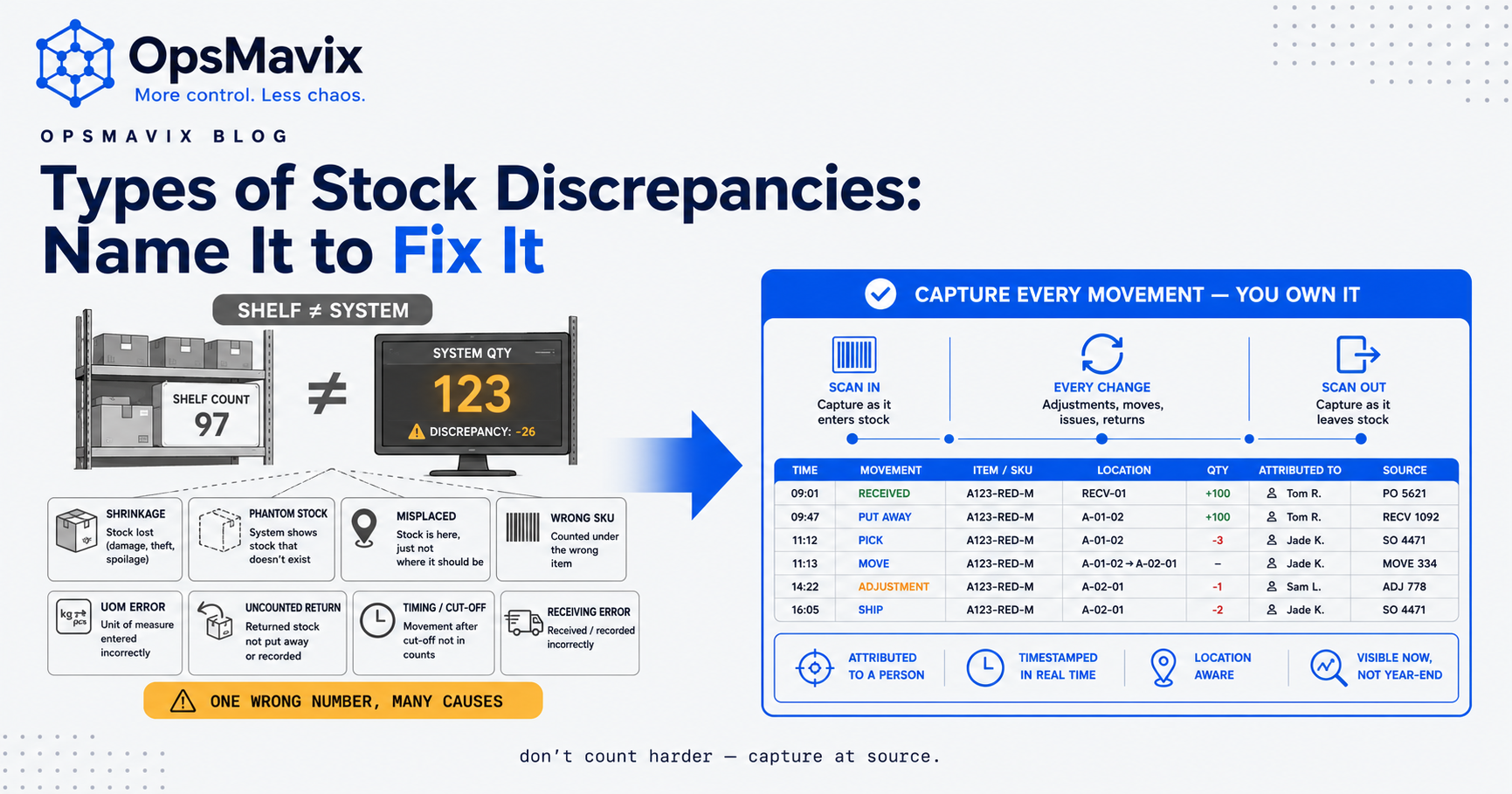
Types of Stock Discrepancies (and What Causes Each One)
A stock discrepancy is when the recorded quantity doesn't match the physical quantity on the shelf. This post names the common types of stock discrepancies — shrinkage, overage, phantom stock, misplaced and mislabelled stock, unit-of-measure errors, uncounted returns, timing errors and receiving errors — and gives the typical cause of each and how it's caught or prevented.
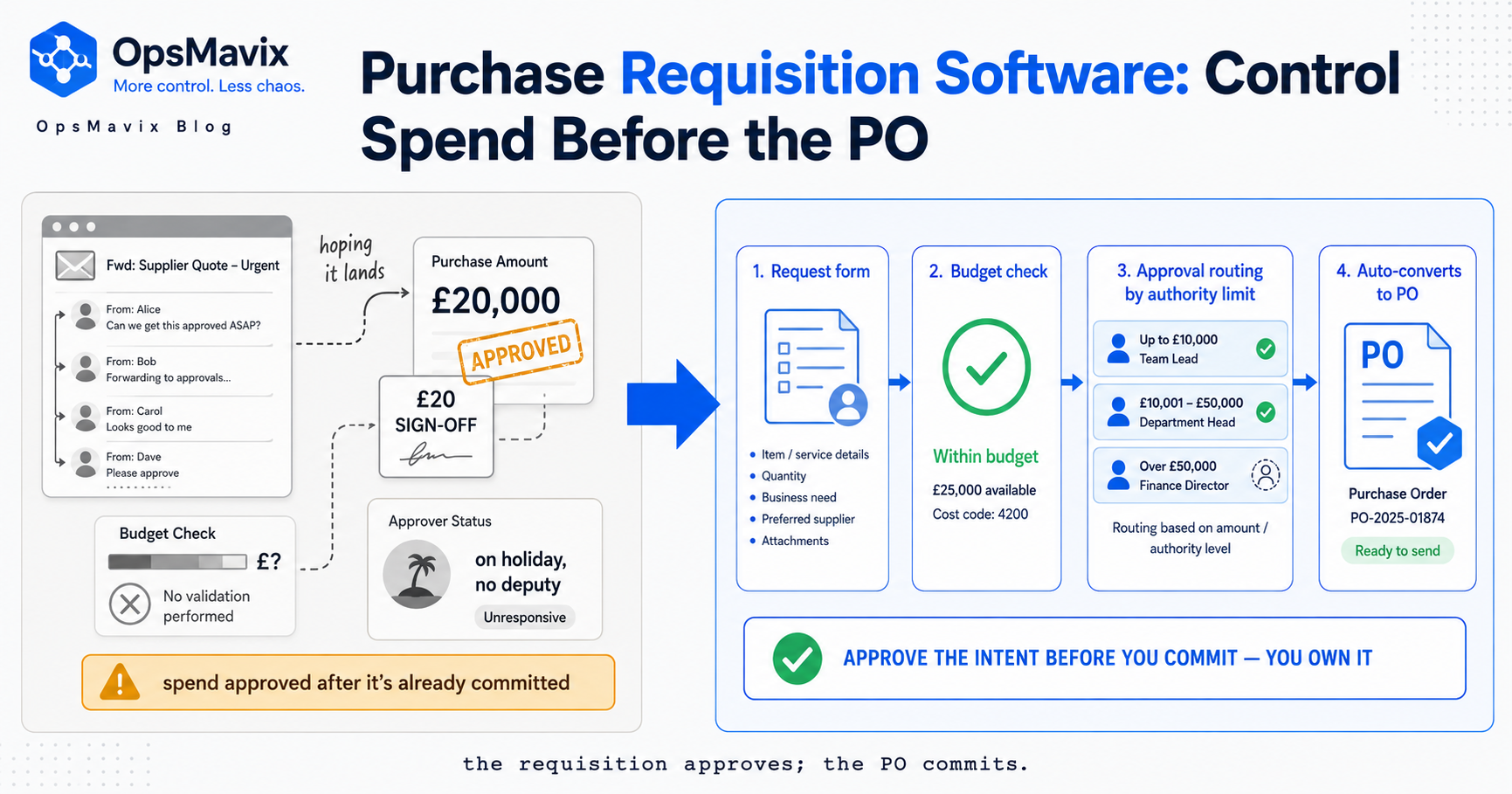
Purchase Requisition Software: Controlling Spend Before the PO Goes Out
Purchase requisition software is the tool that runs request-to-buy — the form, the budget check, the approval routing and the authority limits — so spend is approved before a purchase order commits it. This is a buyer's guide to what that software actually has to do, where the off-the-shelf procurement suite is overkill and where the accounts add-on is too thin, and when a right-sized custom requisition system beats both.
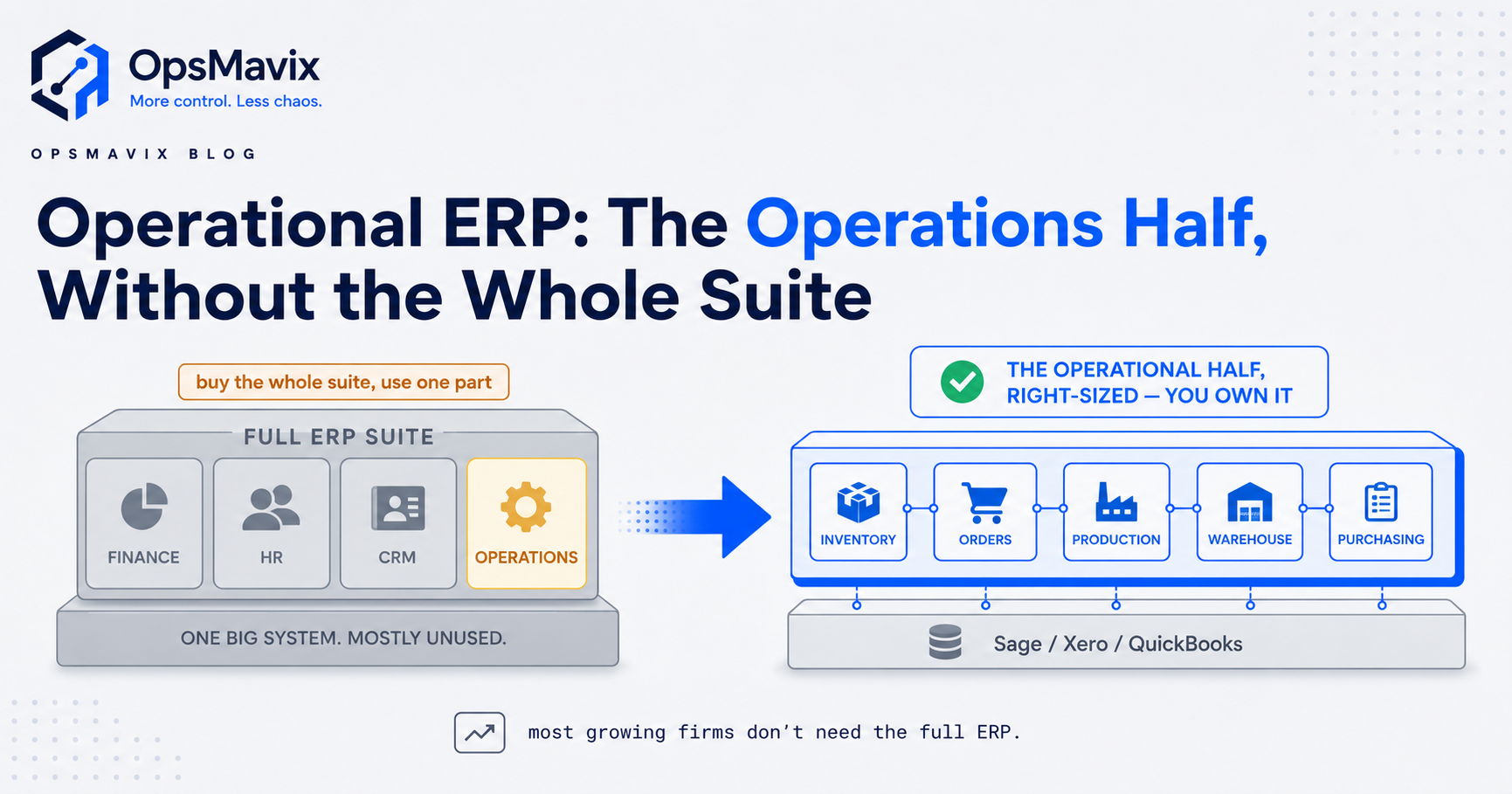
Mintsoft Competitors: The 3PL & Multichannel OMS Landscape (and Where a Build Fits)
Mintsoft competitors split into a few camps — 3PL fulfilment platforms like Fulfillor, multichannel order tools like Linnworks and Veeqo, and the heavier enterprise tier of OrderWise and full ERP/WMS suites. This is an even-handed map of who each one suits and where it stops, a straight Fulfillor vs Mintsoft comparison, when a 3PL should stay on Mintsoft versus look elsewhere, and where a custom build fits for operations that have outgrown the box.