
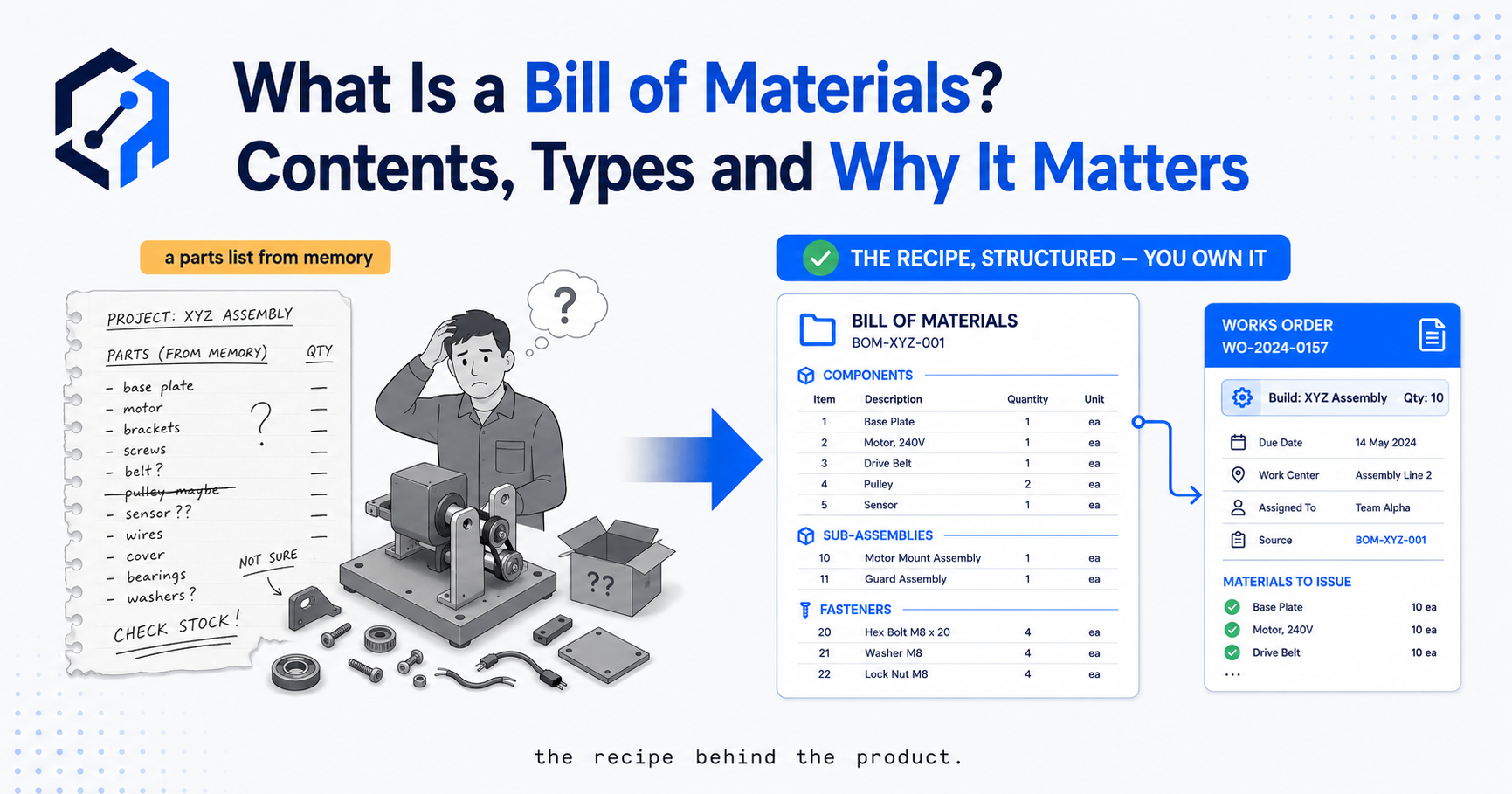
What Is a Bill of Materials? A Plain-English Guide for Growing Manufacturers
A bill of materials (BOM) is the master list of every component, sub-assembly and quantity needed to build one finished product. This guide breaks down what a BOM contains, the different types, and why an accurate one is the difference between a smooth build and a stalled production line.
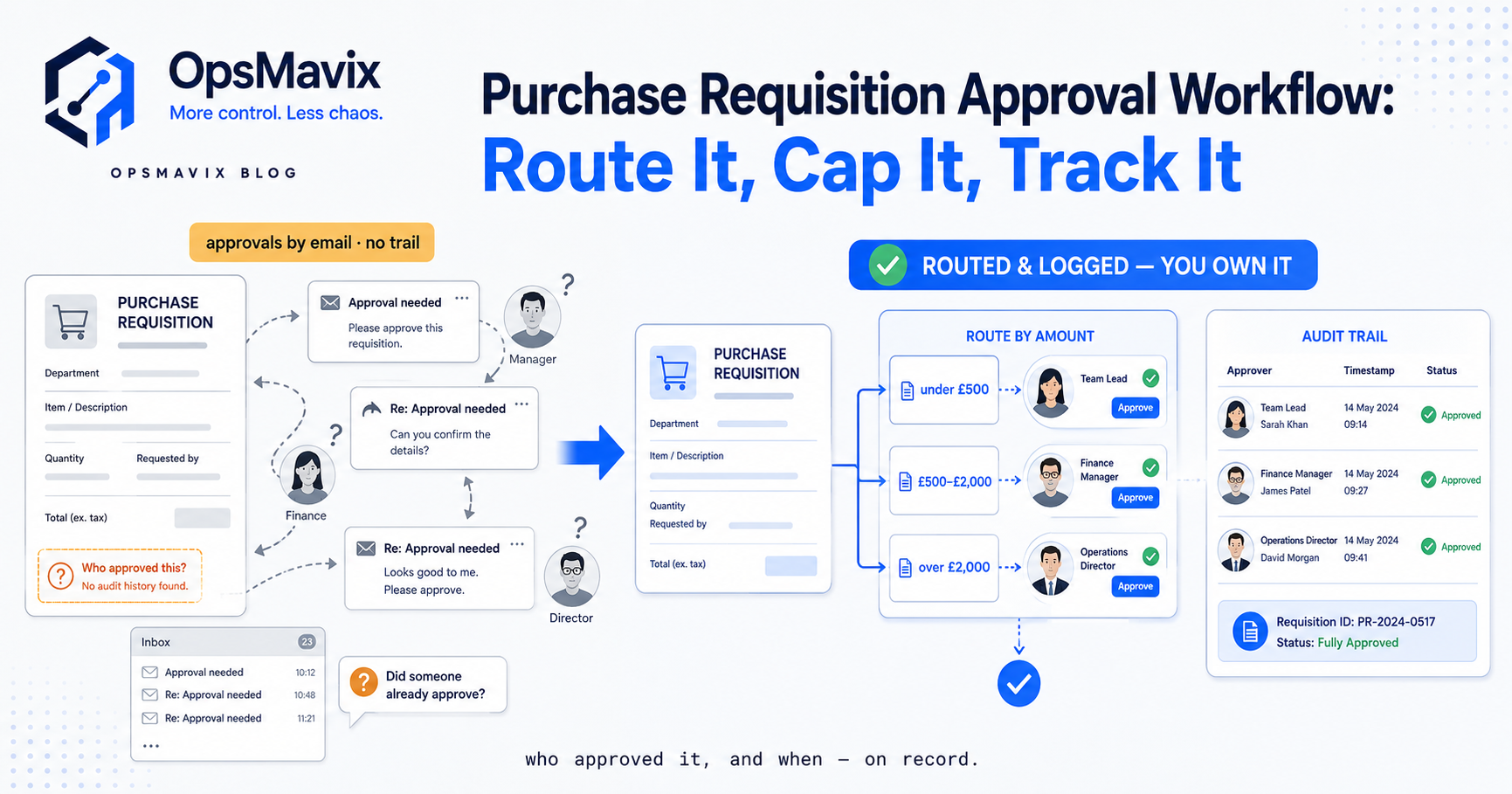
Purchase Requisition Approval Workflow: Routing, Thresholds and Audit Trail That Actually Hold
A purchase requisition approval workflow decides who signs off on a spend request, in what order, and leaves a record of why. Get the routing, thresholds and audit trail right and requests stop dying in inboxes or slipping through unapproved.
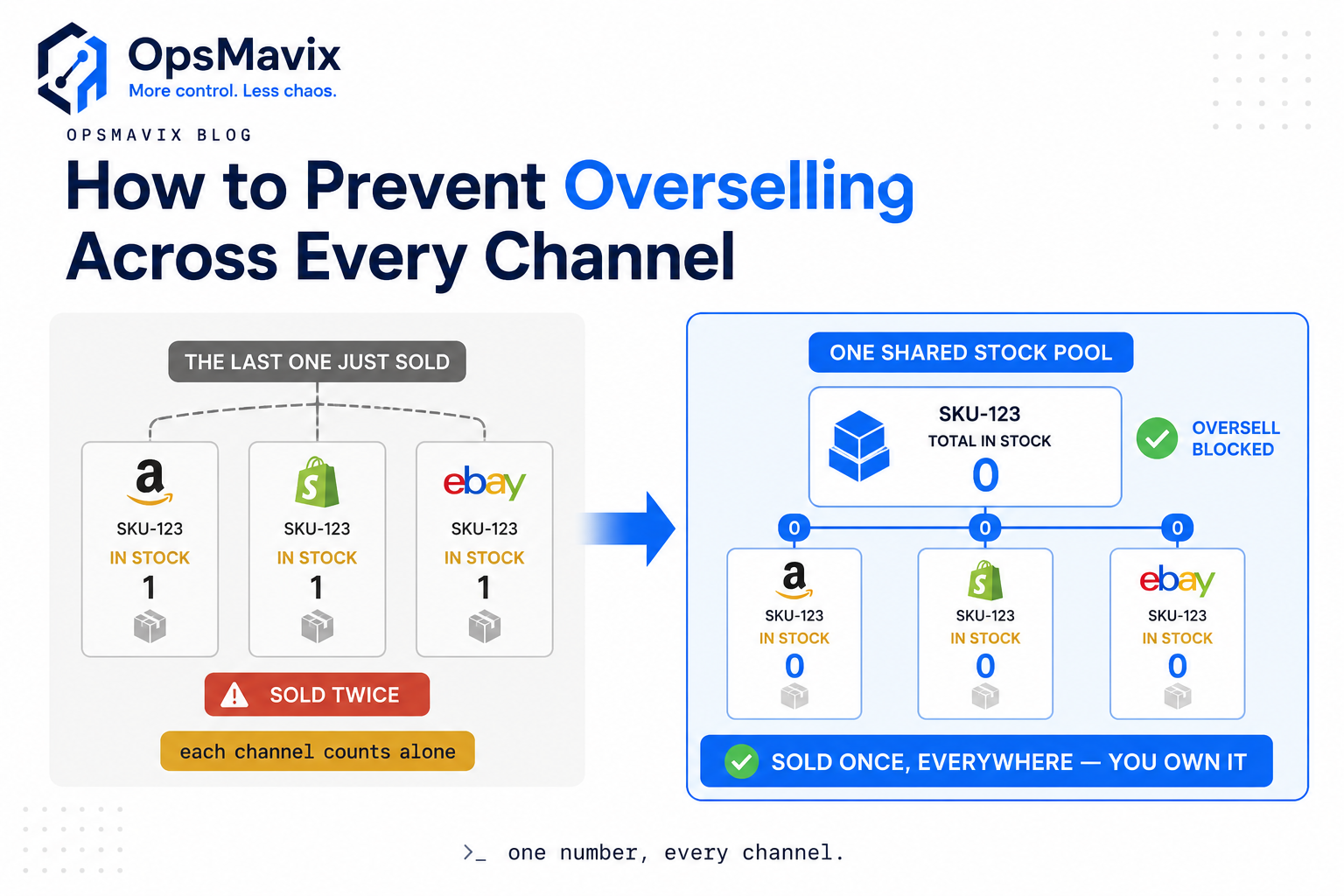
How to Prevent Overselling Across Amazon, Shopify, eBay and Etsy
To prevent overselling, run every sales channel off one shared stock pool that updates in real time, add small safety buffers on your fastest movers, and stop treating each marketplace as its own separate count. This guide walks through how multichannel sellers actually stop selling stock they no longer have.
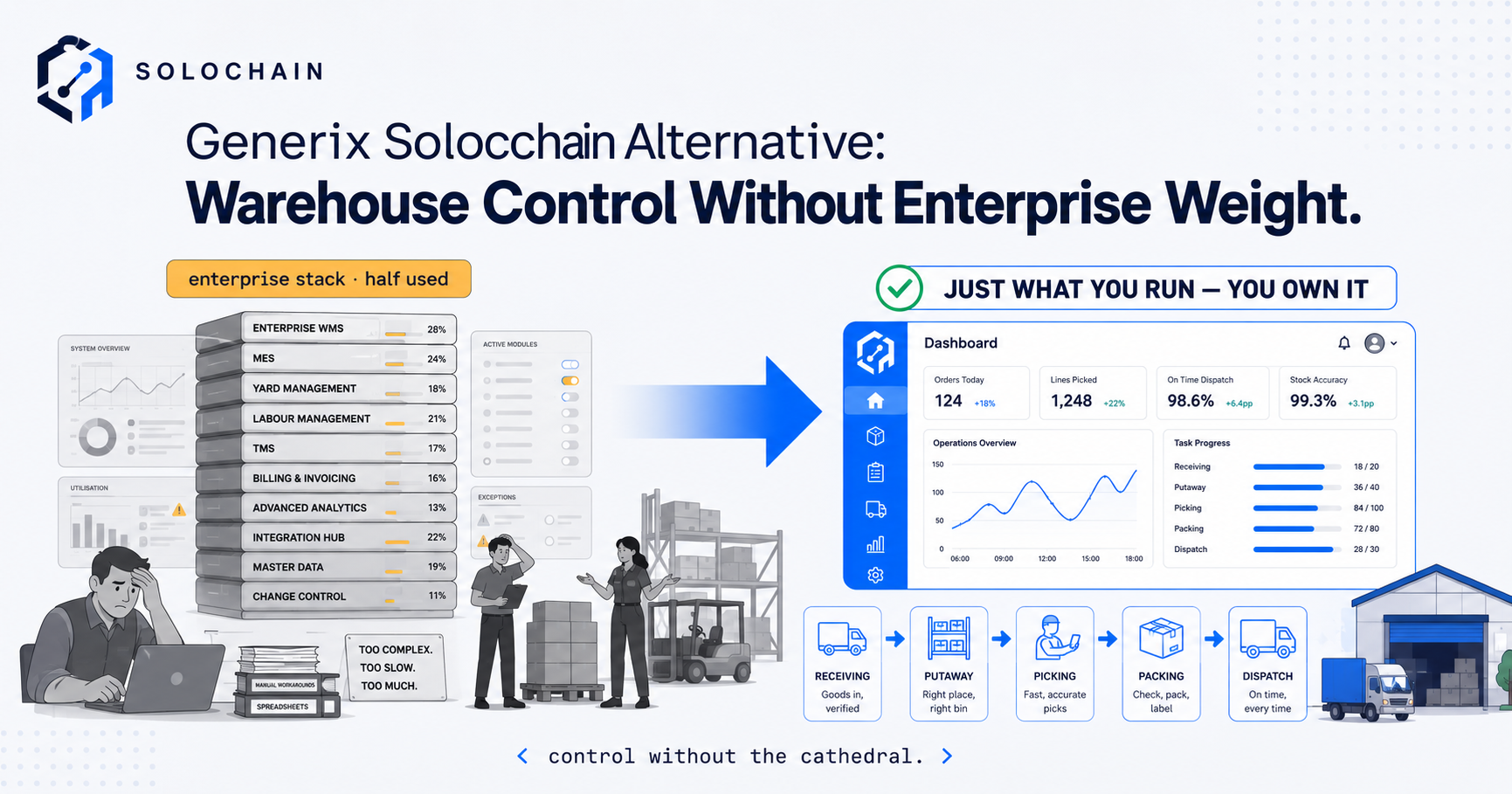
A Generix Solochain Alternative for Teams That Want Warehouse Control Without the Enterprise Weight
The best Generix Solochain alternative for a growing operation is usually not another enterprise WMS/MES, but a right-sized operations system you own. Solochain is strong software built for factories and 3PLs with deep logistics needs. If that's heavier than your warehouse actually runs, here's the middle ground.
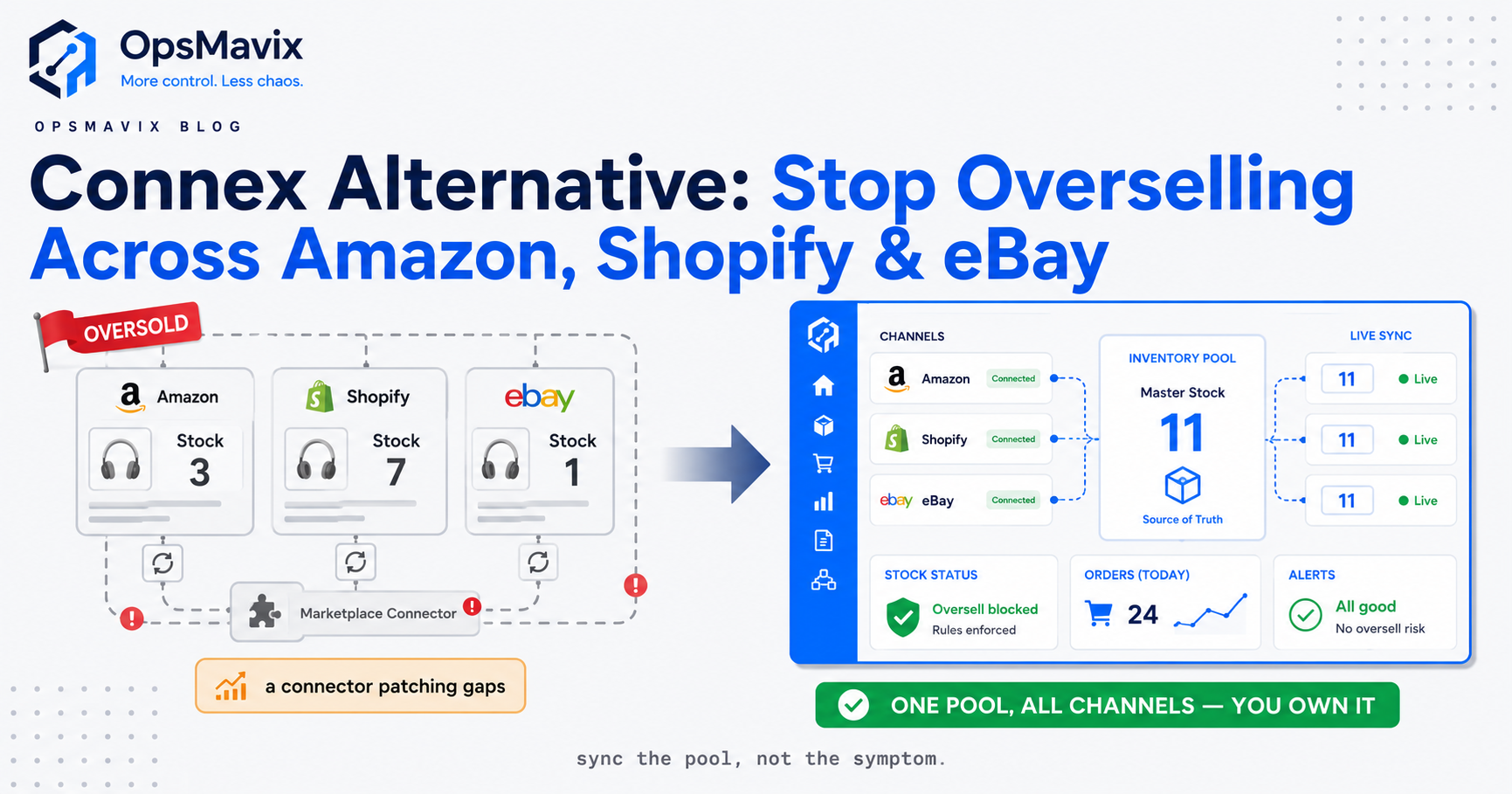
The Connex Alternative for Sellers Who Keep Overselling Across Channels
Connex is a sync connector that pushes orders and inventory between your channels and QuickBooks. If you keep overselling anyway, the fix usually is not a better connector but one operations system where stock lives in a single place. Here is when to switch and what to switch to.
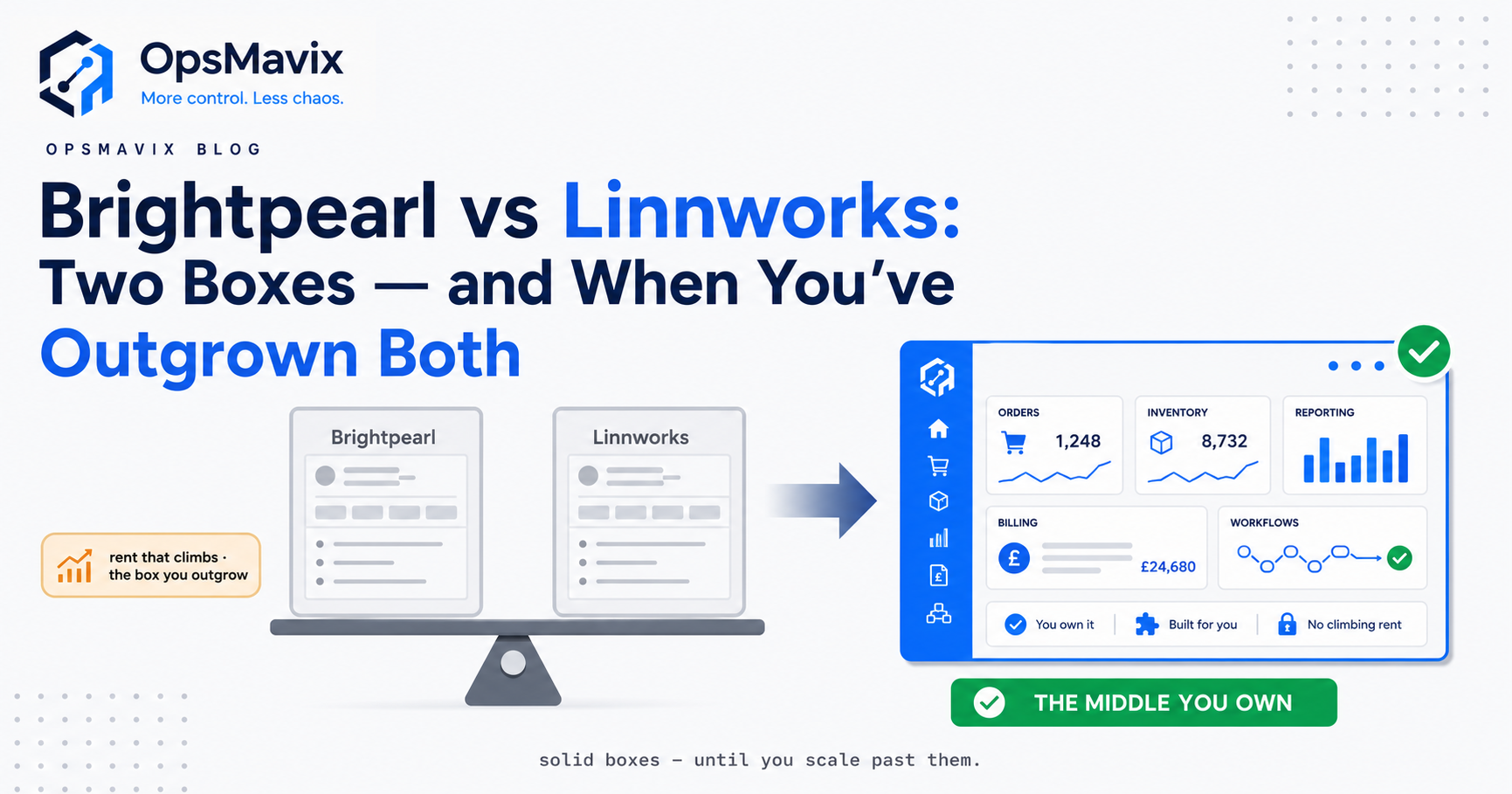
Brightpearl vs Linnworks: Which Fits a Growing Stock Business?
Brightpearl leans toward a full retail operating system with accounting baked in, while Linnworks is a multichannel order and inventory hub. This guide compares both honestly and shows where each one stops fitting the way you actually run.
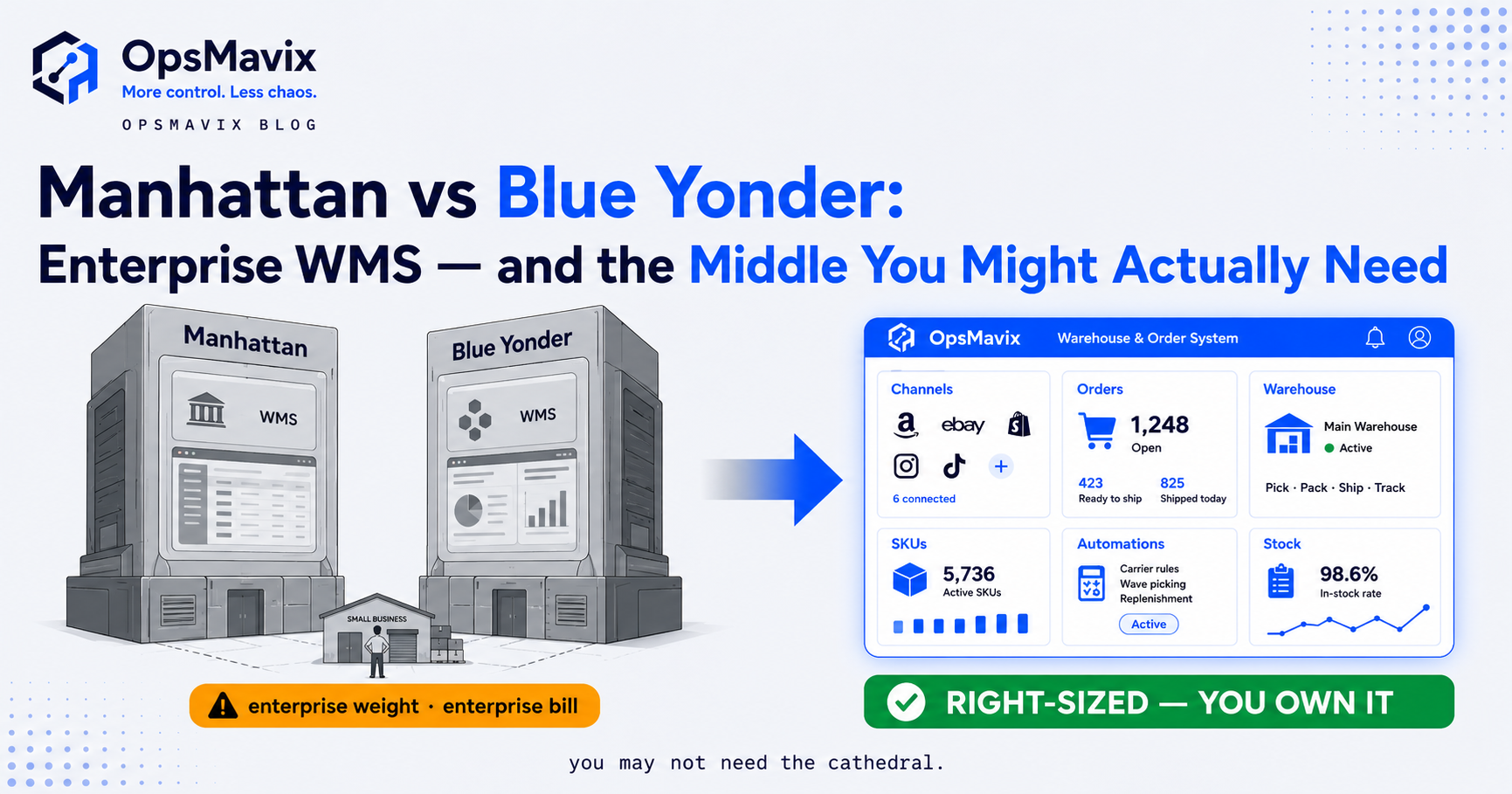
Manhattan vs Blue Yonder: How Two Enterprise WMS Giants Actually Compare
Manhattan Active WM and Blue Yonder WMS are both top-tier enterprise warehouse systems built for high-volume, automation-heavy operations. This guide compares how they differ, what they cost, and how to tell whether your warehouse actually needs either one yet.
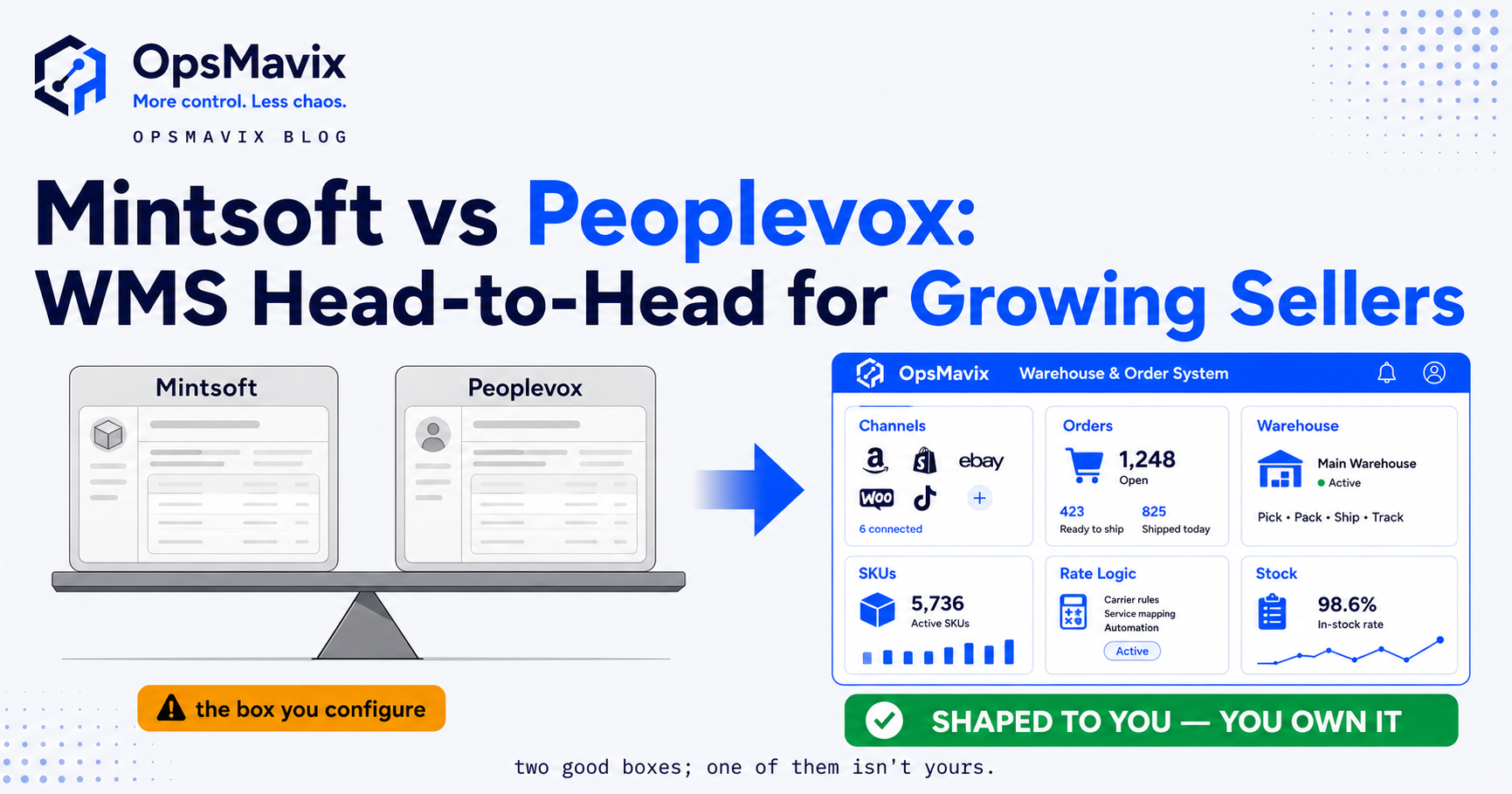
Mintsoft vs Peoplevox: Which Warehouse System Fits How You Actually Ship?
Mintsoft suits multi-client 3PLs and cost-conscious ecommerce warehouses; Peoplevox targets high-growth D2C brands that live and die by pick accuracy. Here is how the two differ on ownership, pricing shape and where each one stops.
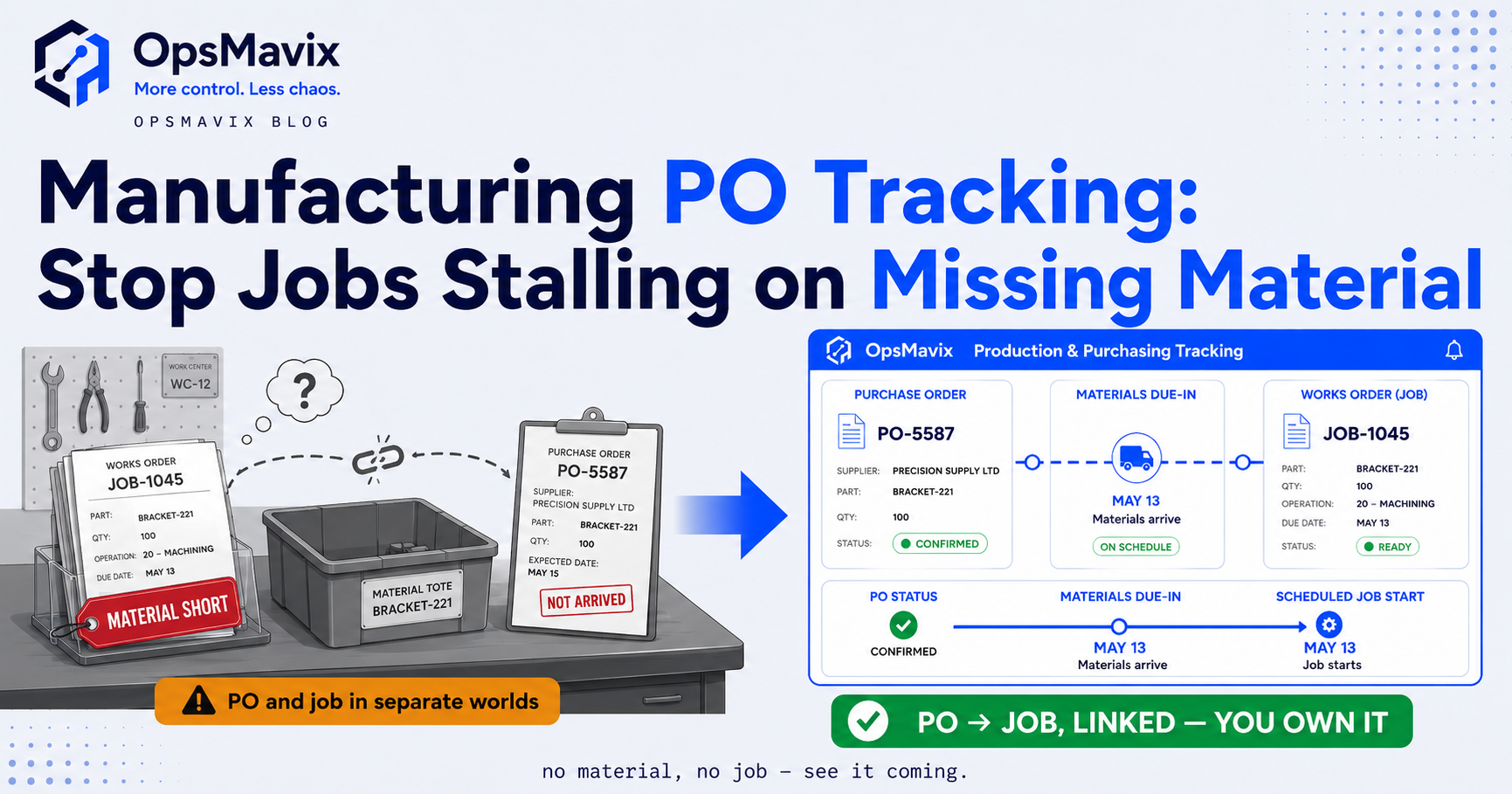
Manufacturing PO Tracking System: Stop Material Shortages Stopping Jobs
In manufacturing, a purchase order isn't a purchasing task — it's a material a job is waiting on. A manufacturing PO tracking system links every open PO to the works order it feeds, so a late or short delivery is a flagged risk before it becomes a stopped line. Here's what that link gives you that a generic PO log can't.