
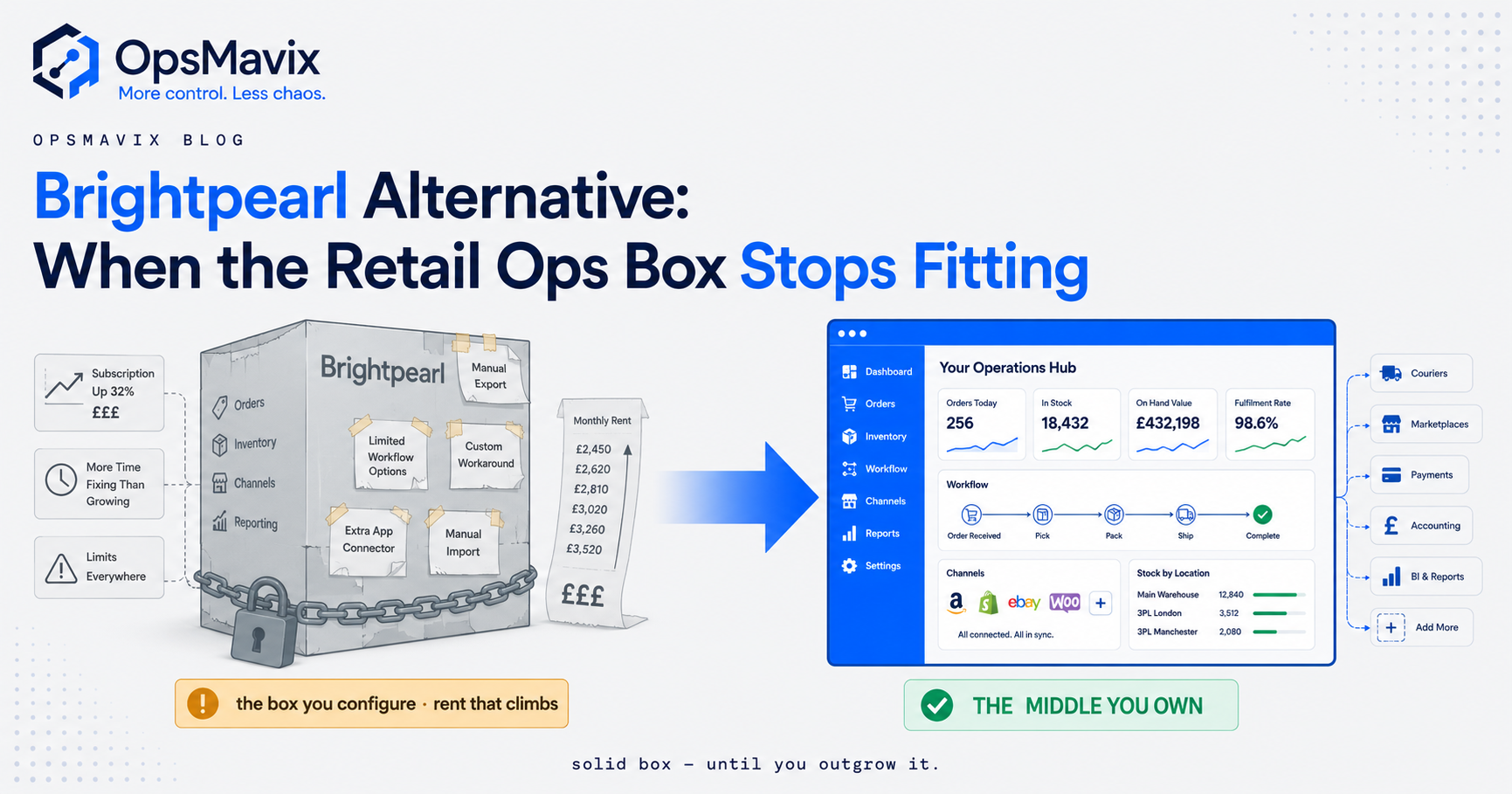
Looking for a Brightpearl Alternative? How to Choose the Right Fit
The best Brightpearl alternative depends on where the platform is straining for you — cost, implementation length, or being sized for retailers larger than you are. This guide covers who Brightpearl genuinely suits, where the ceiling shows, and how to choose without over-buying an enterprise platform you'll only half-use.
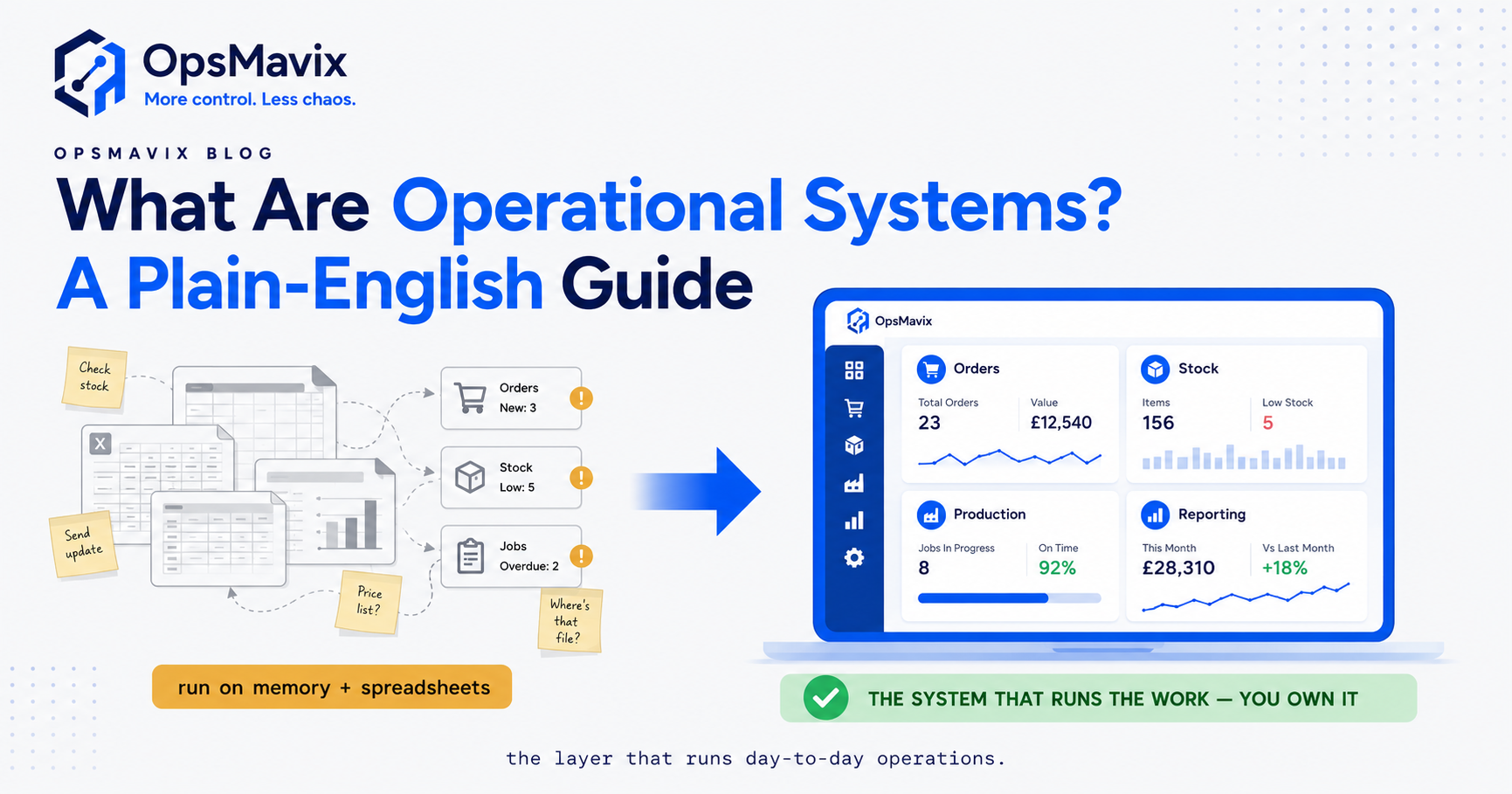
What Are Operational Systems? A Plain-English Guide for Growing Businesses
Operational systems are the software that runs your day-to-day work, tracking orders, stock, production and reporting in one shared place. This guide explains what one is, with plain examples, and how it differs from a spreadsheet and from a full ERP.
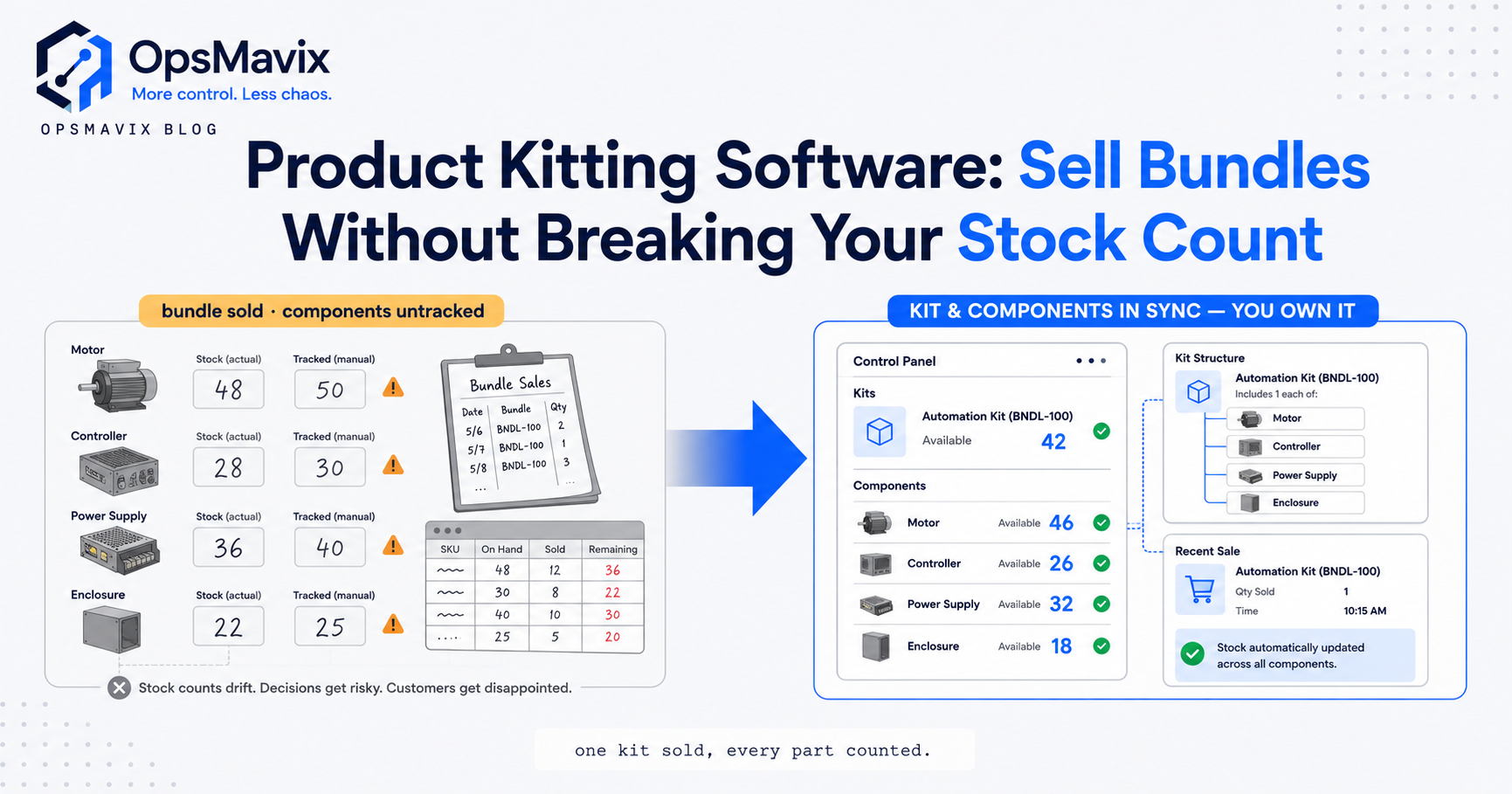
Product Kitting Software: How to Sell Bundles Without Losing Your Stock Count
Product kitting software assembles individual component SKUs into sellable kits or bundles and calculates kit availability from the shared component pool. It stops the overselling and stock drift that spreadsheets create when the same part lives in several bundles at once.
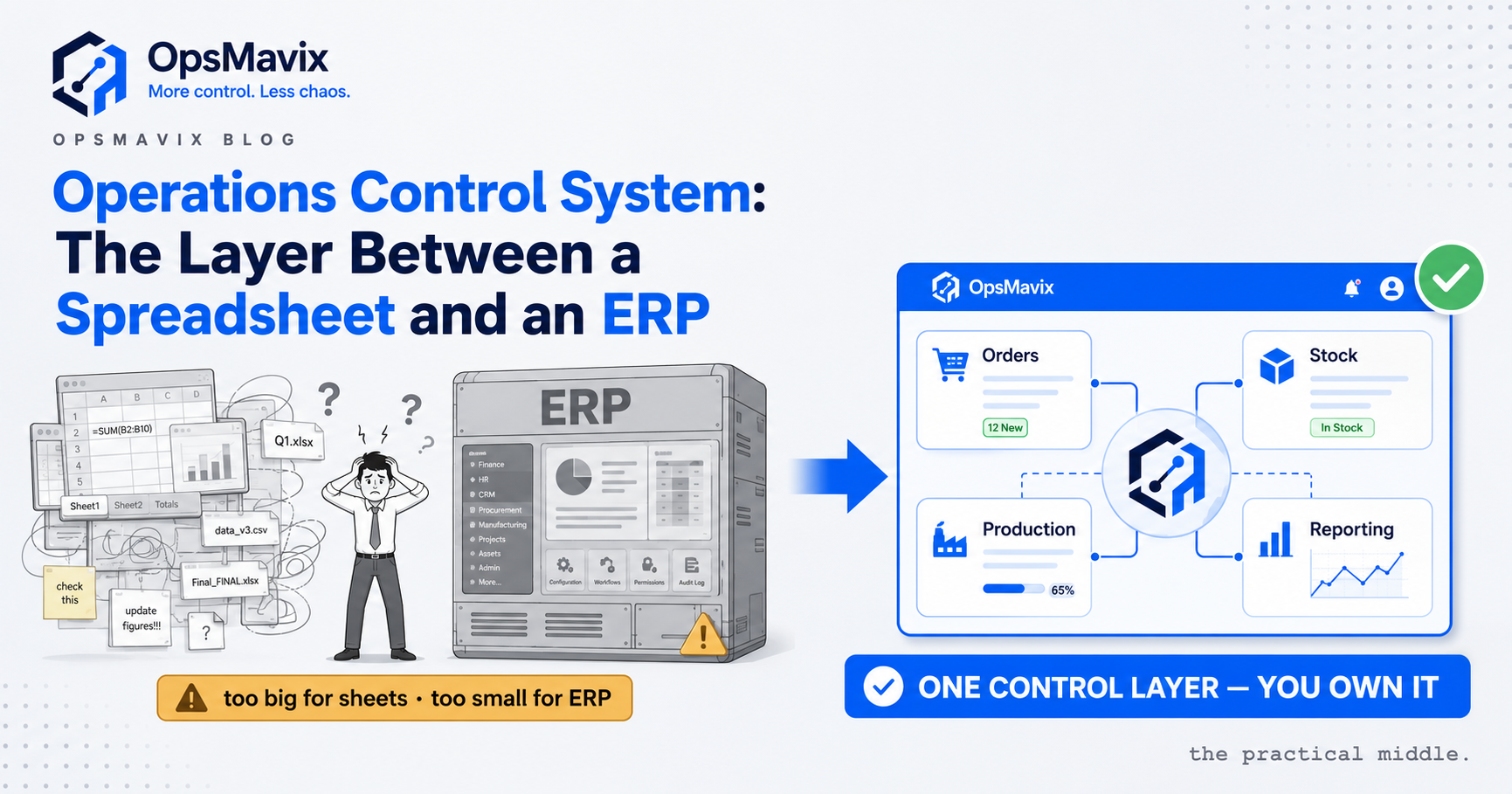
What an Operations Control System Actually Is (and When You Need One)
An operations control system is the working layer that connects inventory, orders, purchasing and production into one place your team actually runs the business from. It sits between the spreadsheets you have outgrown and the ERP you are not ready for. Here is what it does, when you need one, and how to decide.
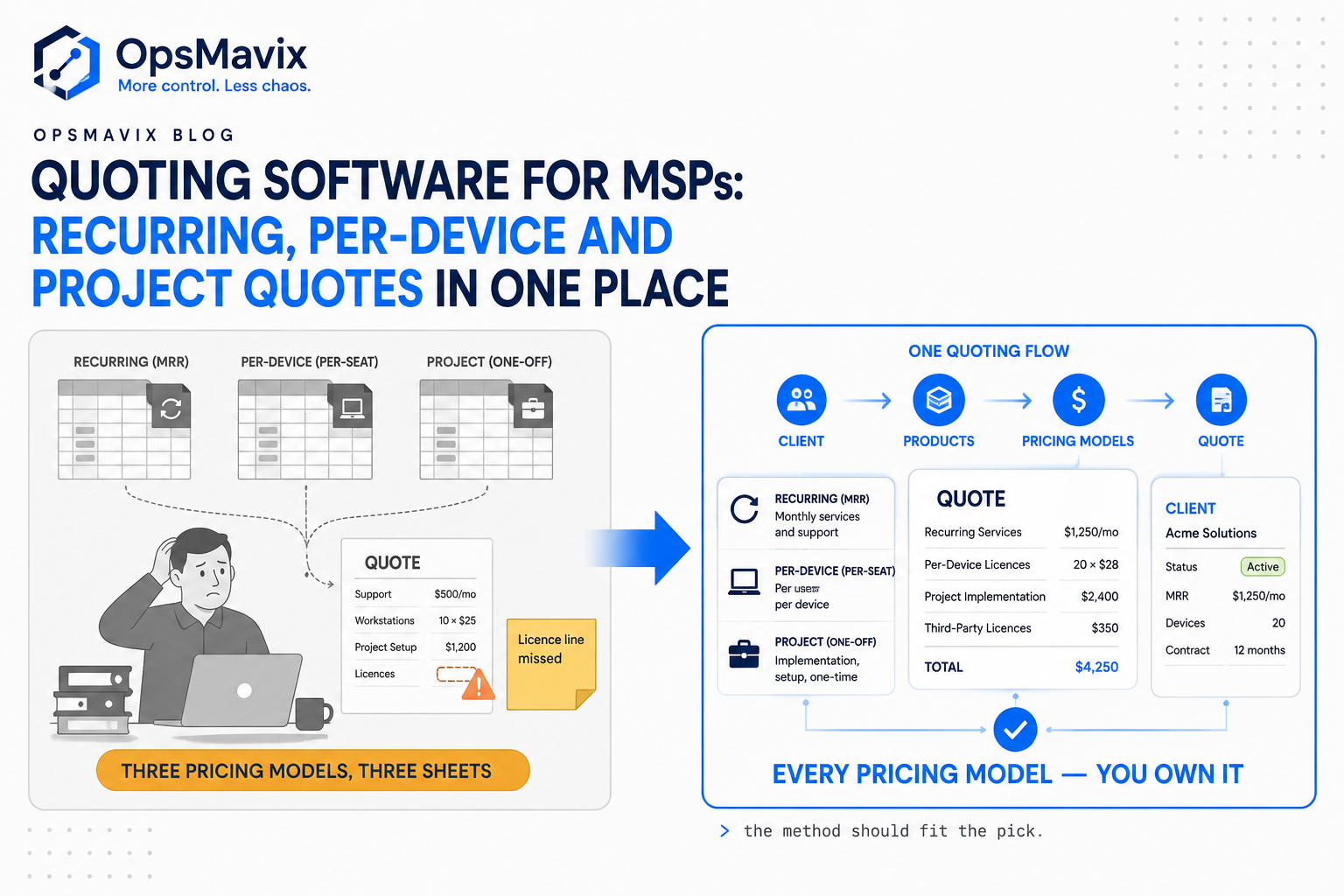
Quoting Software for MSPs: Recurring, Per-Device and Project Quotes Without the Rework
Quoting software for MSPs has to do three jobs at once — price recurring managed services, per-device and per-user tiers, and one-off projects — then hand a clean, signed quote straight into the PSA without re-keying. Most tools do one of those well and force the other two into spreadsheets. Here's what actually matters for an MSP quote, and the point where a bolt-on stops being enough.
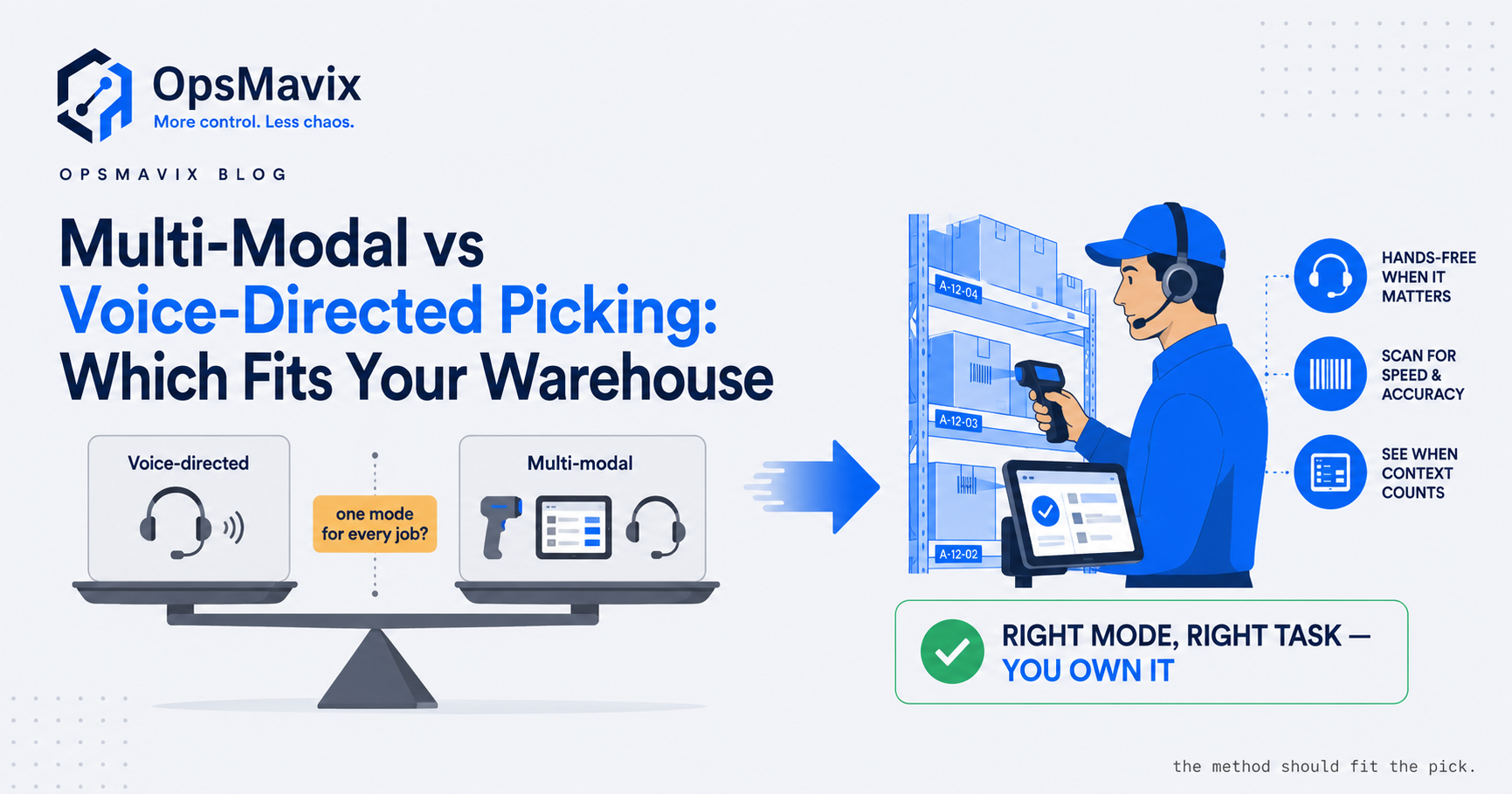
Multi-Modal vs Voice-Directed Picking: Which Fits Your Warehouse?
Multi-modal picking blends voice, scanning and screen prompts in one workflow, while voice-directed picking runs on spoken commands alone. This guide compares the two on accuracy, speed, training and cost so you can pick the right method for your warehouse.
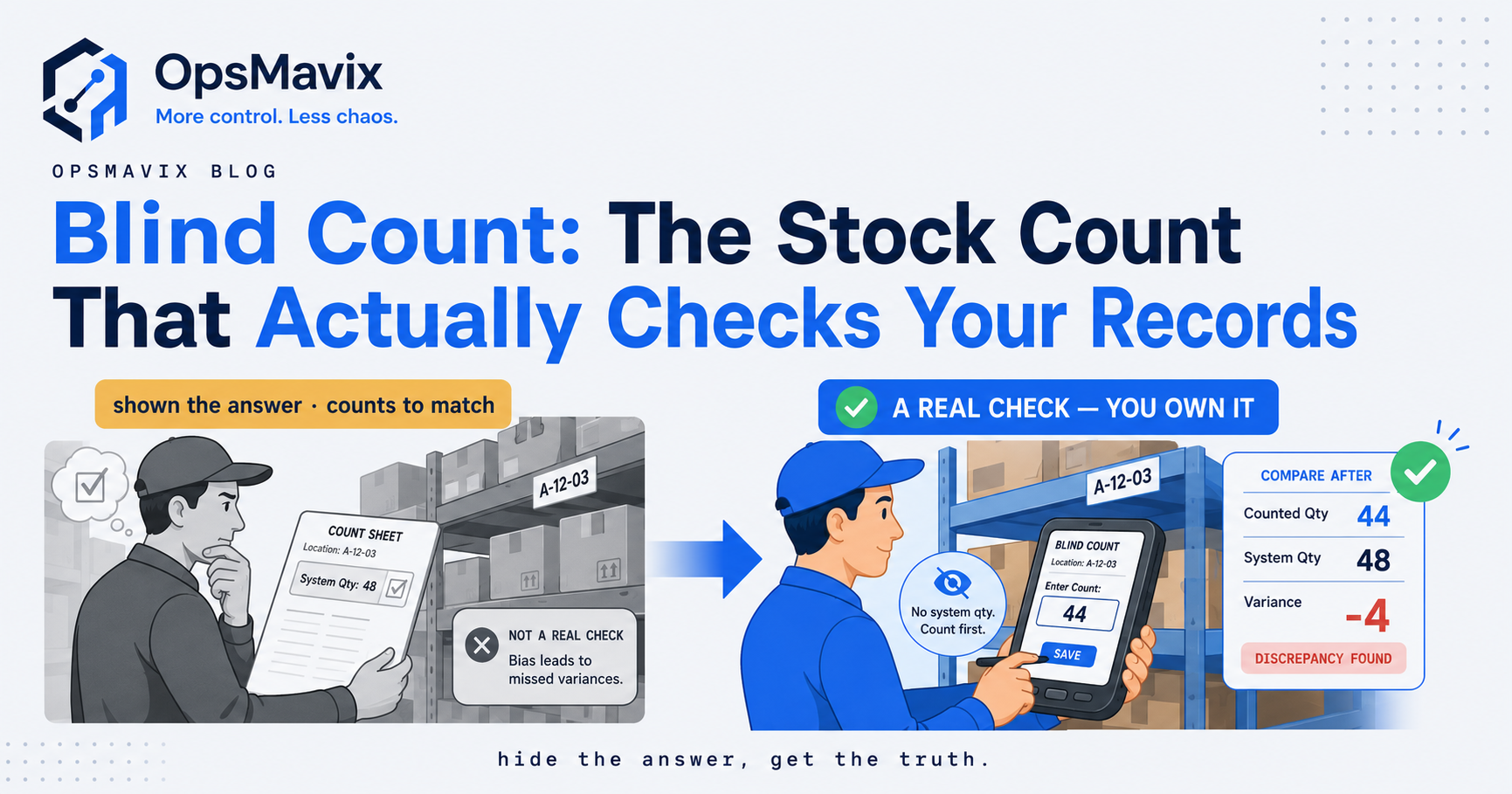
Blind Count Inventory: What It Is and When to Use It
A blind count is a stock count where the person counting cannot see the system's expected quantity, so they record what's physically on the shelf rather than confirming a number. This guide explains blind vs standard counts, when each is right, and how to run blind counts without drowning in recounts.
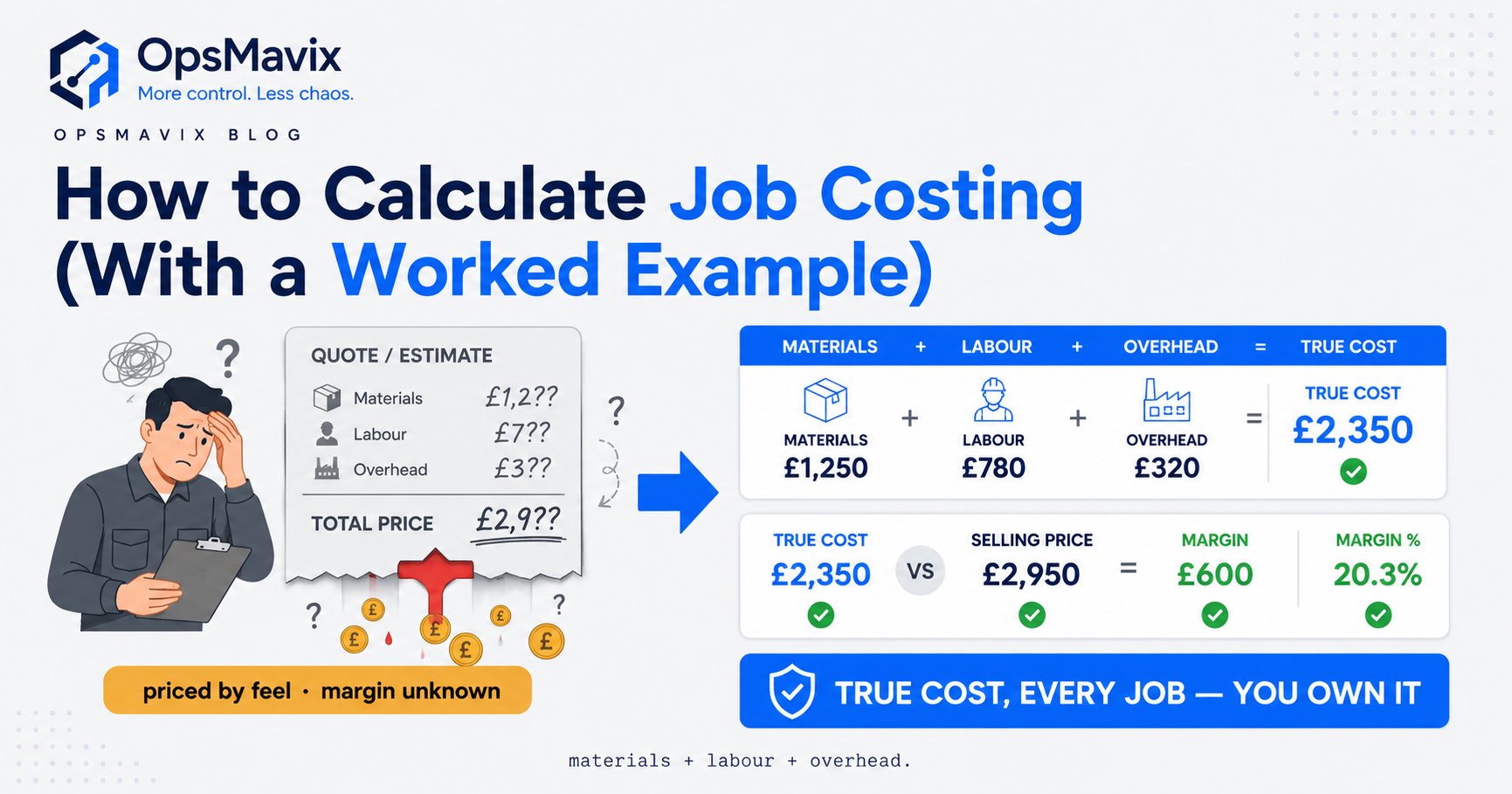
How to Calculate Job Costing: A Worked Example (Materials + Labour + Overhead)
To calculate job costing you add three things for a single job: direct materials, direct labour and a share of overhead. This post runs the full sum on a real example, shows how to build the overhead rate, and covers the estimate-versus-actual check that tells you whether the job actually made money.
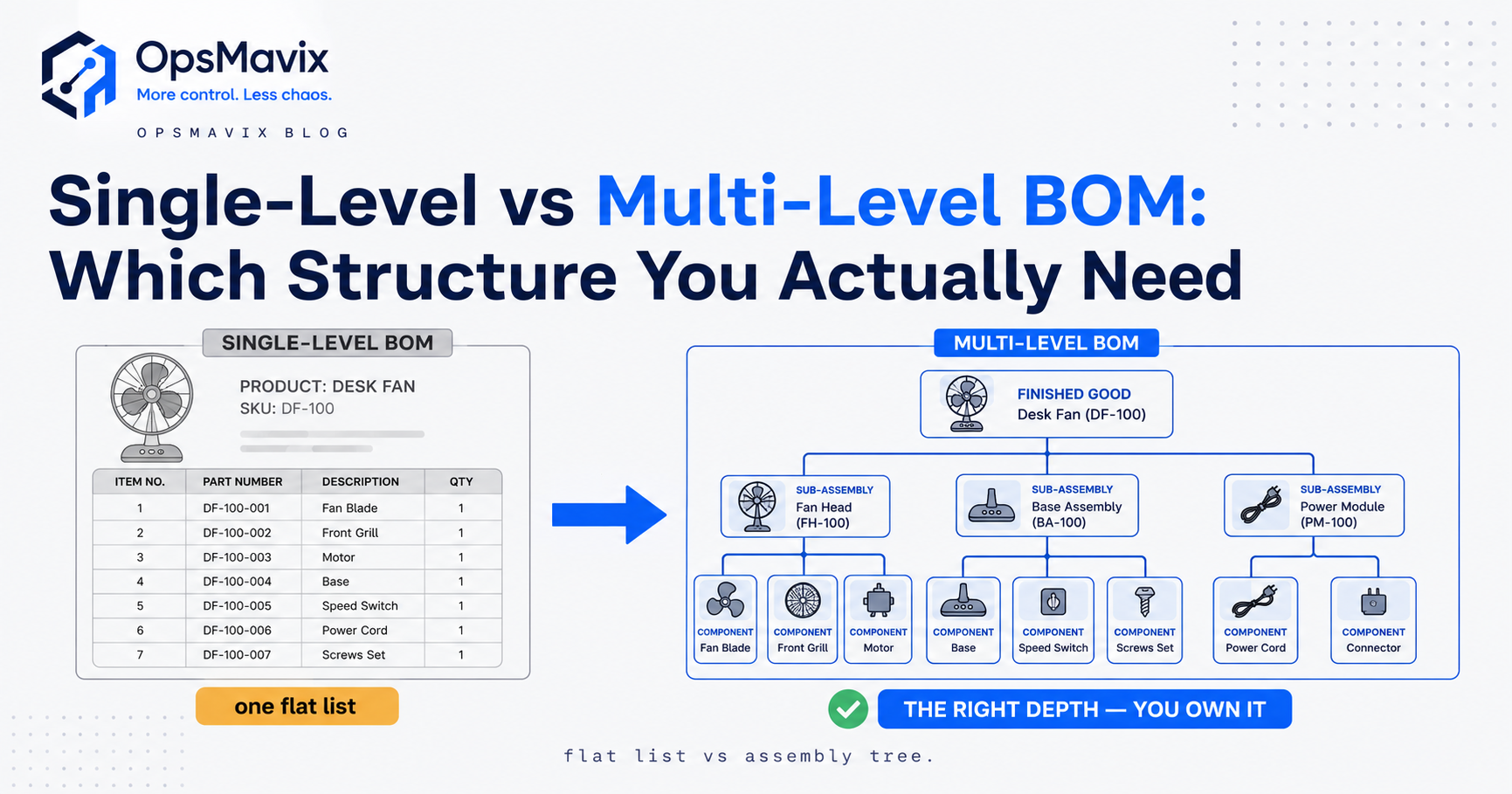
Single Level vs Multi Level BOM: Which Structure Fits How You Build
A single level BOM lists only the direct components of one product; a multi level BOM breaks every sub-assembly down through all its layers. This guide shows when each fits, how sub-assemblies decide the structure, and what it means for costing and stock.