
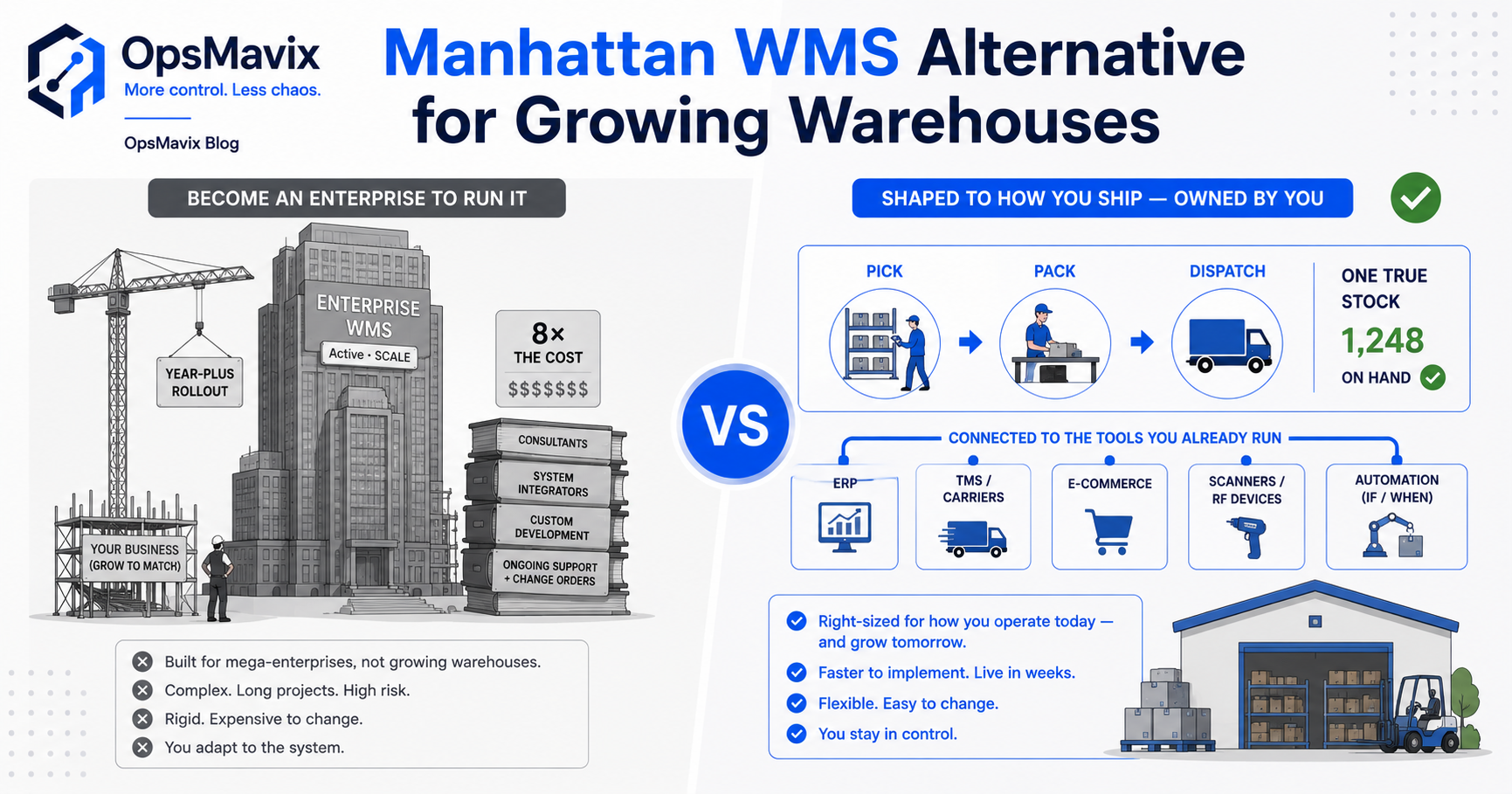
Manhattan Warehouse Management System Alternative: Right-Sized For You
A Manhattan warehouse management system is enterprise-grade — built for the largest distributors and 3PLs. The depth is real, and so is the price, the year-plus implementation, and the org you have to become to run it. Here's what Manhattan WMS is built for, the signs it's overkill for a growing operation, and what a right-sized system you own does instead.
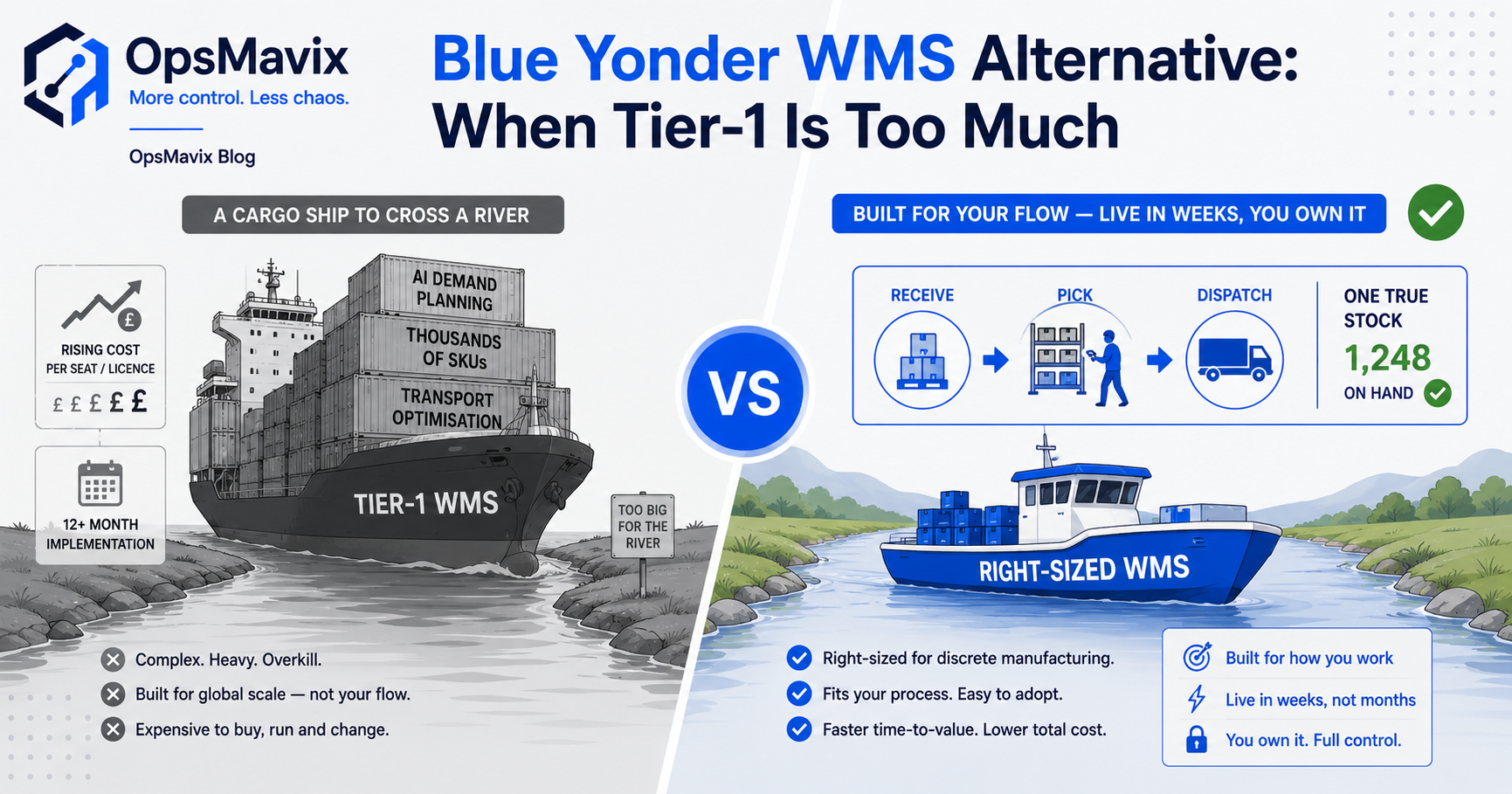
Blue Yonder WMS Alternative: Right-Sized for a Growing Warehouse
Blue Yonder WMS is built for very large, complex supply chains — long, costly to deploy, and far more system than most growing warehouses will ever use. The honest Blue Yonder WMS alternative for a mid-sized operation isn't another giant suite. It's a right-sized warehouse system built around your real flow, live in weeks, that you own.
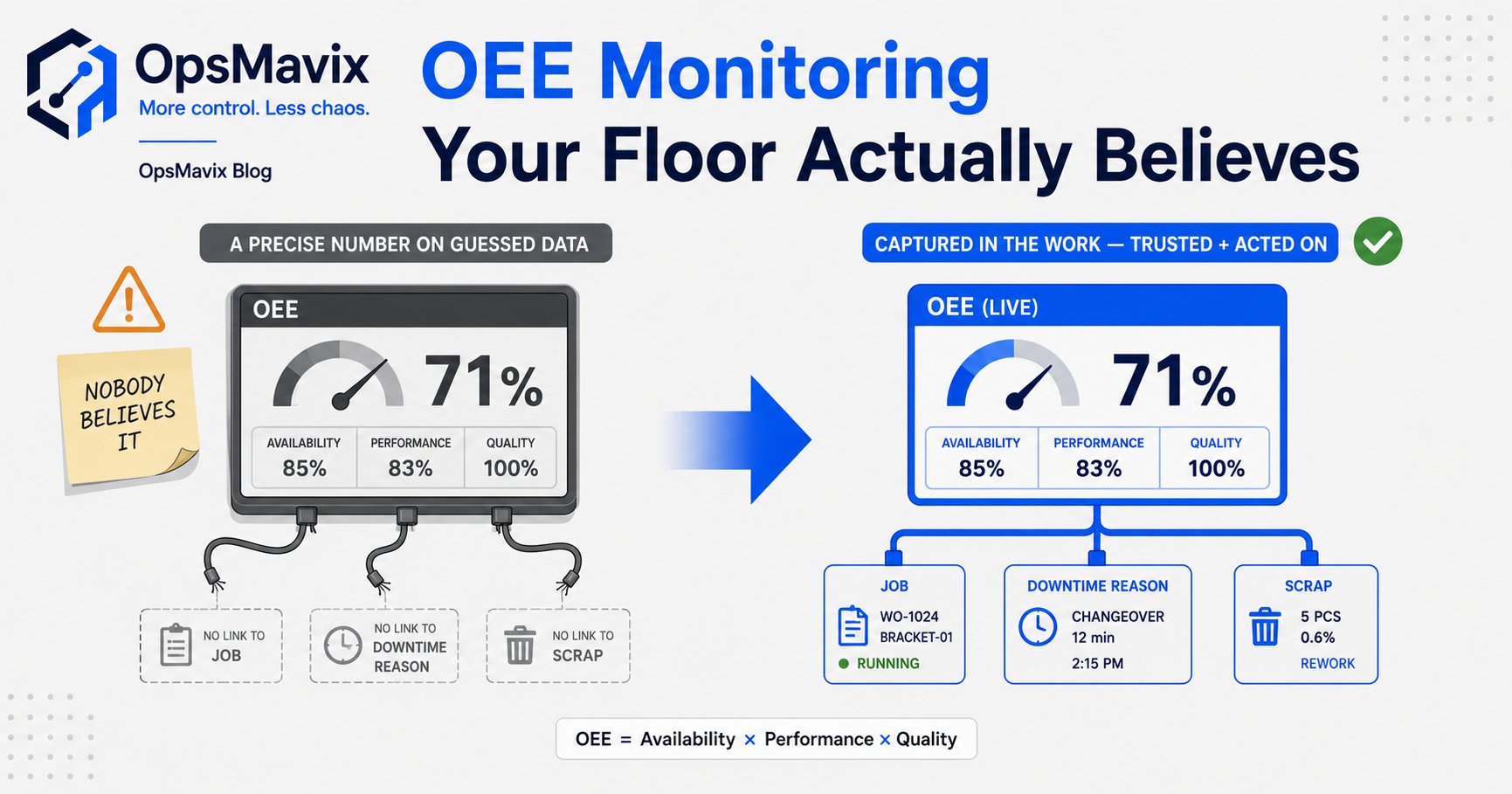
OEE Monitoring for Small Manufacturers: Making the Number Mean Something
OEE monitoring is sold as a dial that tells you how well your machines are running. The catch nobody mentions: a number your floor doesn't trust is worse than no number, because people make decisions on it. Here's what OEE actually measures, why most standalone OEE platforms become another ignored dashboard, and how to capture it inside the work your team already does.
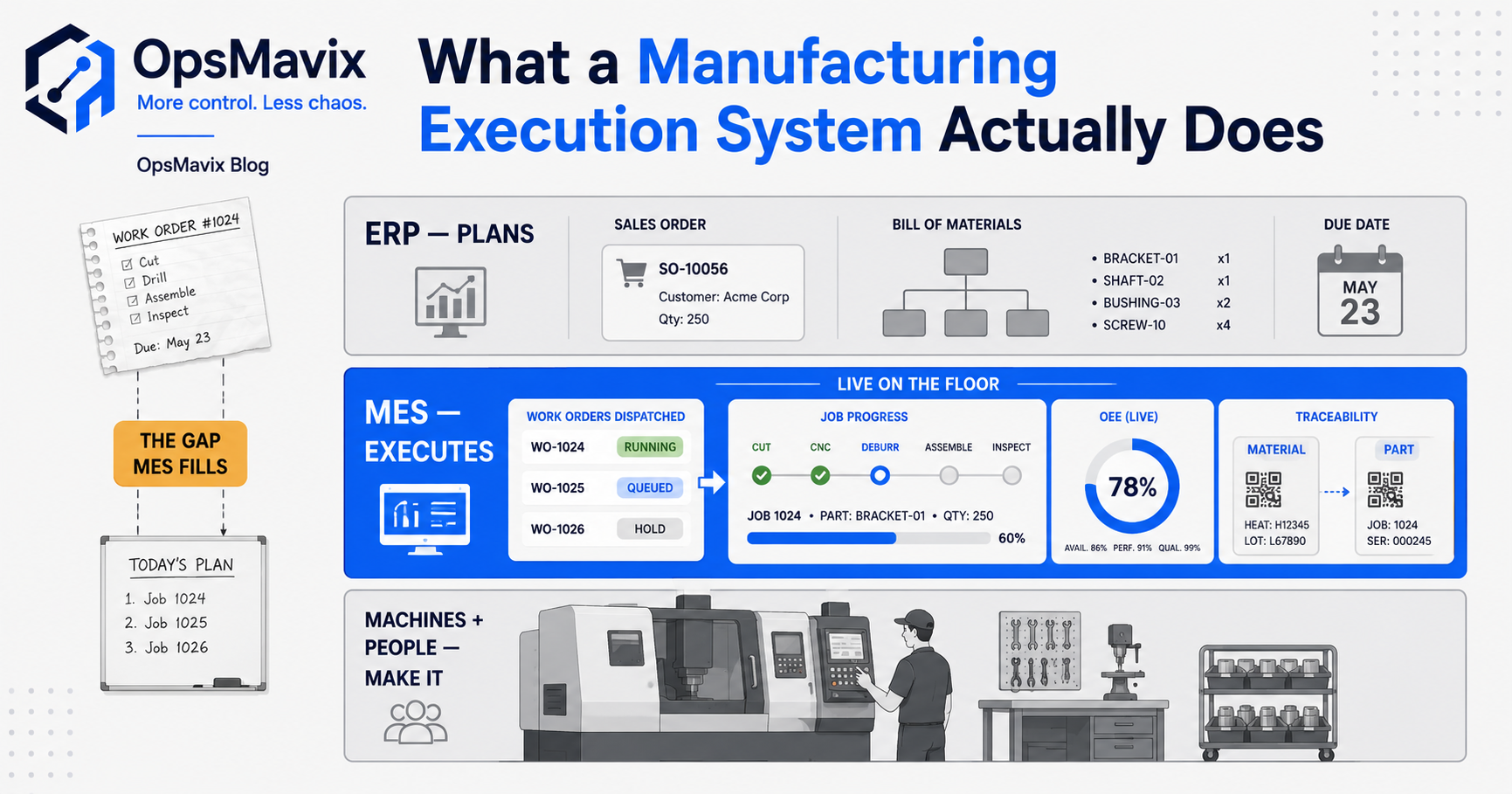
What a Manufacturing Execution System (MES) Actually Does — and When You Need One
A manufacturing execution system (MES) sits between your ERP and your machines, running and tracking work on the floor in real time. Here's what an MES genuinely does, the symptoms small and mid manufacturers feel (no live view, paper travellers, double entry, no traceability), and the honest question of when you need a full MES versus a right-sized system built around your floor.
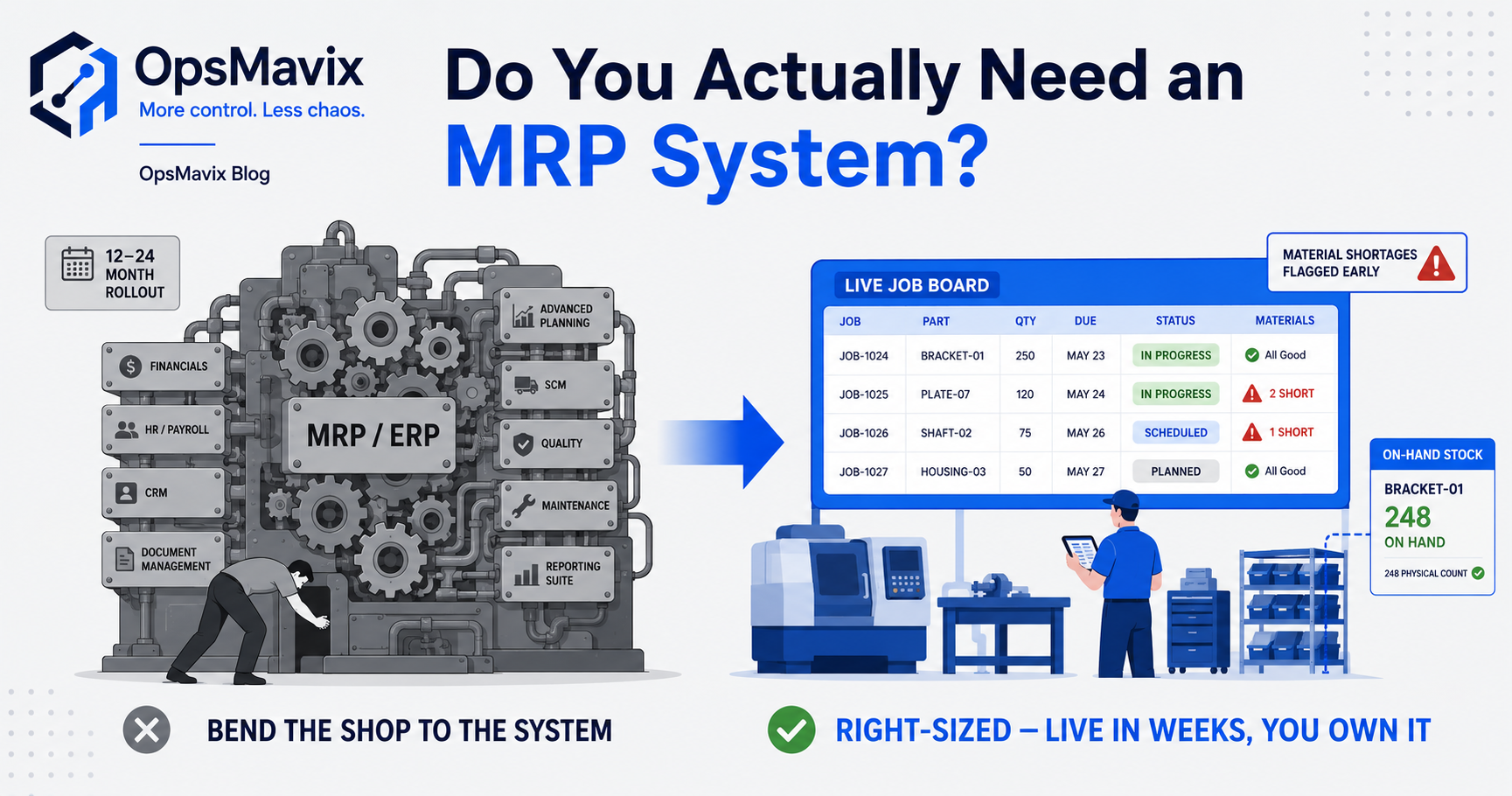
Do You Actually Need an MRP System? An Honest Take for Growing Manufacturers
An MRP system turns demand into a bill of materials, a purchasing plan and a schedule — and it's built for a scale and complexity most small and mid manufacturers haven't reached. The symptoms are real: materials short, jobs late, stock guesses, double-entry. But the fix is often a right-sized system built around how your shop actually runs, not a heavyweight rollout you bend the business to.
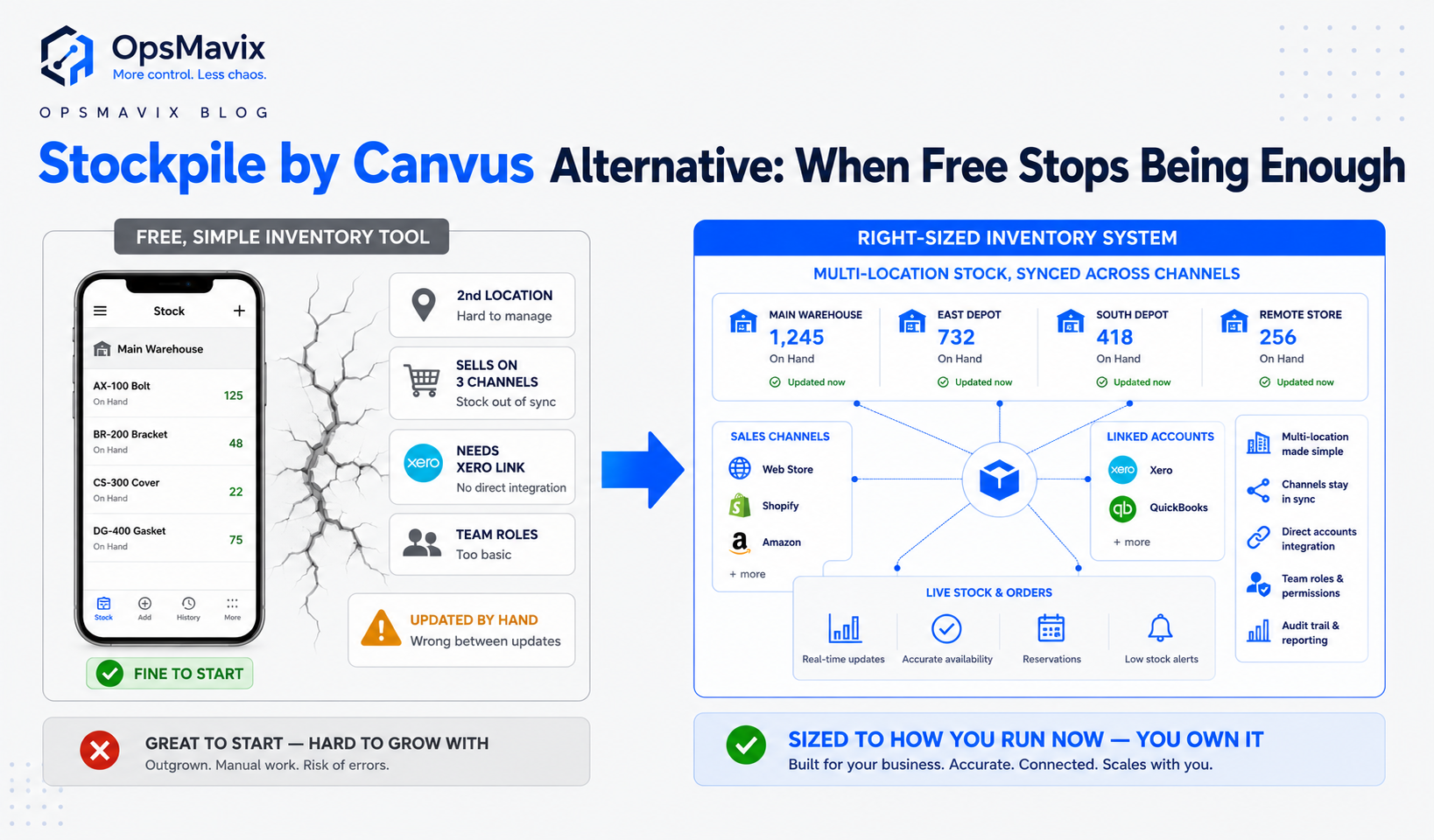
Stockpile by Canvus Alternative: When Free + Simple Stops Being Enough
Stockpile by Canvus is free, simple and genuinely good for getting off paper. You go looking for a Stockpile by Canvus alternative when you outgrow it — multiple locations, stock that has to stay right across channels, links to your accounting and orders, roles for a growing team. The honest answer isn't another free app. It's a right-sized system shaped to how you actually run, that you own.
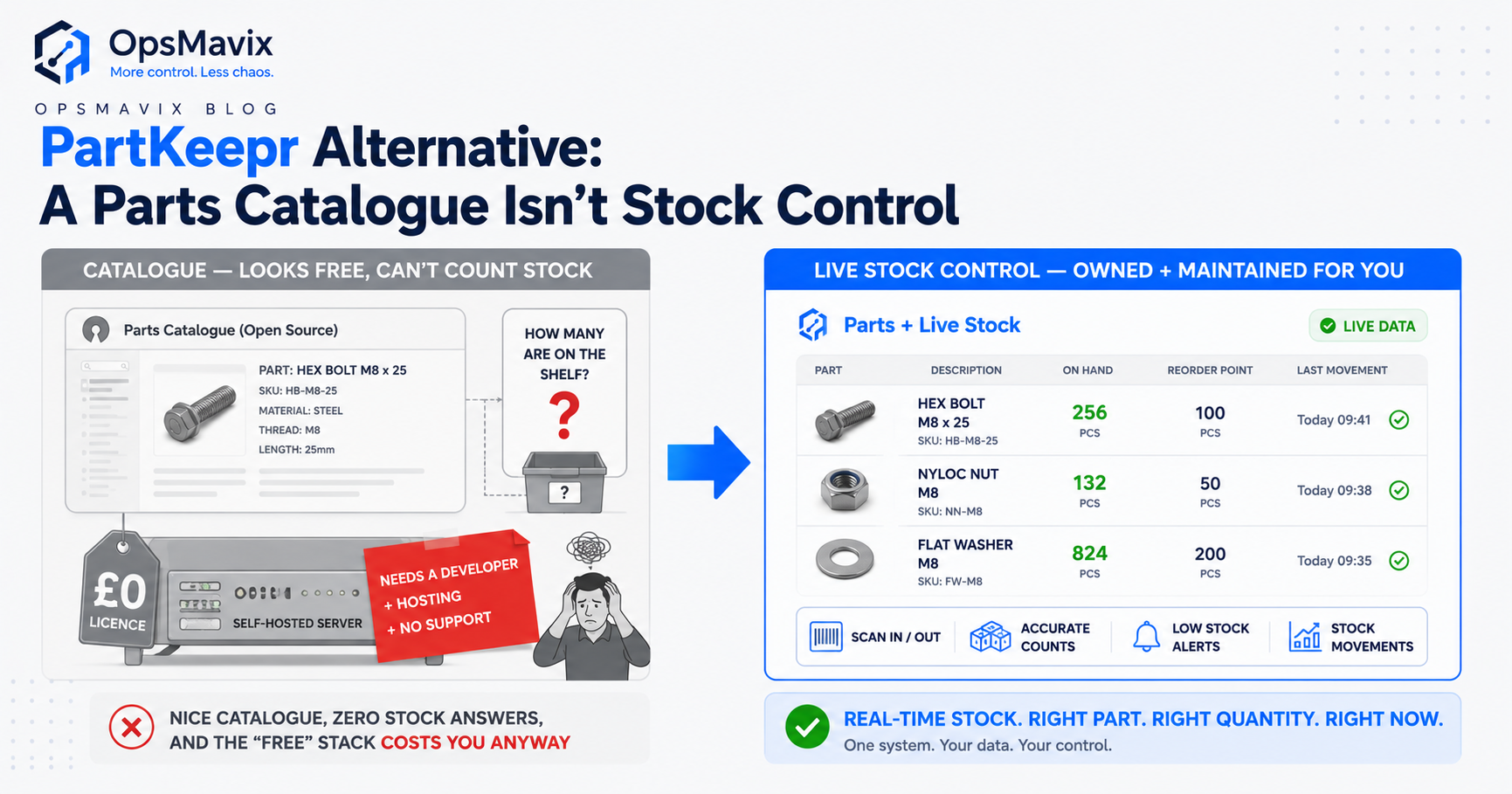
PartKeepr Alternative: When Free, Self-Hosted Parts Inventory Isn't Free
PartKeepr is free, open-source, self-hosted parts inventory — no licence fee, which is exactly why the real cost hides. Here's where the bill lands (a developer to install and host it, security, support you own), when it genuinely fits, and what a right-sized built-for-you stock system does that DIY can't.
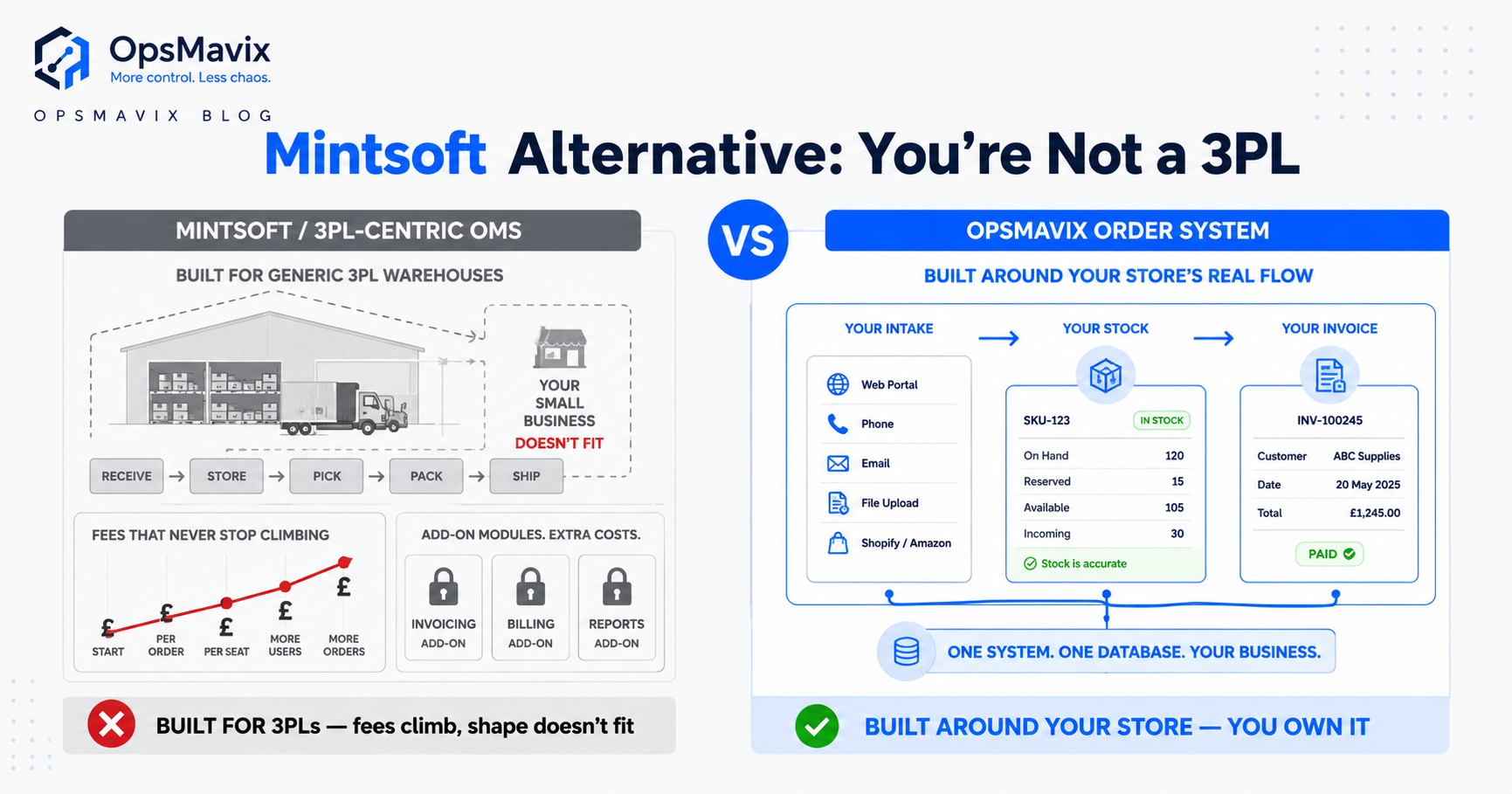
Mintsoft Alternative: When You're Not a 3PL and Want It Shaped to You
Mintsoft is built for 3PLs and multichannel sellers who fit its order-and-warehouse template. The trouble starts when you're not a 3PL, your flow doesn't match, and per-order pricing climbs as you grow. Here's where it fits, when you've outgrown it, and what a system built around your operation does instead.
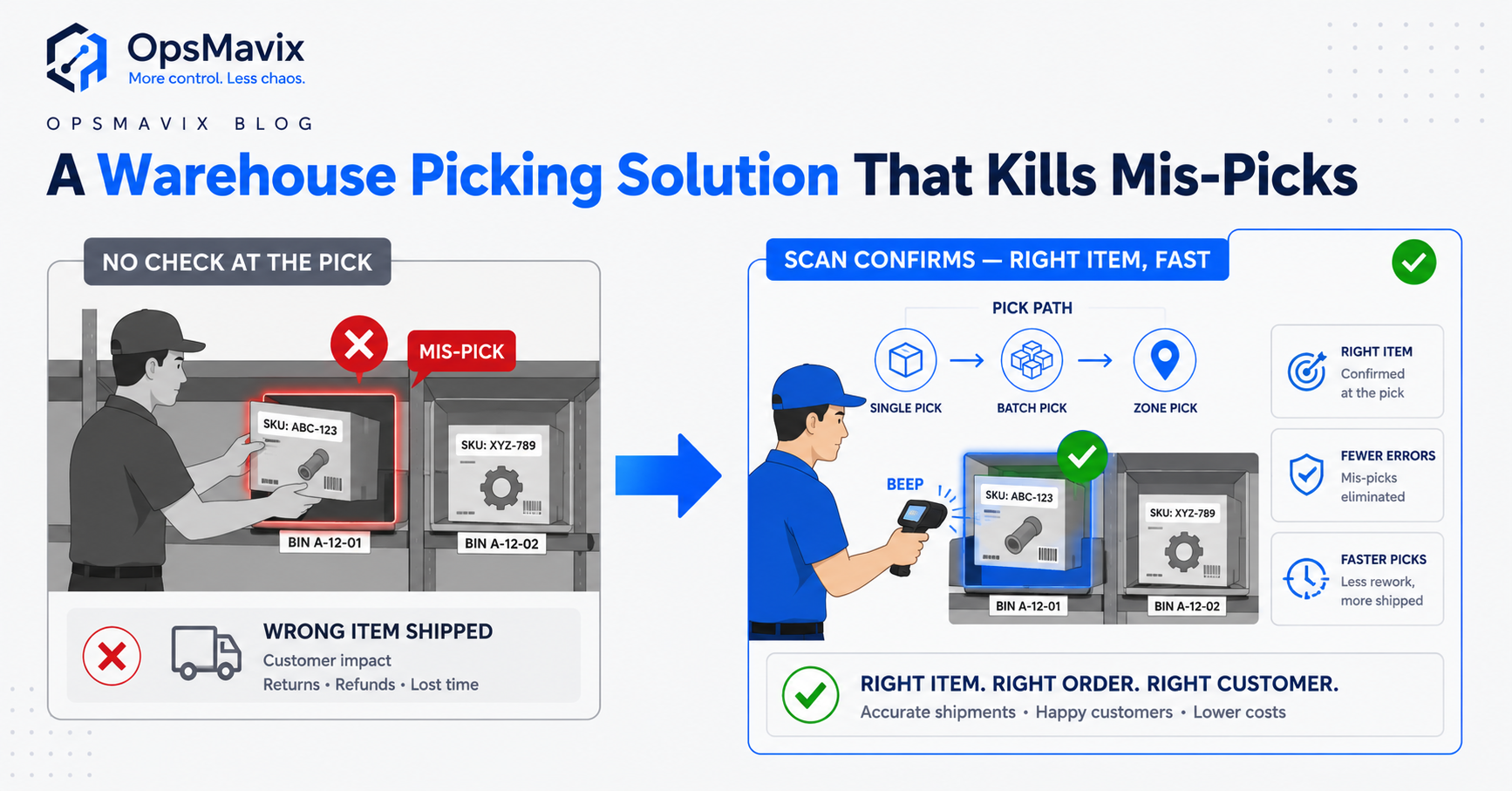
Warehouse Picking Solution: Cut Mis-Picks and Speed Fulfilment
A warehouse picking solution is the workflow that gets the right item into the right box, fast — not another stock report. Here's how single, batch, zone and wave picking actually differ, why scanners kill mis-picks, and when off-the-shelf software fights your floor versus a system built around the warehouse you already run.