
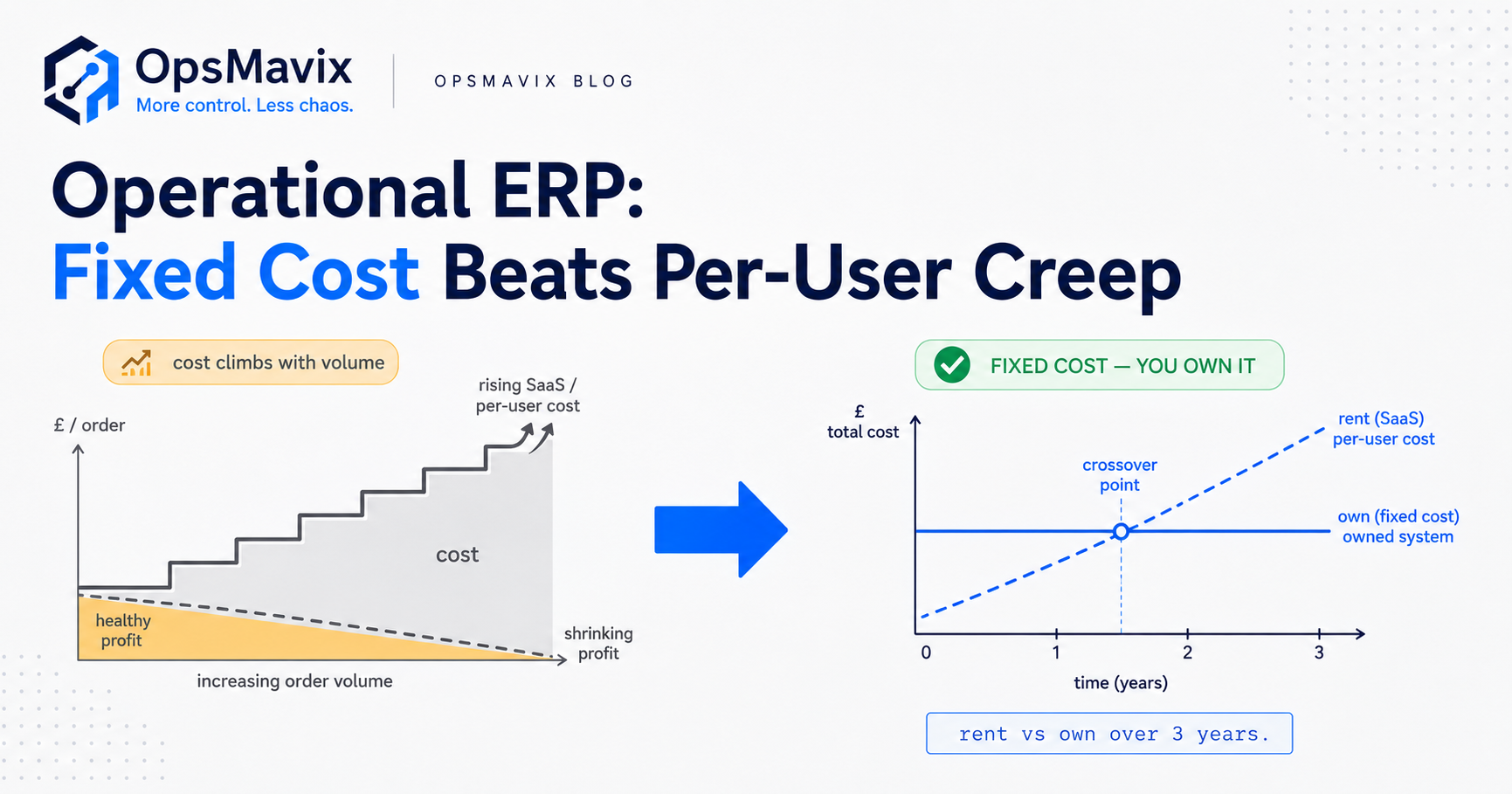
Mintsoft Pricing: What It Really Costs as You Scale
Mintsoft pricing is built around throughput — priced by order volume, banded tiers and paid modules rather than a flat licence — so the model stays cheap at low, steady volume and quietly turns a growing 3PL's success into a rising bill. Here's how the pricing structure actually works, the costs that never show on the headline quote, why per-order pricing fights a fulfilment operation as it scales, and the three-year point where a fixed-cost system you own becomes the cheaper answer than the one you rent.
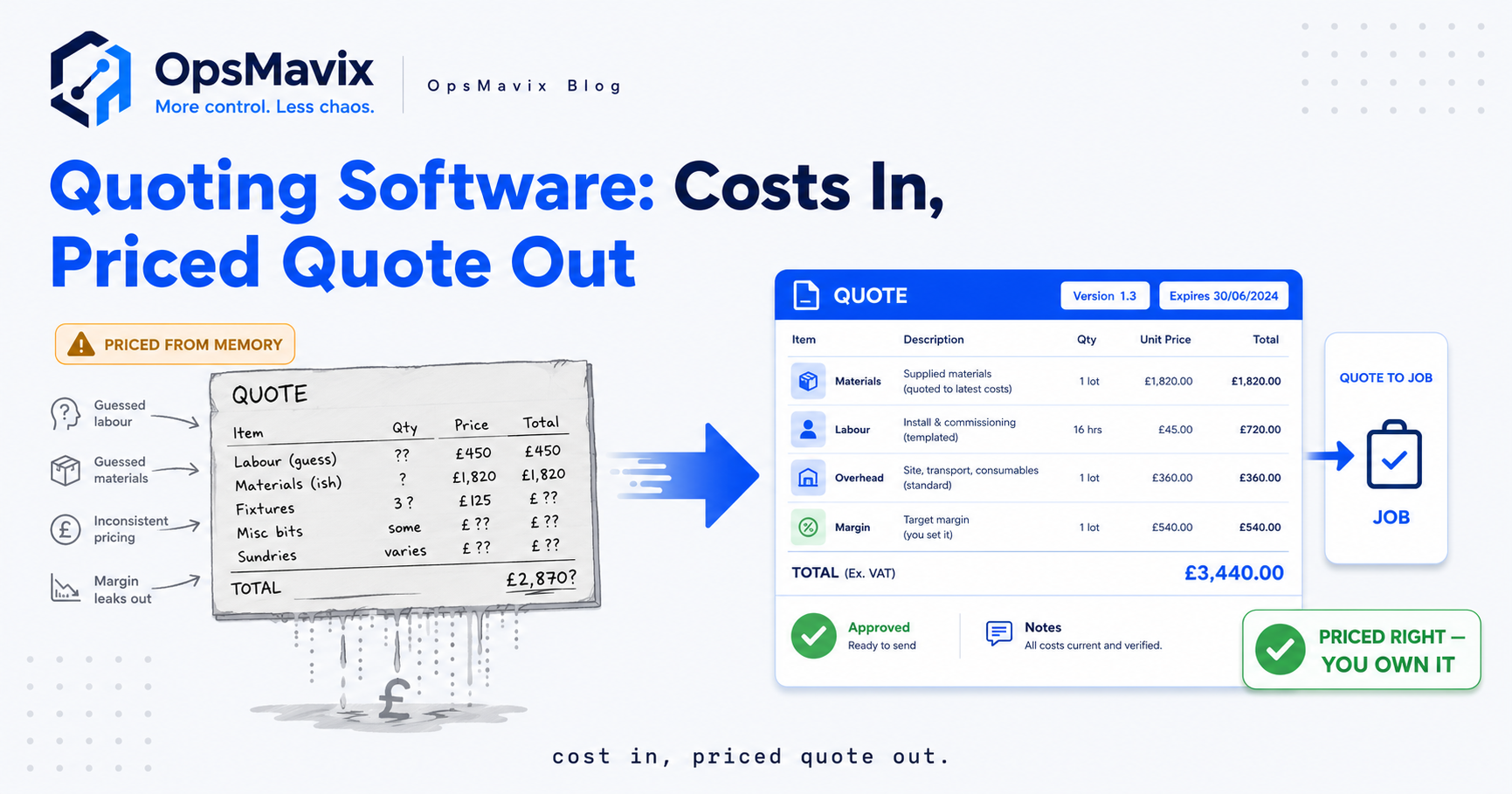
What Is Quoting Software? What It Does and Who Needs It
What is quoting software? It's the tool that turns your real costs and catalogue into consistent, priced quotes, controls versions, expiry and discount approvals, and hands the won quote straight to the job without re-keying. Here's what it does, how it differs from estimating, and who actually needs it over a spreadsheet.
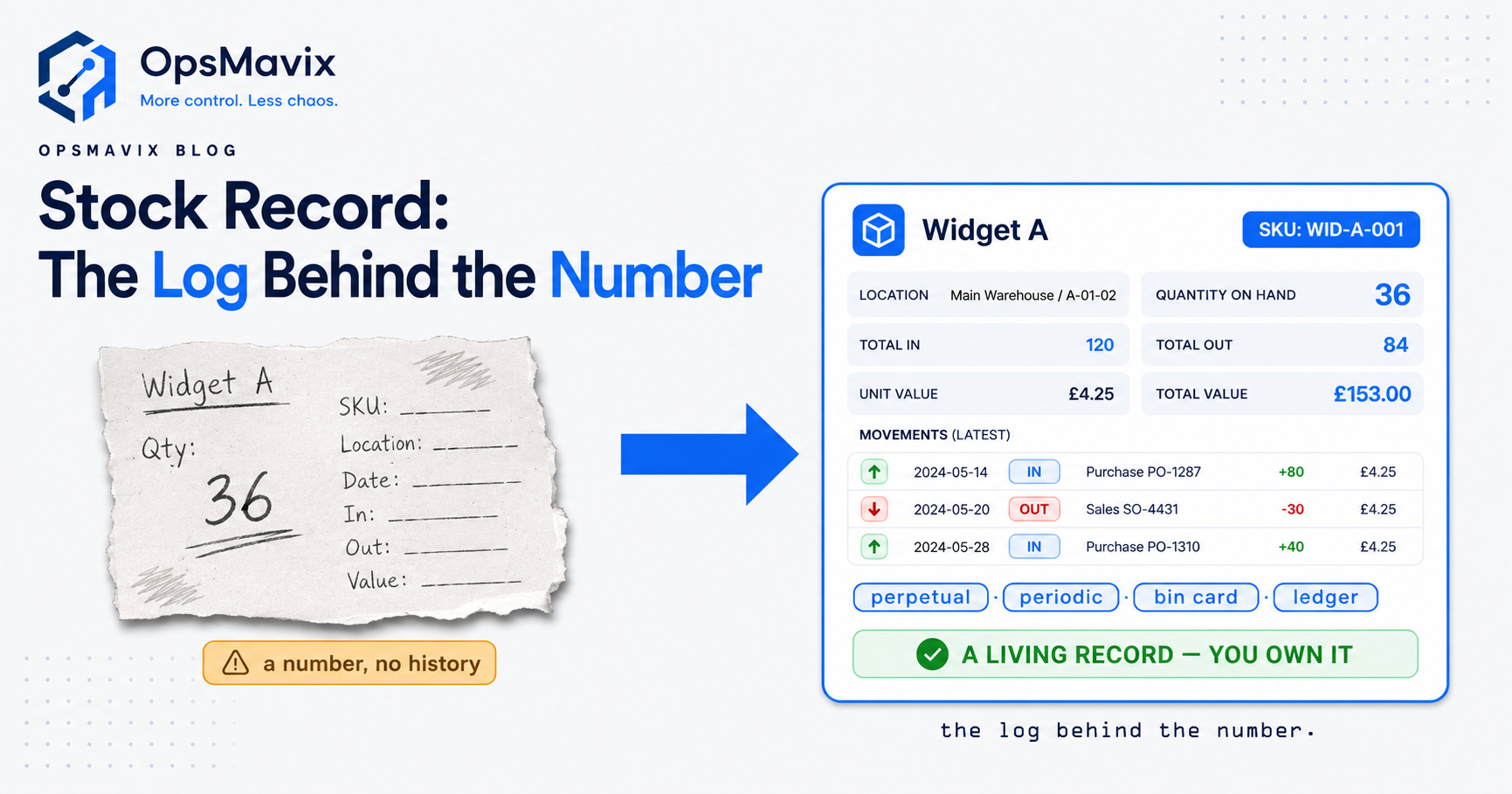
What Is a Stock Record? Contents, Types and Why It Matters
What is a stock record? It's the per-item log of what you hold, how it has moved, and what it's worth. Here's what a good stock record contains, the main types (perpetual vs periodic, the stock record card, bin card and stock ledger) and where most fall short of the shelf.
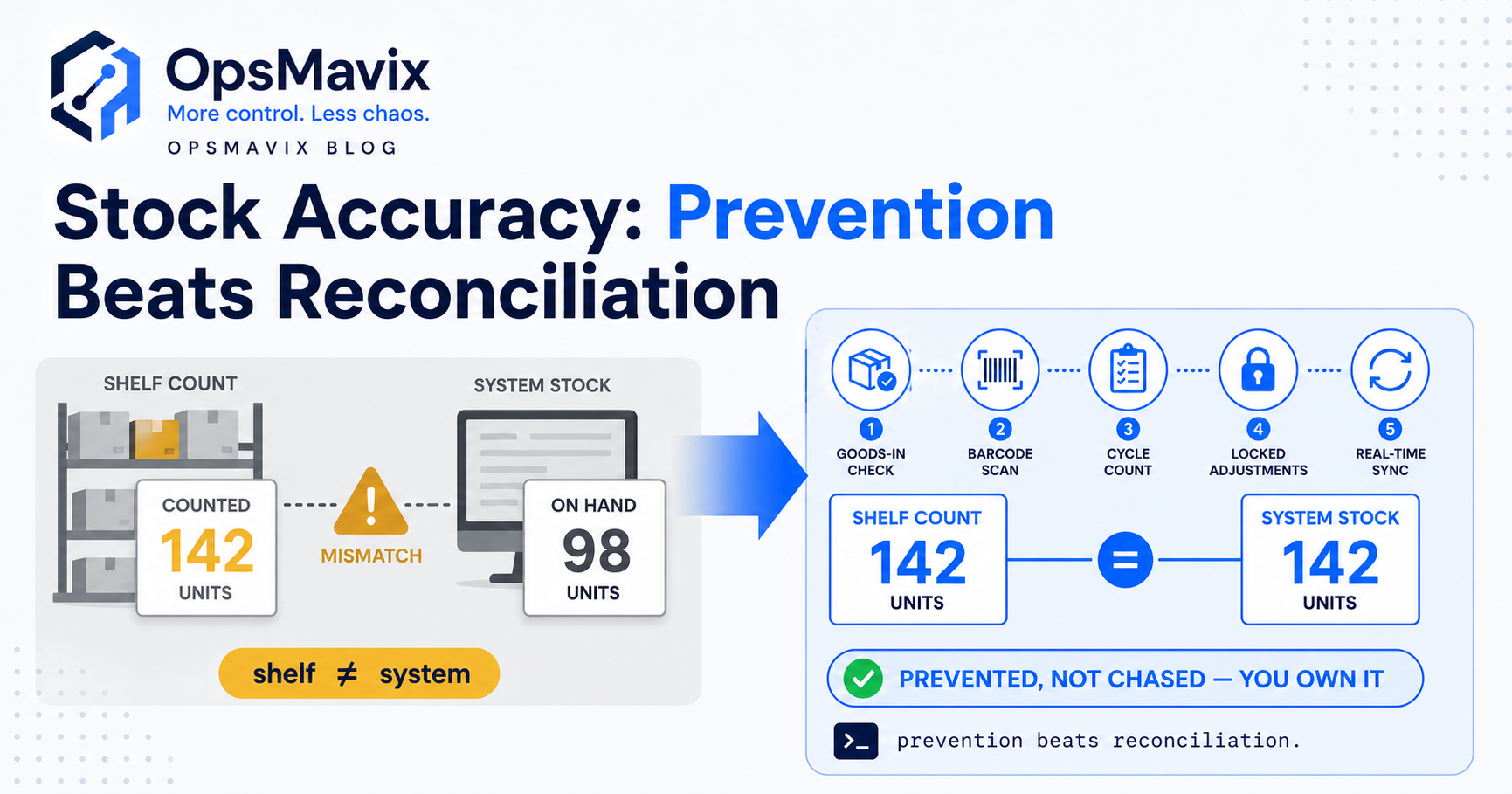
How to Prevent Stock Discrepancies Before They Cost You
Prevention beats reconciliation. This is the practical playbook for how to prevent stock discrepancies — accurate goods-in, scan capture instead of manual entry, cycle counting to catch drift early, locked-down adjustments, and one real-time source of truth. It covers why a spreadsheet structurally can't do it, and the honest exception where a tiny operation still can.
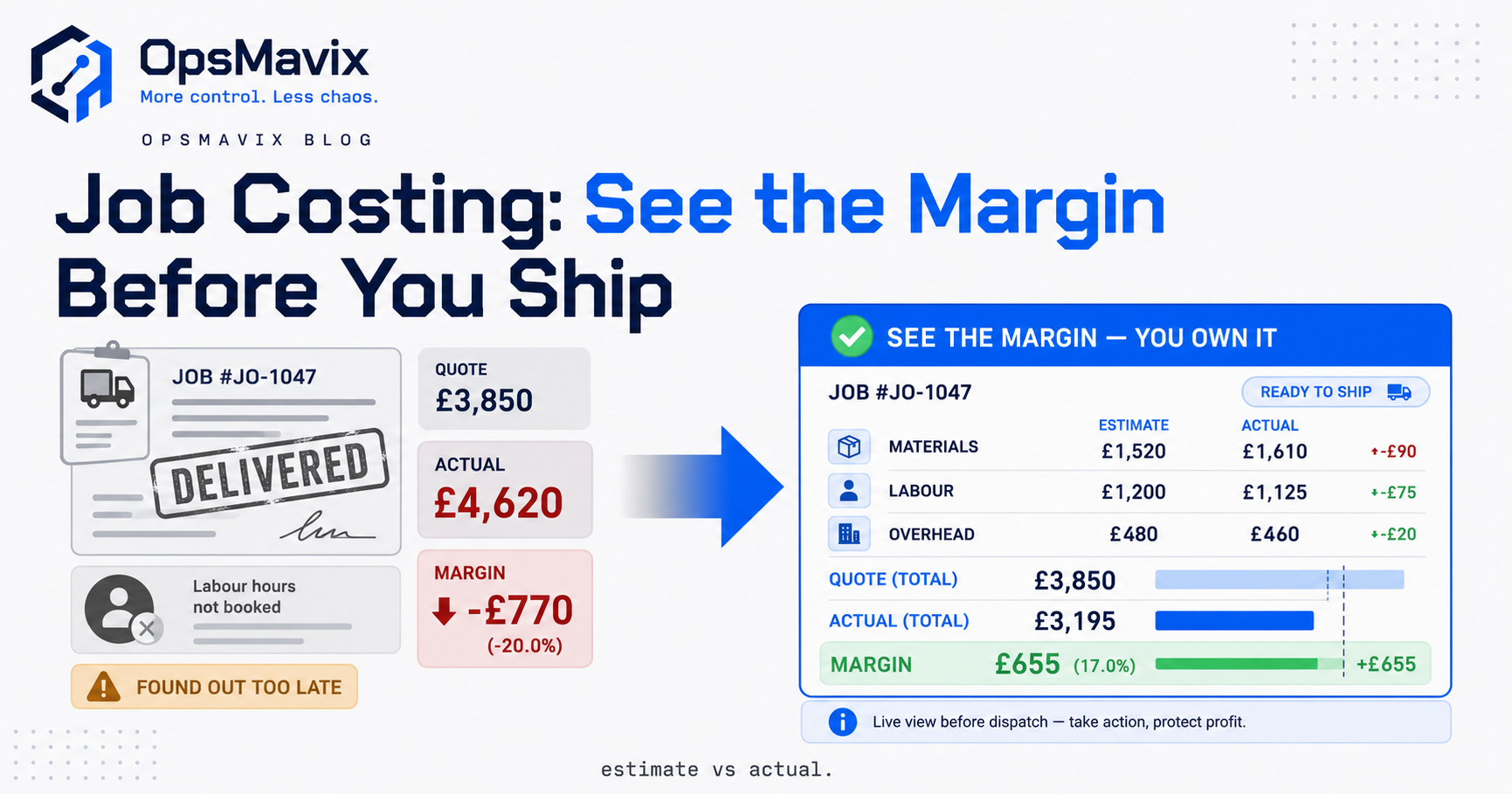
What Is Job Costing? Tracking the True Cost of Every Job
What is job costing? It's tracking the actual cost of one specific job — its direct materials, direct labour and share of overhead — so you can hold what the job really cost against what you quoted. Here's the concept, the three cost components, and why the estimate-vs-actual gap is the whole point.
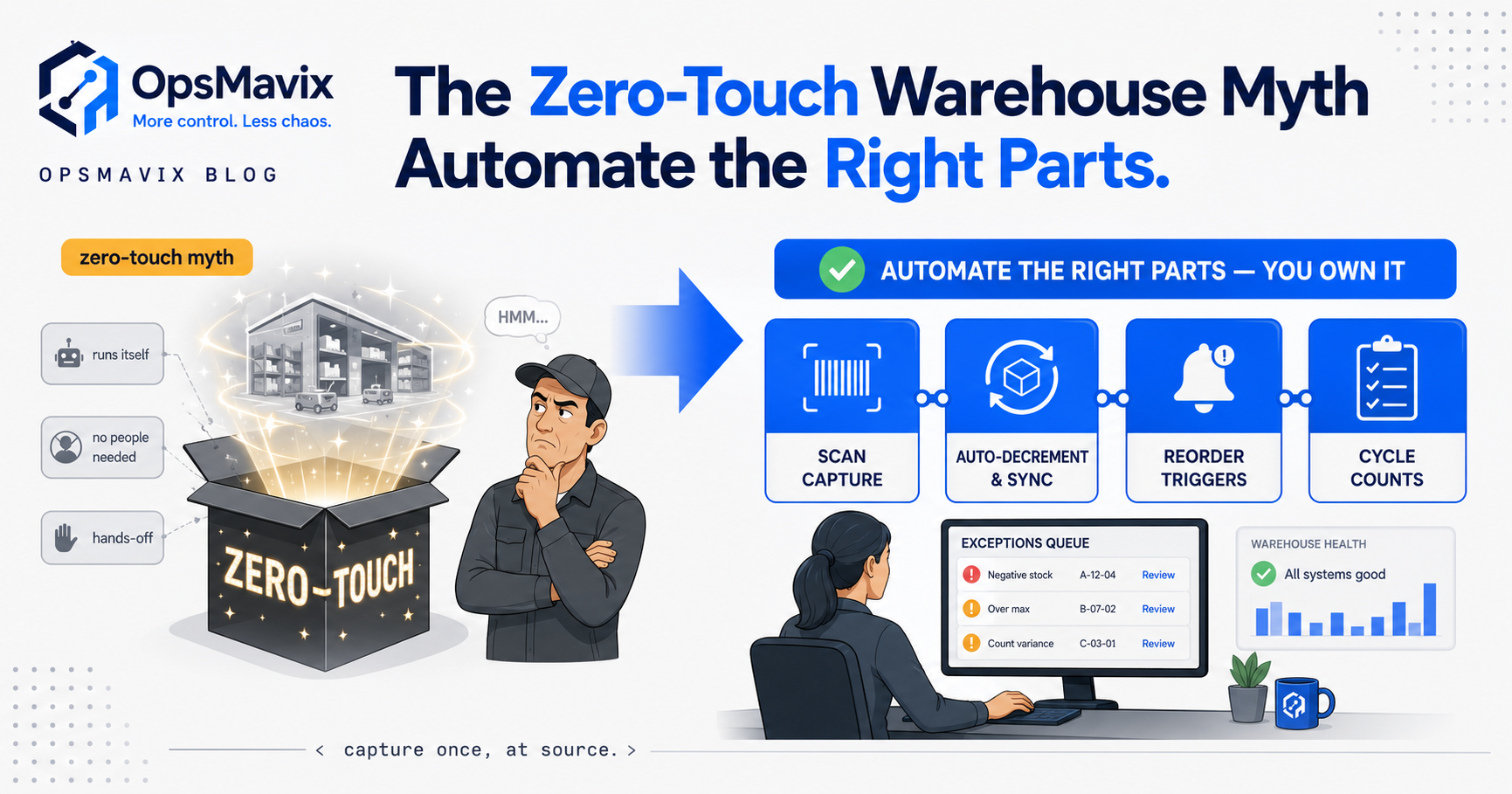
Fully Automated Inventory System: What's Real, What's Marketing
A "fully automated inventory system" is mostly a marketing phrase — no serious stock operation runs with zero people. But a lot genuinely does automate: capture, decrement on sale, channel sync, reorder triggers and cycle counts. Here's an honest map of what's real, where automation quietly fails, where humans must stay in the loop, and how to build it around your actual flow instead of buying hands-off magic that doesn't survive contact with a real warehouse.
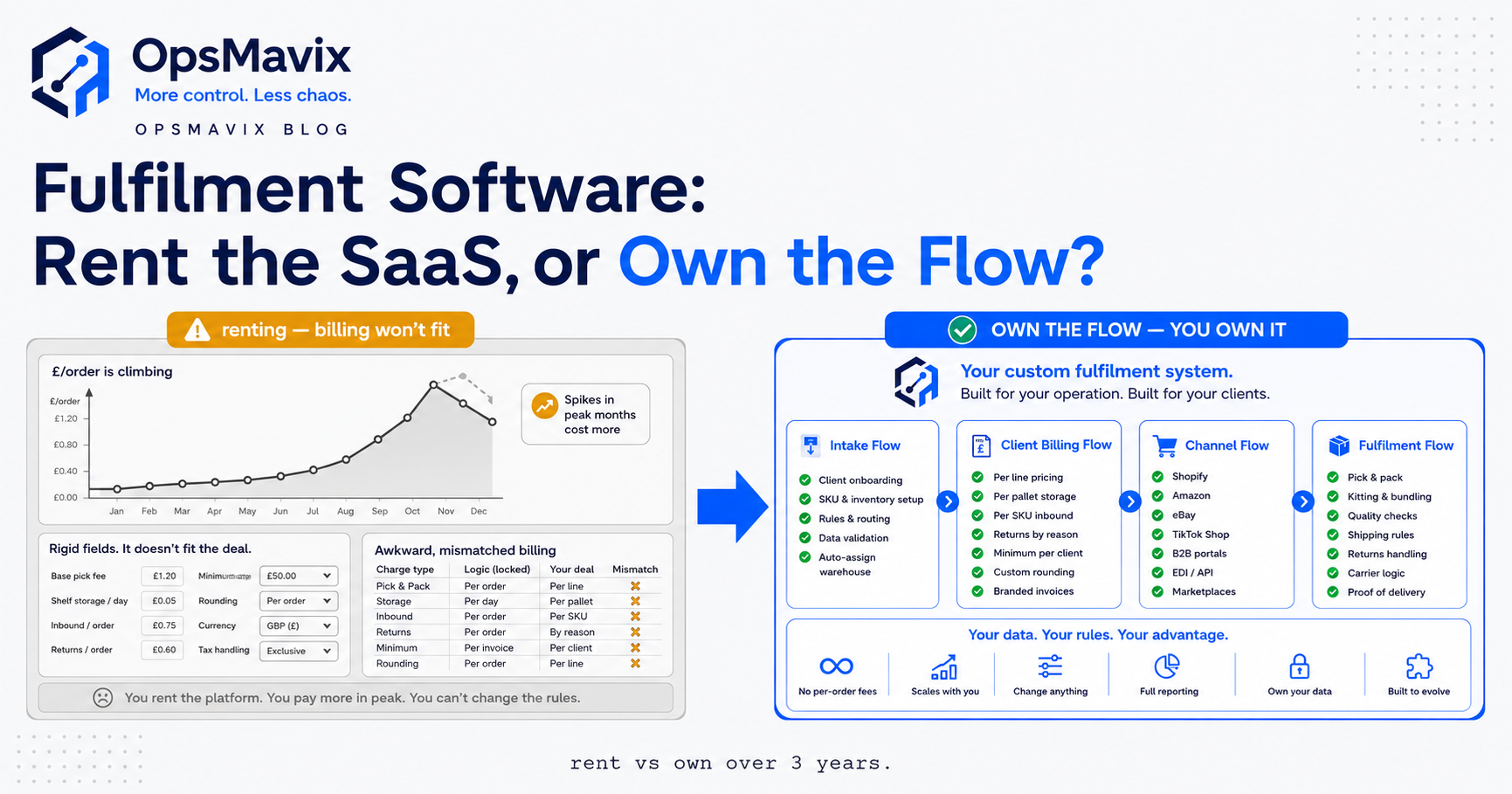
Fulfillor Alternative: When a 3PL Outgrows Rented Fulfilment Software
Fulfillor is capable fulfilment software for 3PLs and multichannel sellers — but you rent it, and you bend your billing and workflows to fit it. Here's where it's the right call, the signs a fulfilment house outgrows it, and what owning your exact intake, billing and channel flow changes.
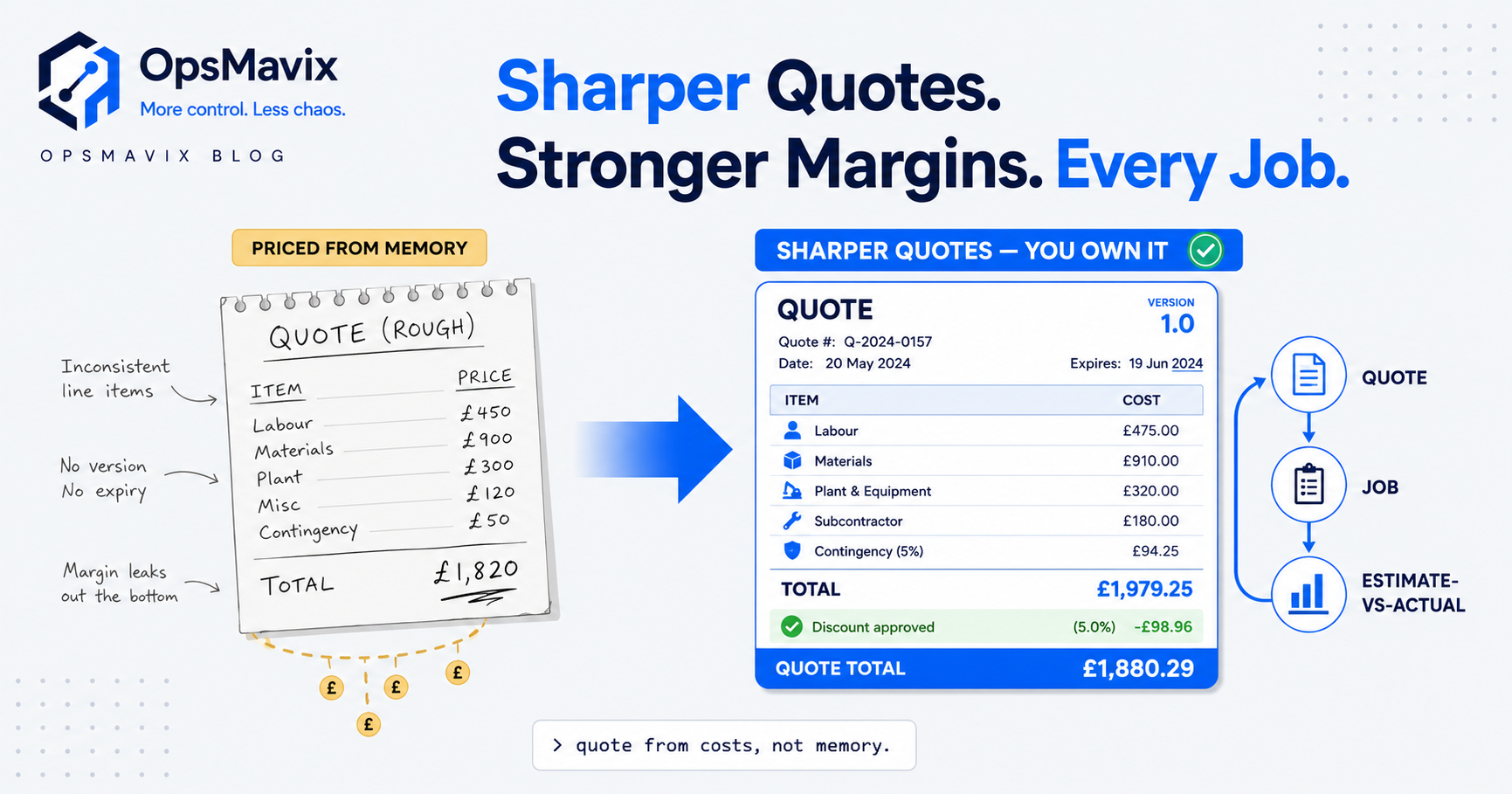
Quoting Software Best Practices: Win More, Leak Less Margin
Quoting software best practices come down to one idea — good quoting is a discipline, not a document. Quote from current costs instead of memory, keep line items consistent, control versions and expiry, put a rule on discounts, and close the loop from quote to job to estimate-vs-actual so the next quote is sharper. The software only matters insofar as it enforces those habits. Here's the practice, step by step.
Multi-Location Inventory Rebalancing: Getting Stock Where Demand Is
A stockout at the shop while the same SKU gathers dust at the warehouse two counties over — that's a rebalancing failure, not a buying one. Multi-location inventory rebalancing is the act of moving stock between sites so the right quantity sits where demand is. Here's how to decide what to move, track it in transit, and know when the handling cost isn't worth it.