
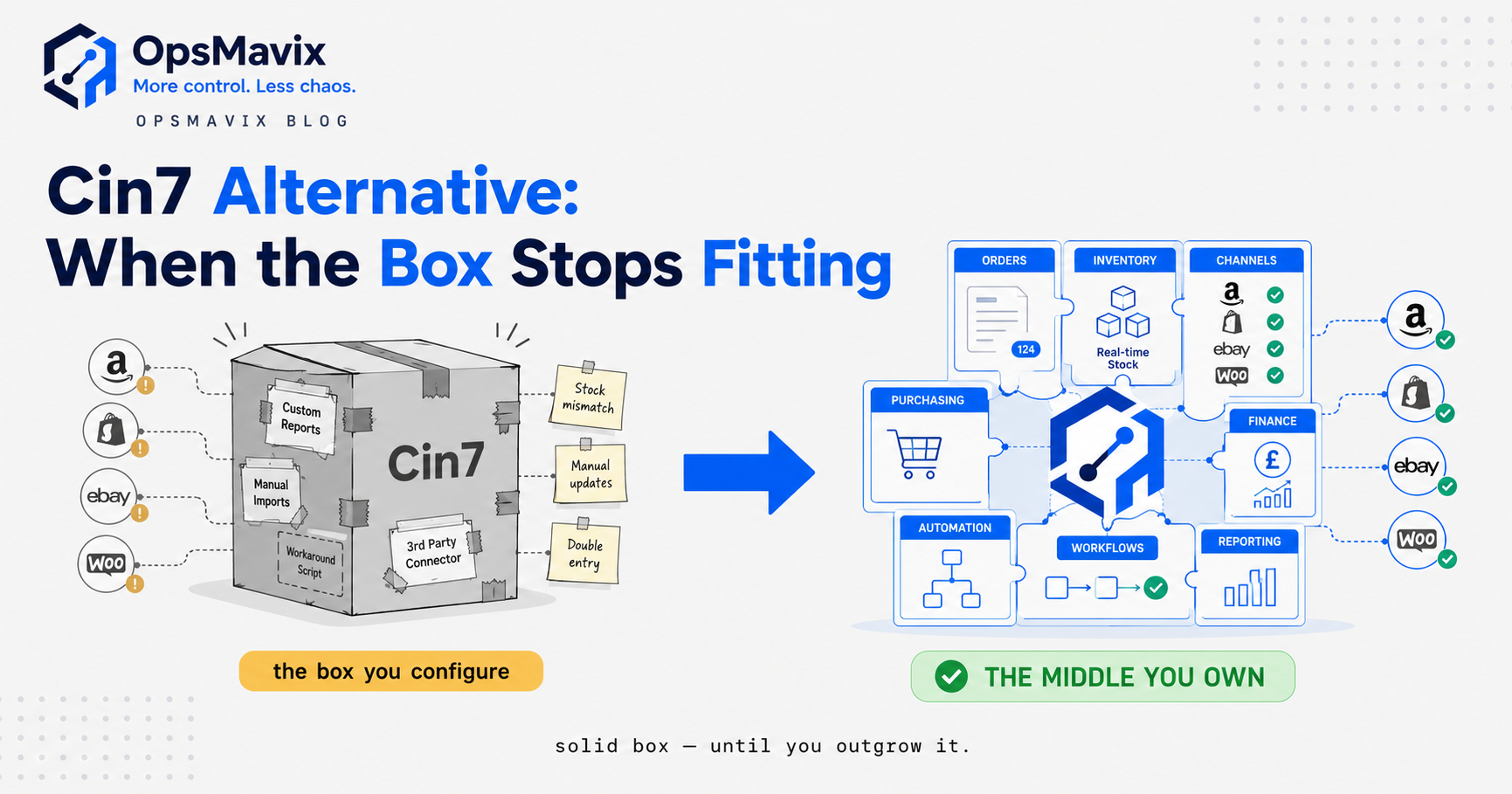
The Cin7 Alternative for Businesses Stuck Between a Spreadsheet and an ERP
If you're hunting for a Cin7 alternative, the real question isn't which inventory tool is "better"; it's whether you need a packaged product or a system shaped around how your operation actually runs. Cin7 is strong for standard multichannel stock and orders, but it strains when your process doesn't fit its mould.
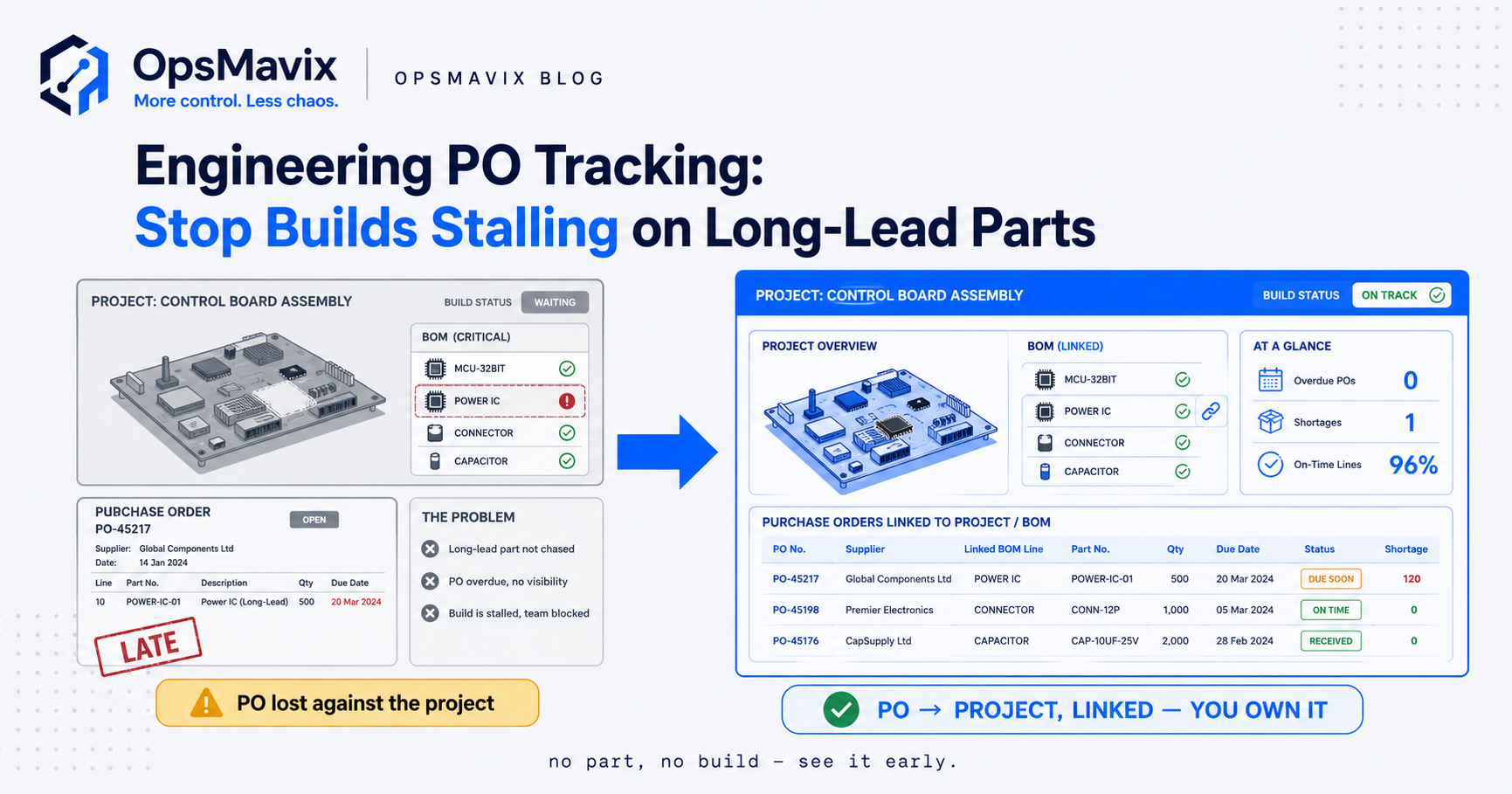
Engineering PO Tracking System: Long-Lead Items That Stall a Build
For engineer-to-order firms, a purchase order isn't a stock top-up — it's a long-lead item a whole project is waiting on. An engineering PO tracking system ties every open PO to the project and BOM it feeds, so a supplier slipping is a flagged build risk months out, not a surprise at assembly. Here's what that link gives you that a general PO log can't.
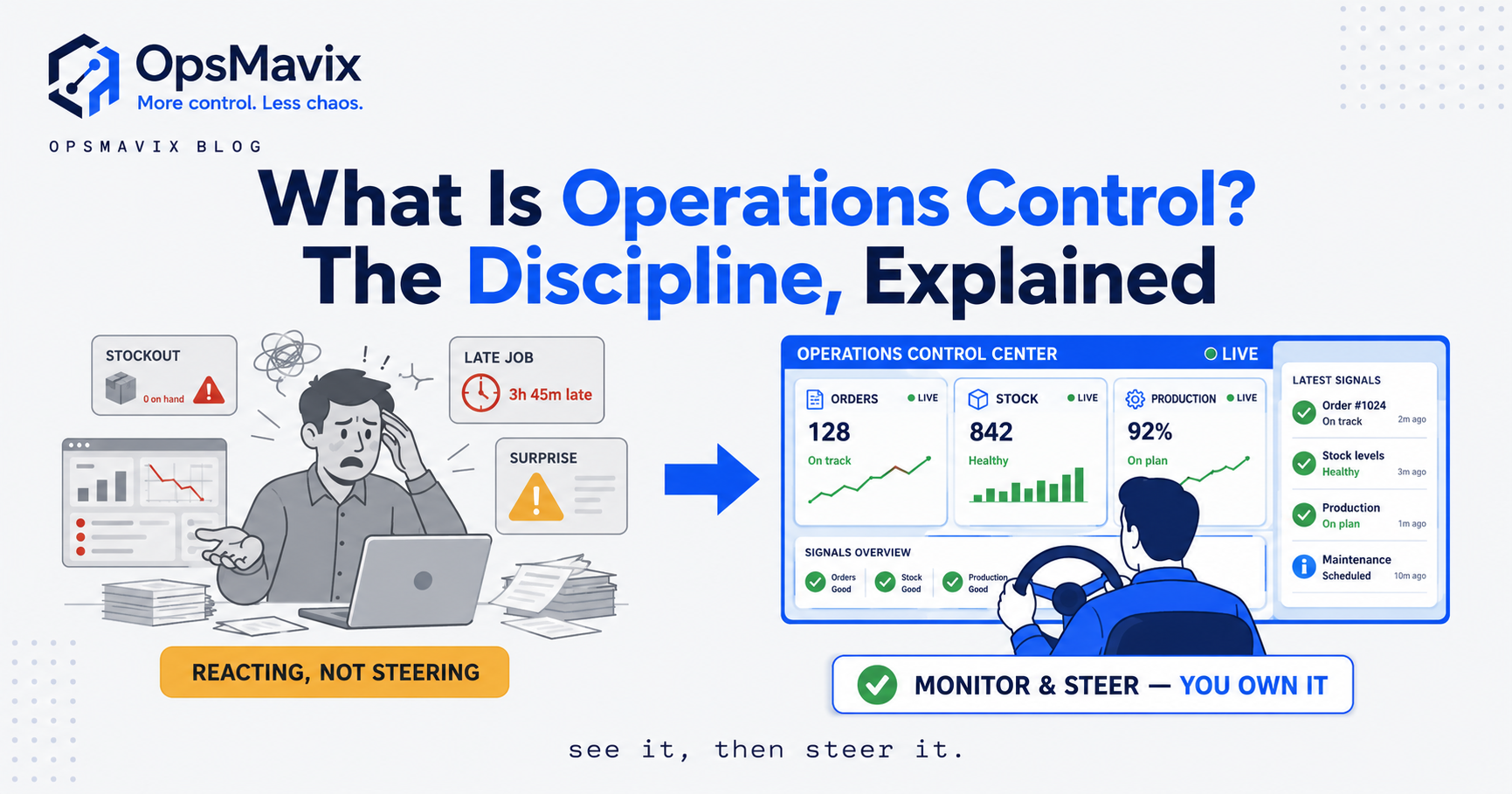
What Is Operations Control? A Guide to Controlling Operations
Operations control is the practice of monitoring what your daily operations are actually doing and steering them back on track when they drift. This post defines it as a discipline — not a piece of software — walks the loop it runs on, and shows why most growing businesses do it badly without realising.
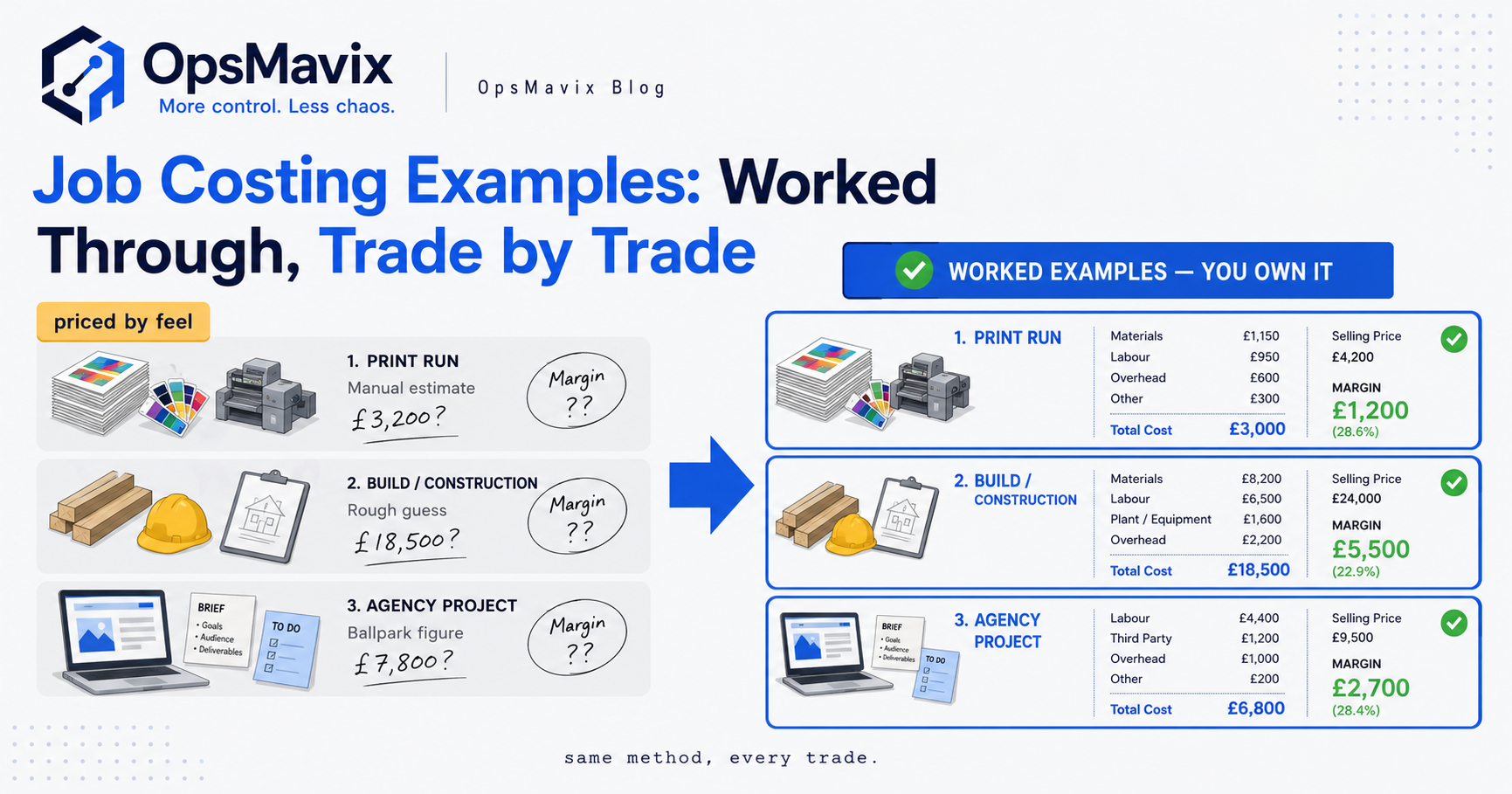
Job Costing Examples: Worked Numbers From Print, Construction and Agency Jobs
Three fully worked job costing examples from a print run, a construction job and an agency project. Each one shows the labour, materials and overhead maths, and where the quoted margin quietly disappears in real jobs.
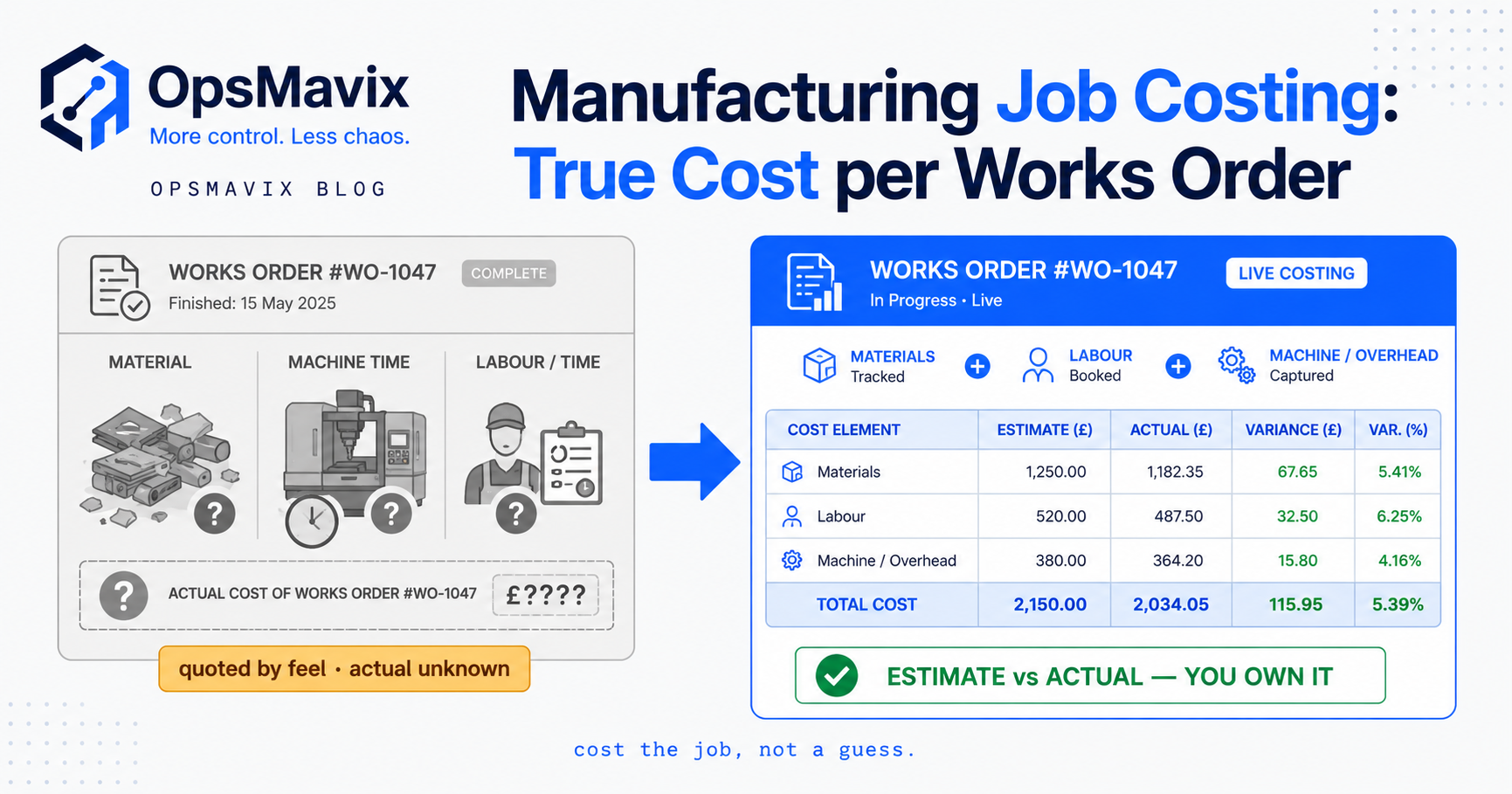
Manufacturing Job Costing: Materials, Labour and Machine Time Per Works Order
Manufacturing job costing is the practice of costing a single works order by its materials, its labour hours and its machine and overhead time, then comparing that estimate to what the job actually consumed on the floor. This post covers the machine-hour piece most guides skip, how to track work in progress, and why the estimate-versus-actual gap is where your real margin lives.
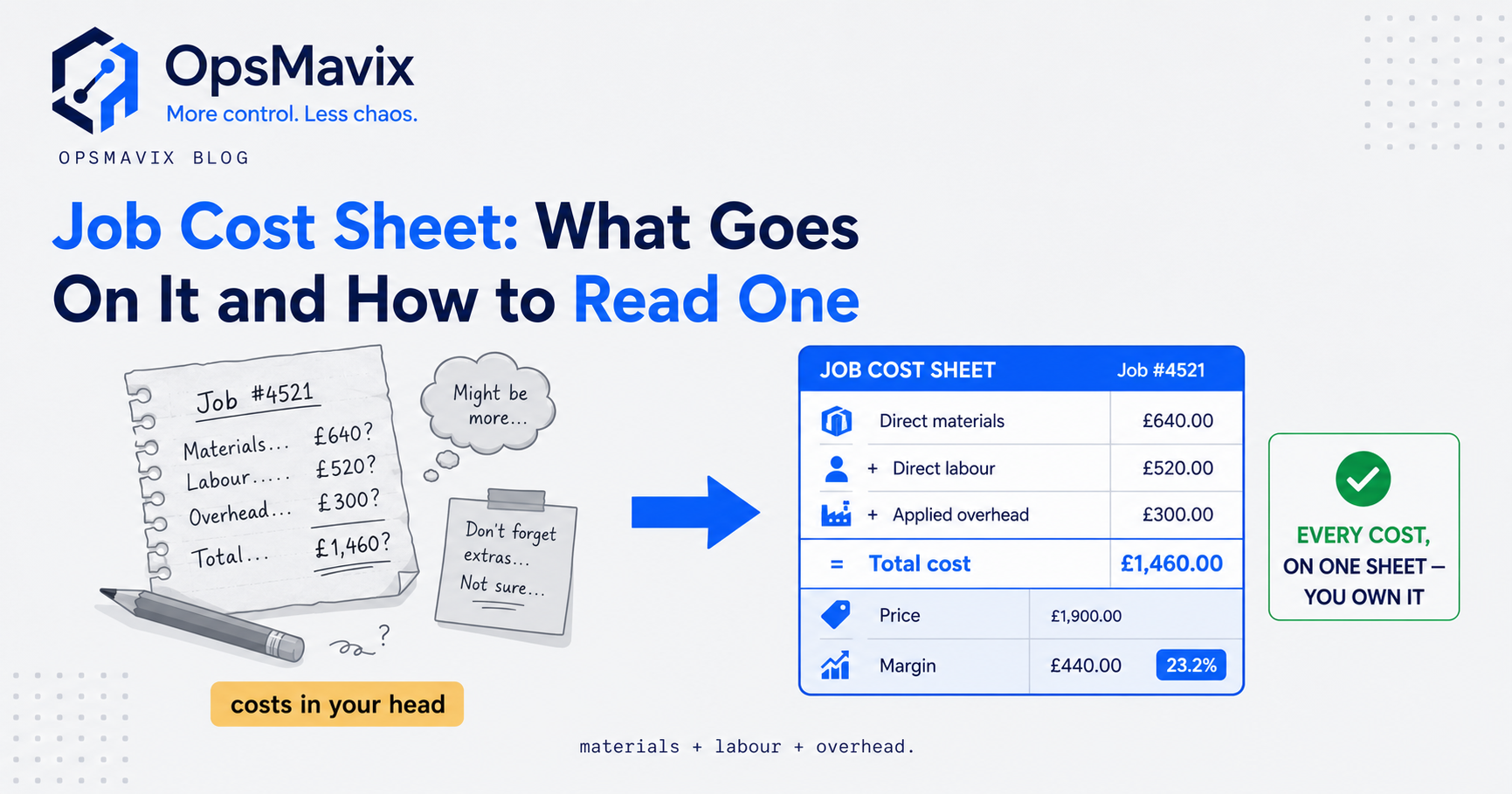
The Job Cost Sheet Explained: Line Items, Layout and a Worked Example
A job cost sheet is the single document that gathers every direct material, direct labour hour and overhead cost charged to one specific job. This guide shows the exact line items, a worked layout you can copy, and where the numbers usually go wrong.
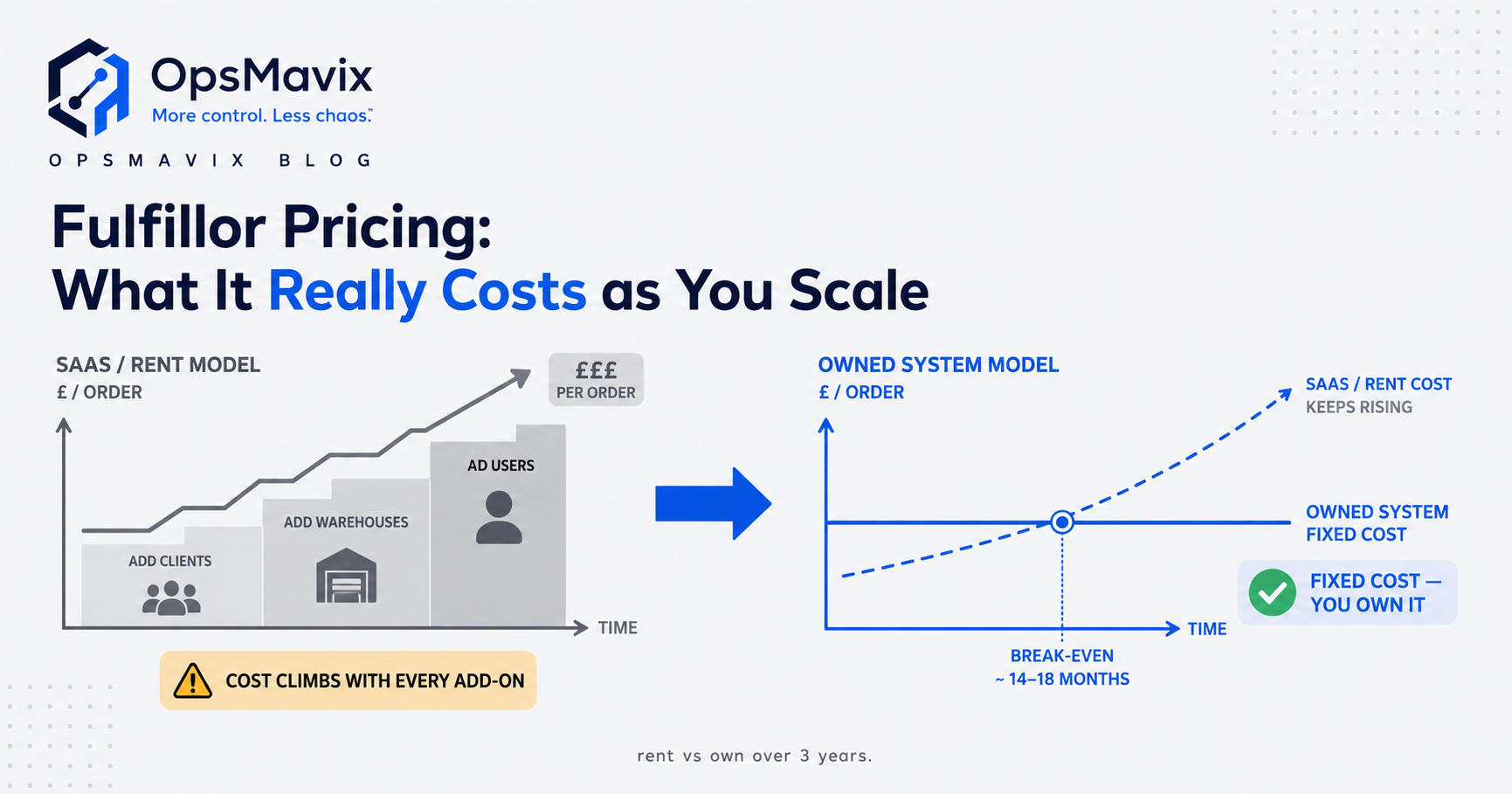
Fulfillor Pricing Explained: What It Really Costs to Scale
Fulfillor pricing is quote-based, with no public price list — tiers scale on monthly order volume, warehouse setup, users and client count. This breaks down how the model actually works and where the cost climbs as you grow.
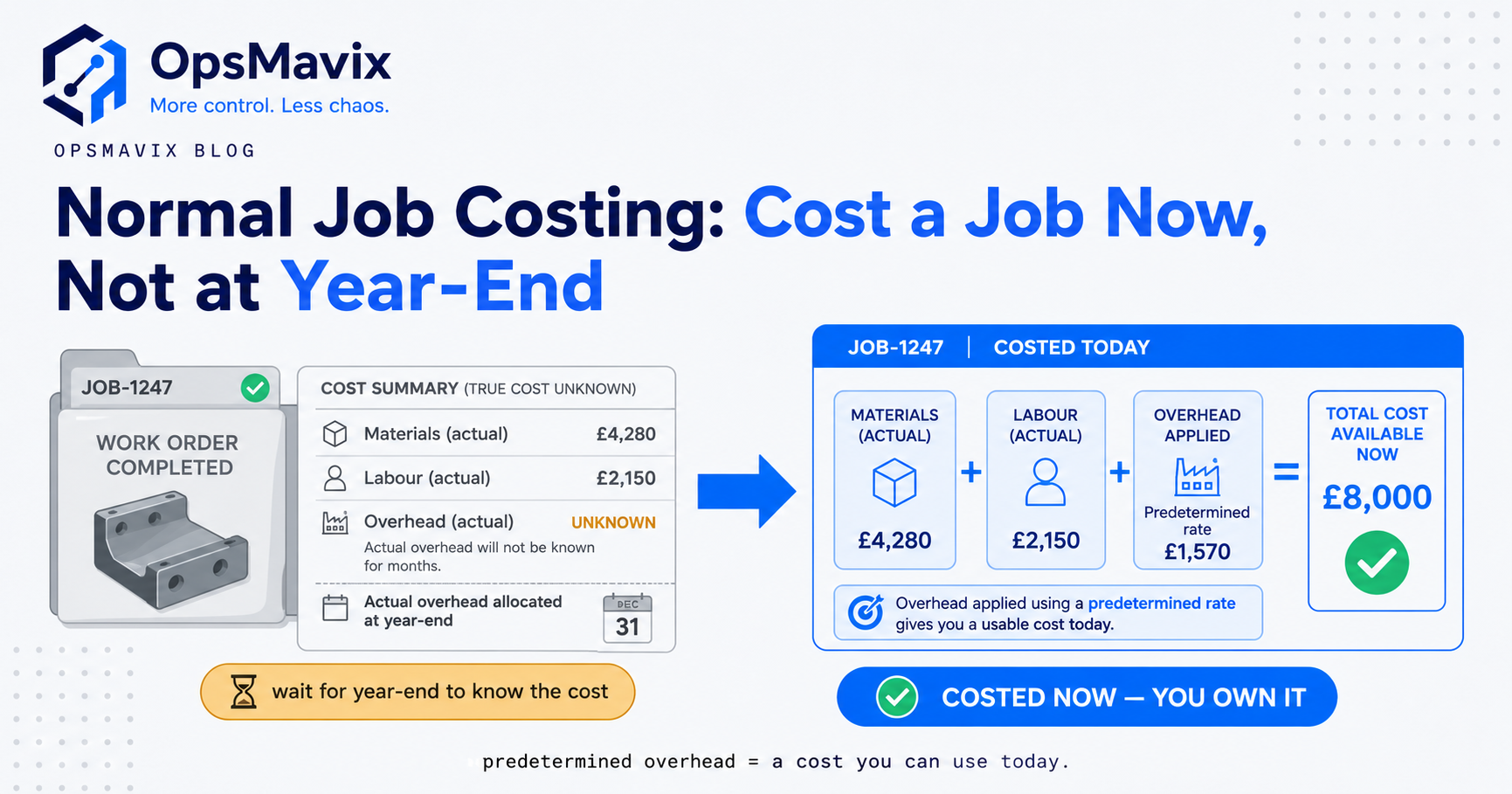
Normal Job Costing Explained: Actual Costs, Applied Overhead, and Why It Exists
Normal job costing charges each job with actual direct materials and actual direct labour, then applies overhead using a predetermined (budgeted) rate. It exists because real overhead figures arrive too late to price and invoice jobs on time. Here is how it works in practice and where the messy bits hide.
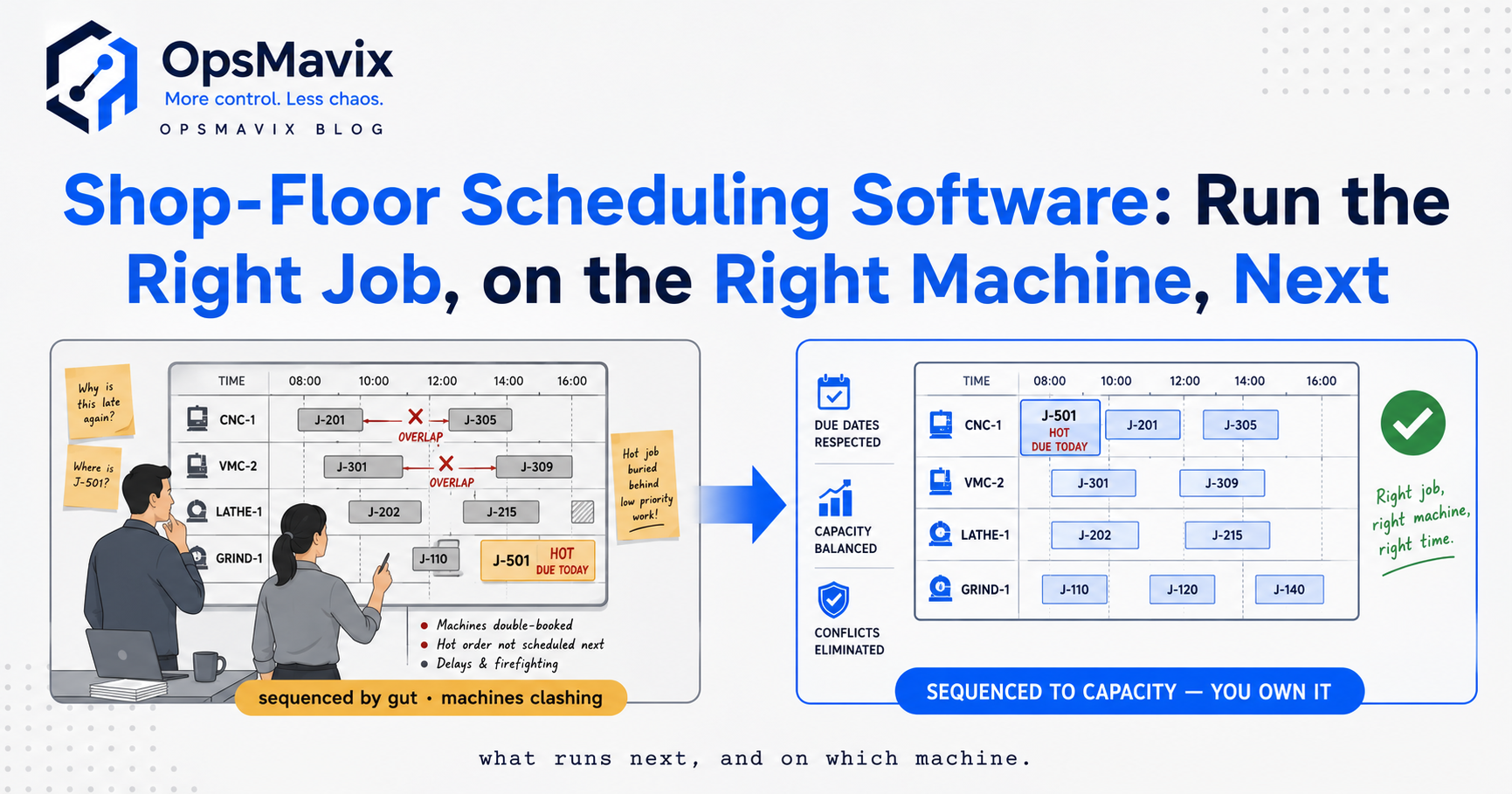
Shop Floor Scheduling Software: How to Decide Which Job Runs When
Shop floor scheduling software decides which job runs when, on which machine, against finite capacity and real due dates. It is not the same as tracking what is happening now. Here is what scheduling should do and where a spreadsheet quietly fails.