
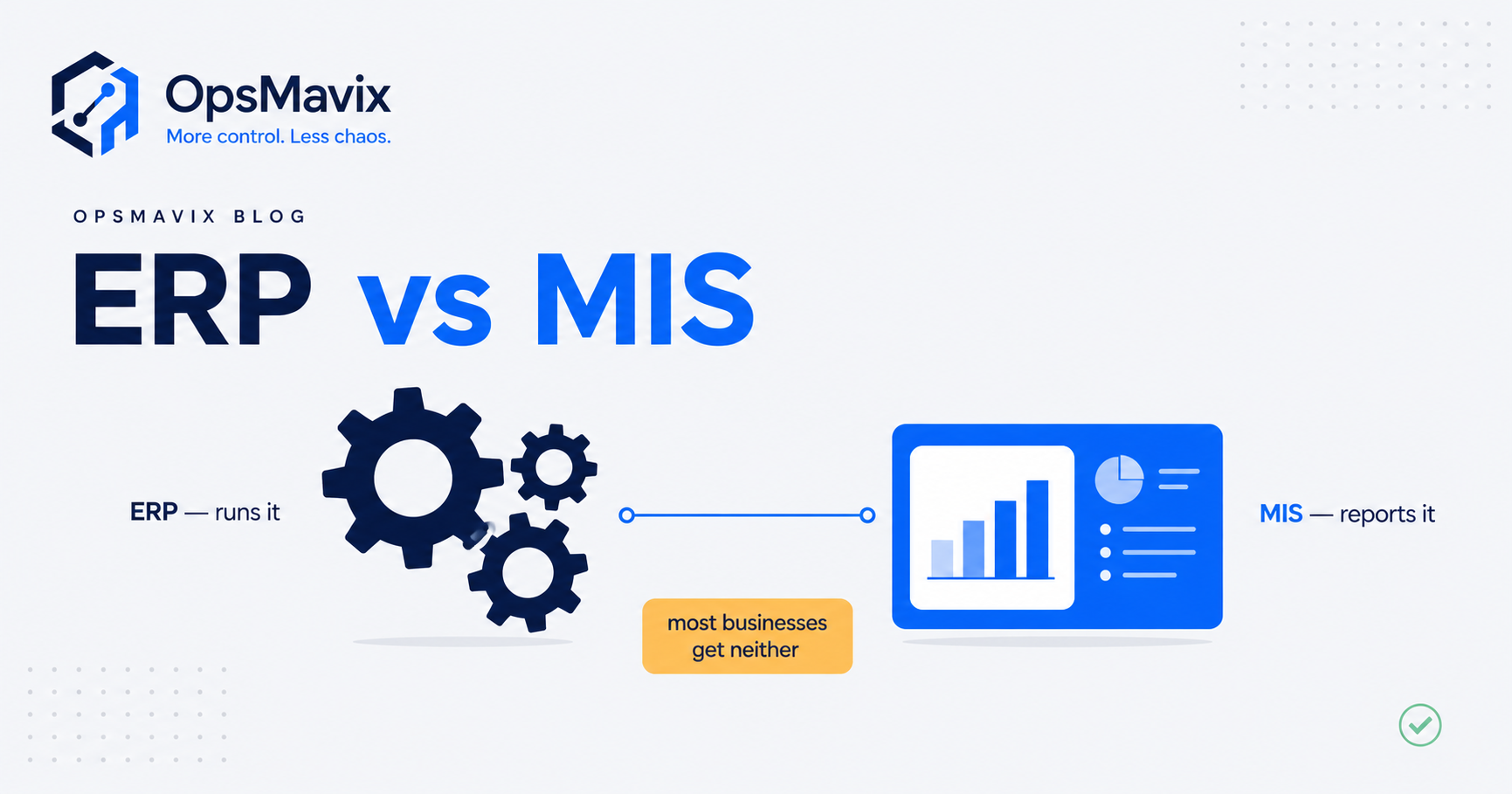
ERP vs MIS: What Is the Difference (and Which Do You Need)?
ERP and MIS are not rivals: one runs the work and one reports on it. An ERP is the transaction system of record; an MIS is the management information layer that turns those transactions into decisions. This guide defines both plainly, sets them side by side, and explains why most growing businesses conflate them and end up with neither working properly, and what a right-sized owned operations system does instead.
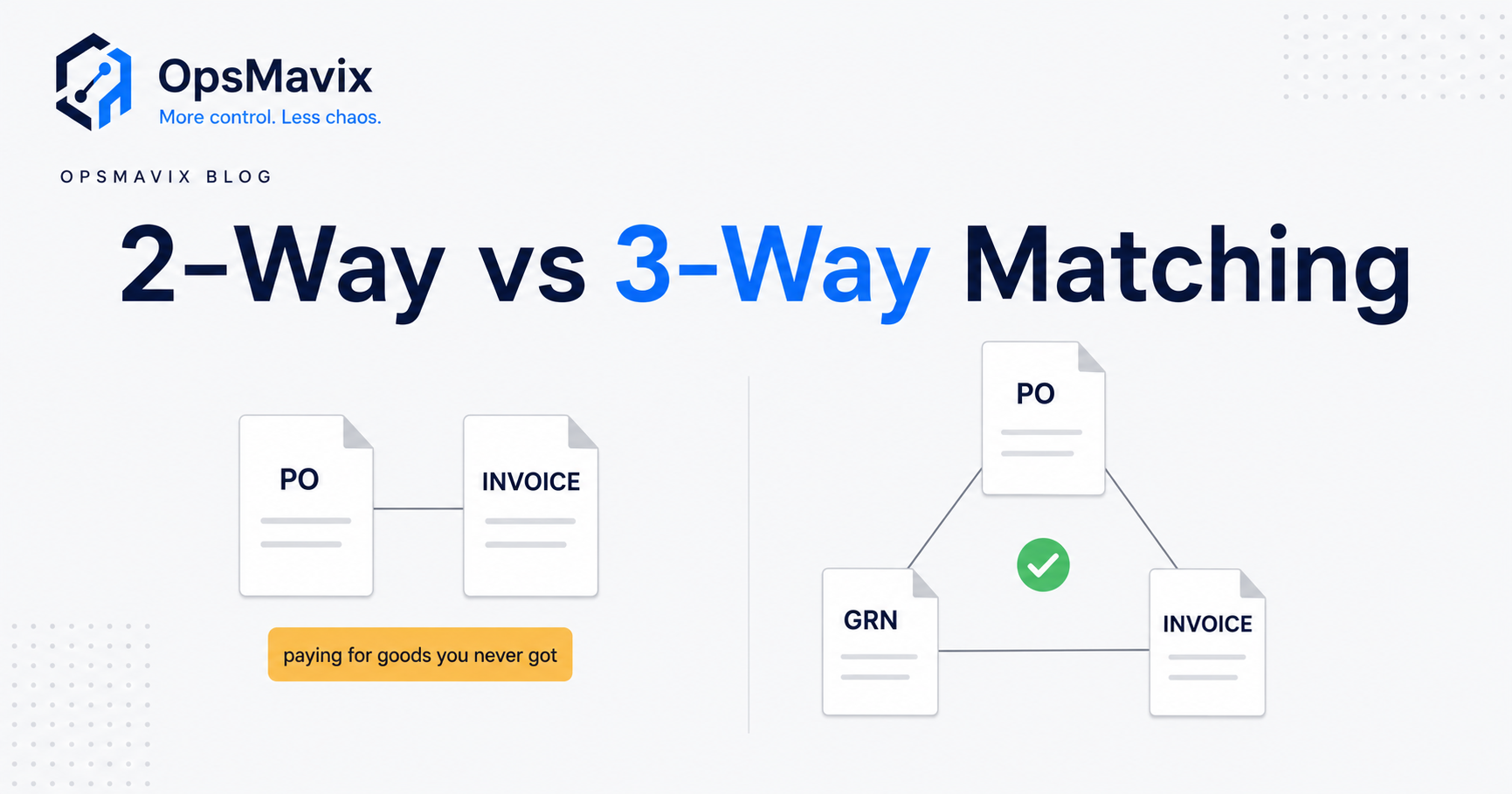
2-Way vs 3-Way Matching: Which Should You Use?
2-way matching compares the purchase order and the invoice; 3-way matching adds the goods received note so the bill has to agree with what physically arrived. This guide gives you a side-by-side table, the one gap that decides between them — paying for goods you never received — and a plain framework for choosing, plus how an owned system runs the match automatically at receipt so nothing gets paid before it's verified.
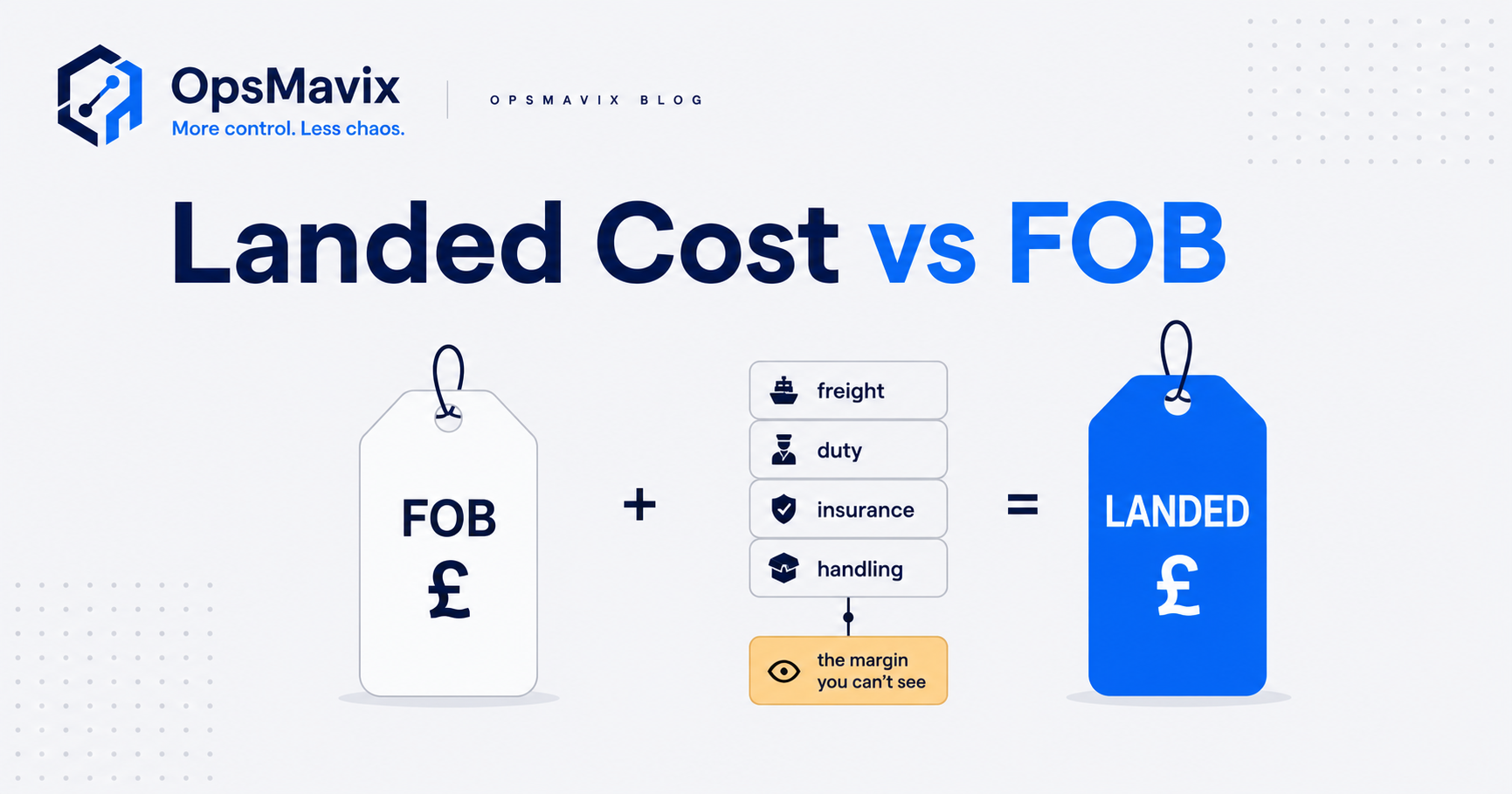
Landed Cost vs FOB: What the Difference Costs You
FOB is the price on the supplier's invoice at the moment the goods cross the ship's rail. Landed cost is what that stock actually cost you once freight, insurance, duty and handling are added. Costing your imported lines at FOB quietly overstates margin on every one of them. This guide draws the line between the two with a full £ worked example.
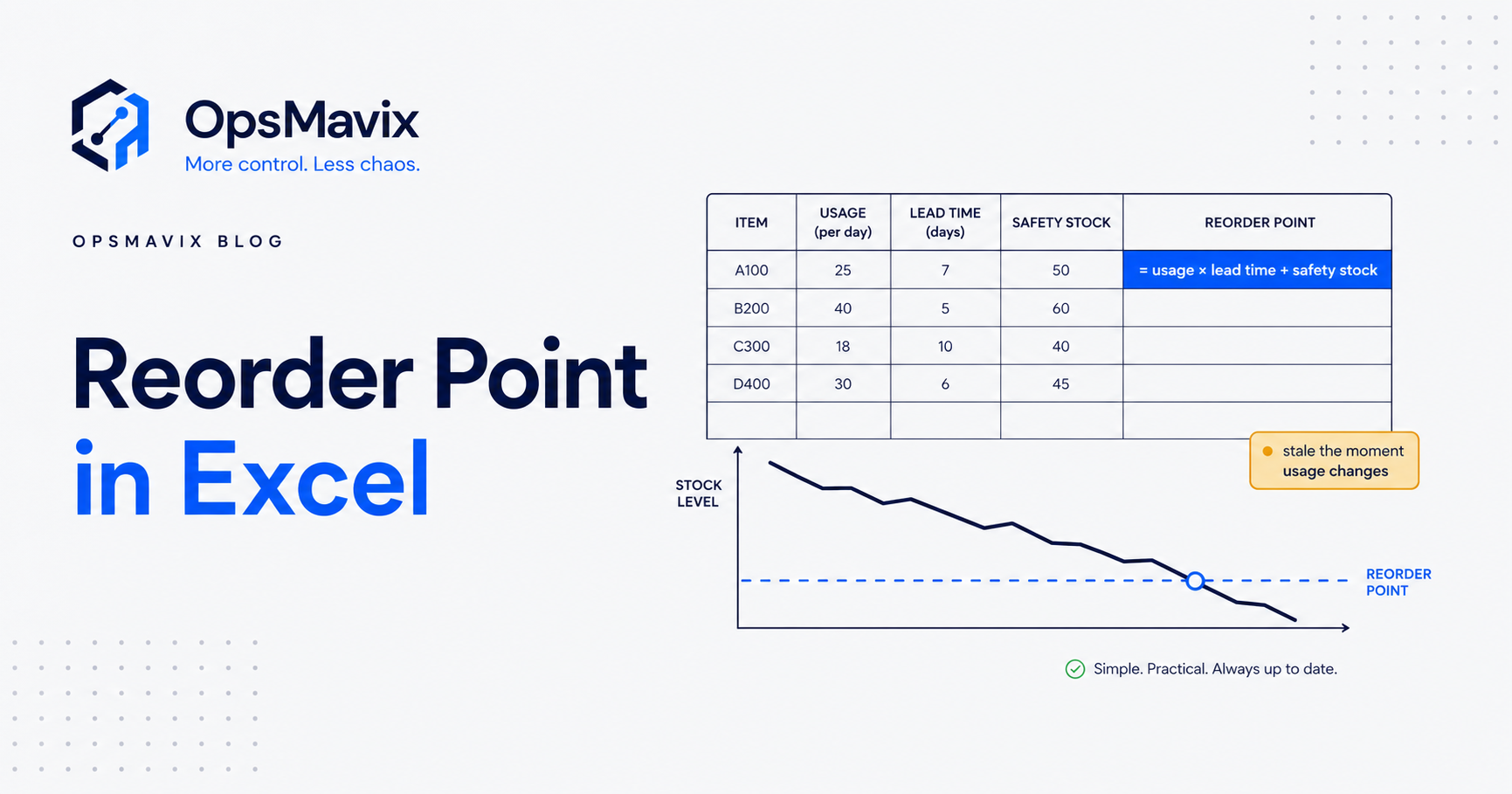
How to Calculate Reorder Point in Excel (Formula + Free Template Logic)
The reorder point formula fits in a single Excel cell: average daily usage × lead time in days, plus safety stock. This is the exact build — which columns to lay out, the formula to type, a worked example with real numbers, and the honest limitation nobody puts in the tutorial: the spreadsheet cannot see your live stock, so the number is stale the moment usage moves.
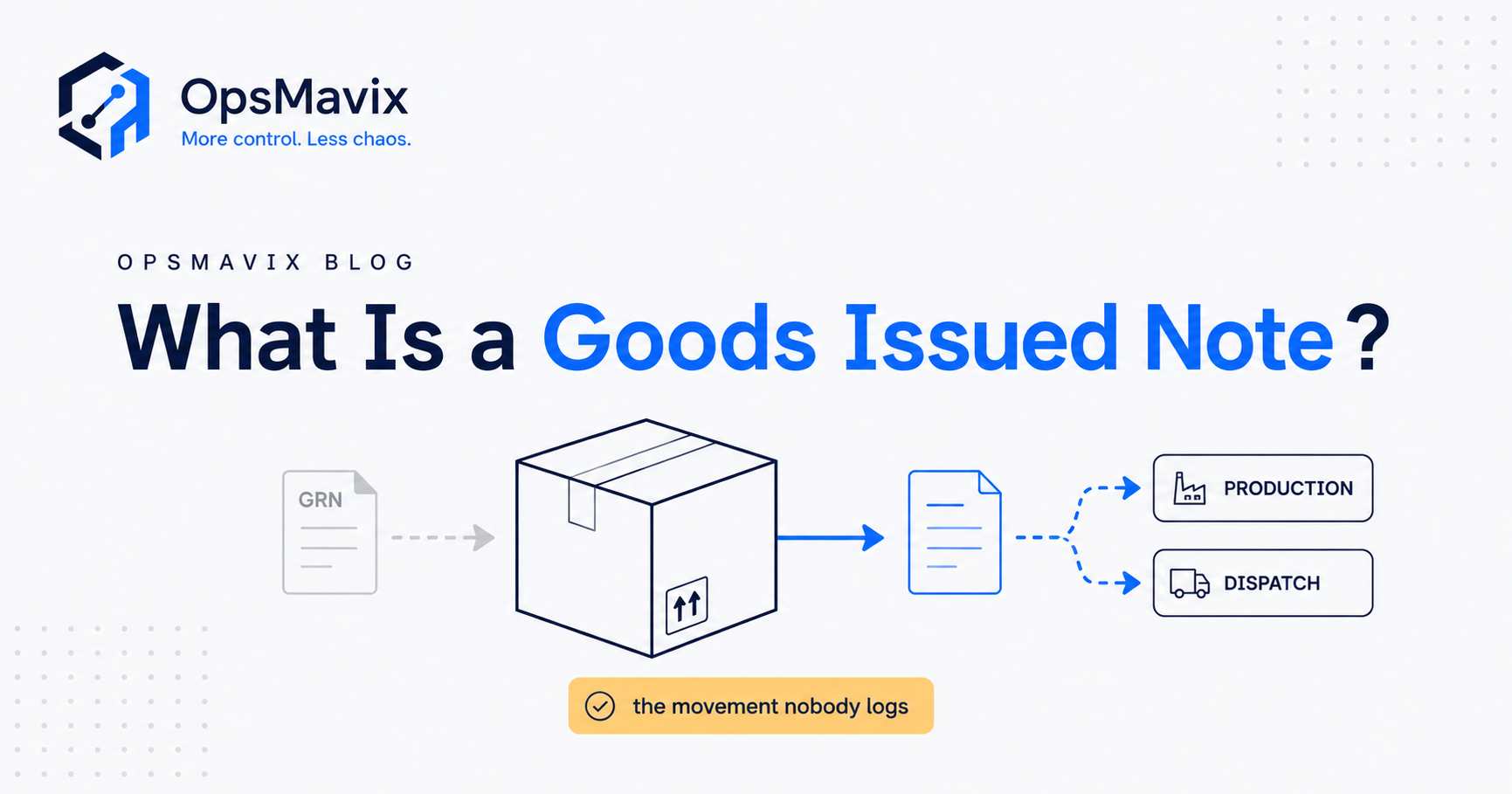
What Is a Goods Issued Note (GIN)? Definition and Uses
A goods issued note is the record of stock leaving your business — issued to production, picked for dispatch, or drawn for internal use. This guide covers what goes on a GIN, how it differs from a GRN and a delivery note, and why untracked issues are the single biggest reason your stock figure never matches the shelf.
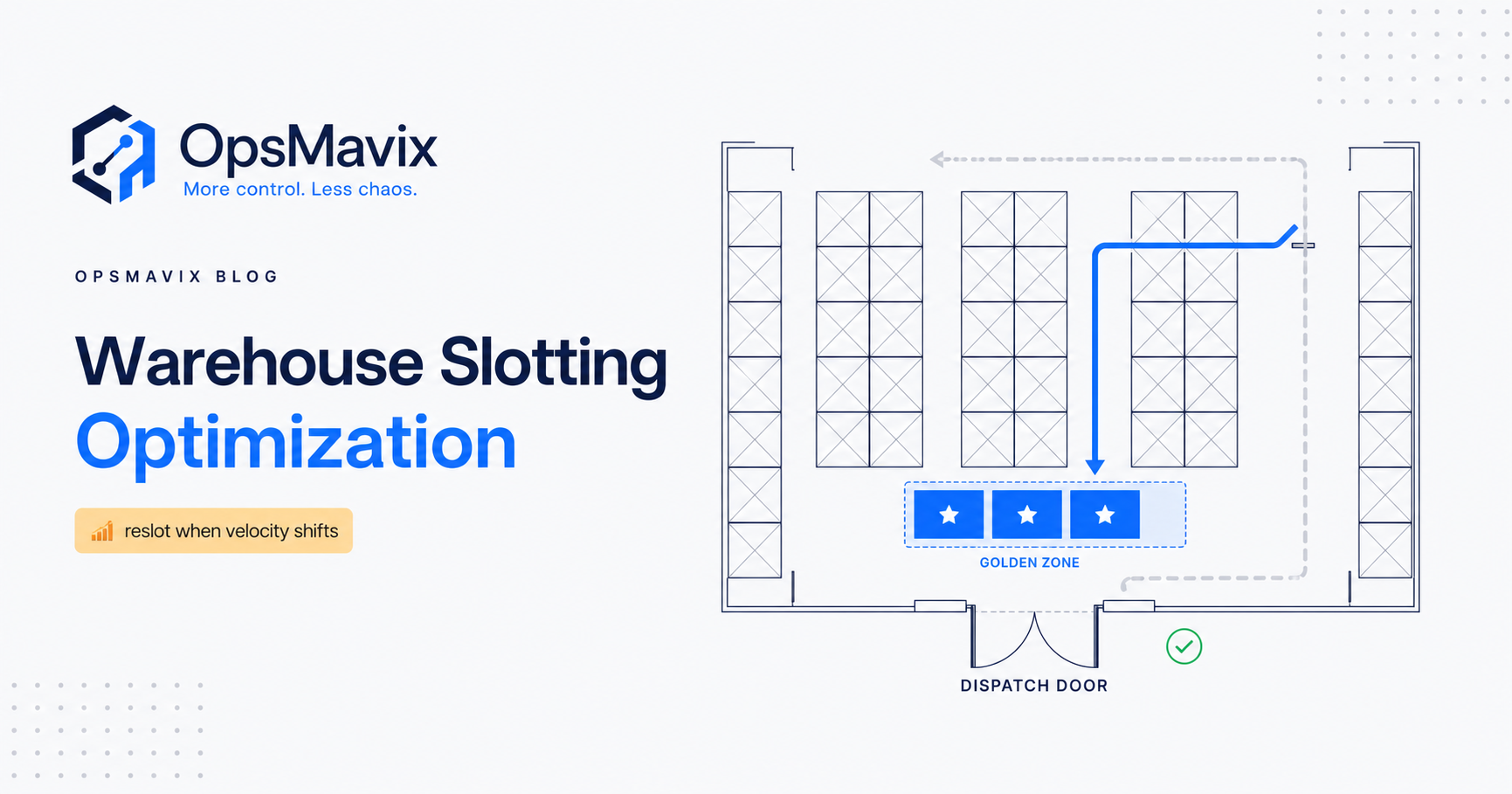
How to Do Warehouse Slotting Optimization (Method + Worked Example)
A step-by-step method for optimising where every SKU sits in the pick face, worked through one example that cuts a pick path from 214 metres to 96. Covers velocity ranking, golden-zone placement, cube-per-order and travel-distance logic, how often to reslot, and how to keep placement keyed to real pick frequency inside the system you already run.
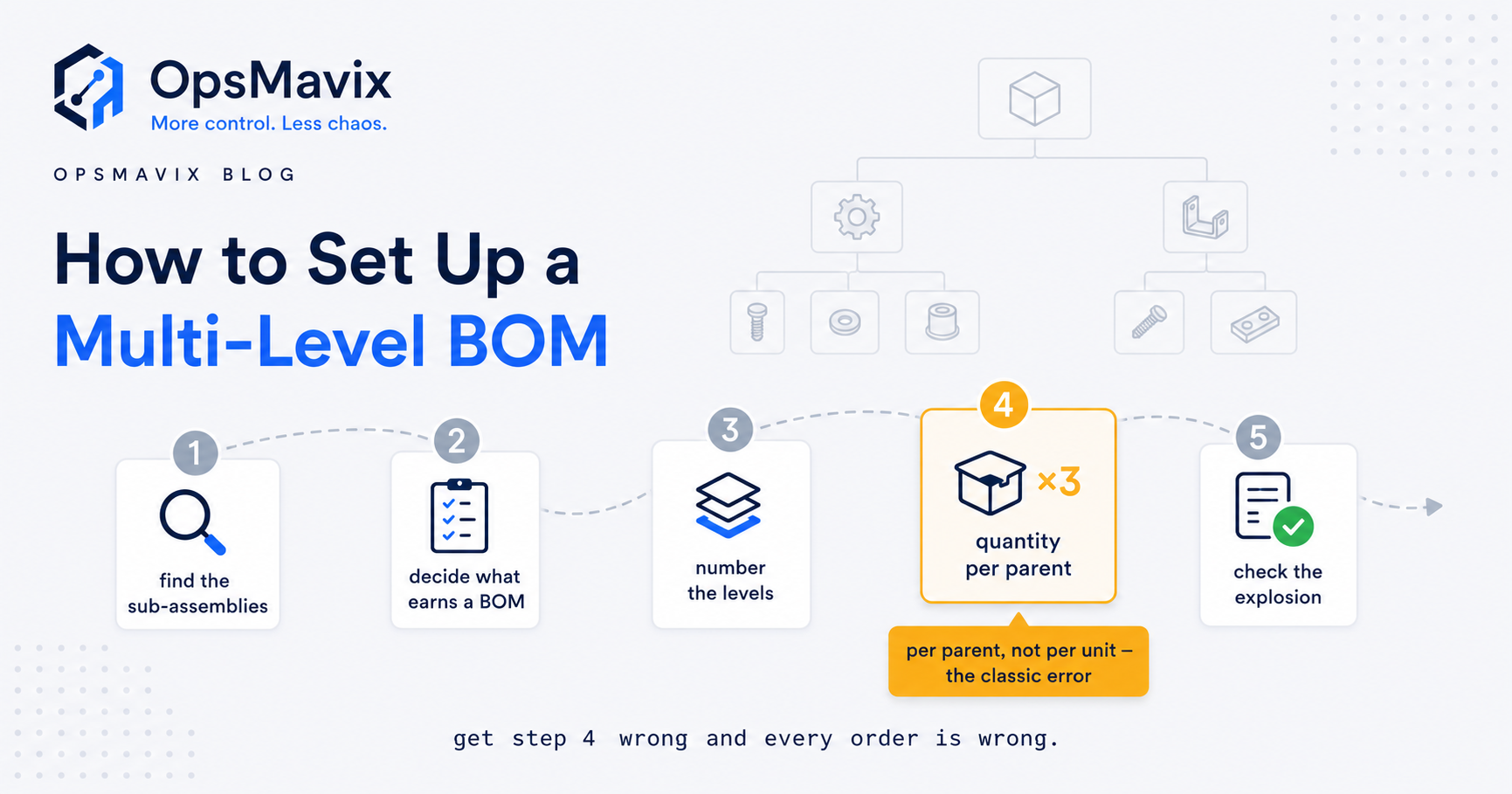
How to Set Up a Multi-Level BOM for a Product With Sub-Assemblies
A step-by-step build of a multi-level BOM for a product with sub-assemblies, using one worked example the whole way through. Covers which sub-assemblies earn their own BOM, how to number the levels, why quantities are per parent and not per finished unit, and how to check the explosion before you buy anything.
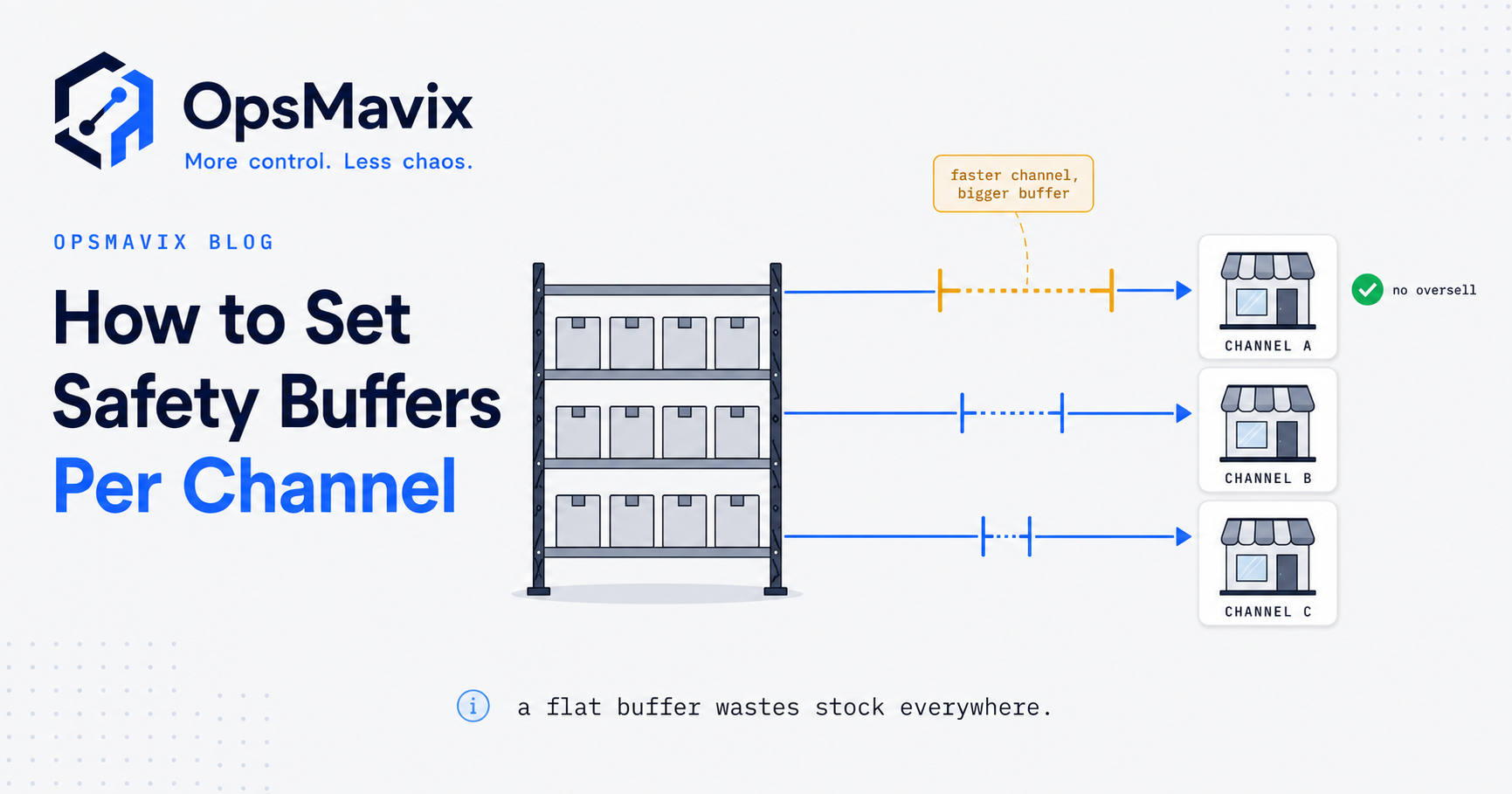
How to Set a Safety Buffer Per Channel So You Stop Overselling Best Sellers
A flat 5% buffer on every listing hides stock where you did not need to and still lets your fastest SKU oversell on Amazon. This guide sizes a safety buffer per channel from measured sync lag and peak sales velocity, shows which channels earn a bigger number, and explains when the honest answer is to fix the sync instead.
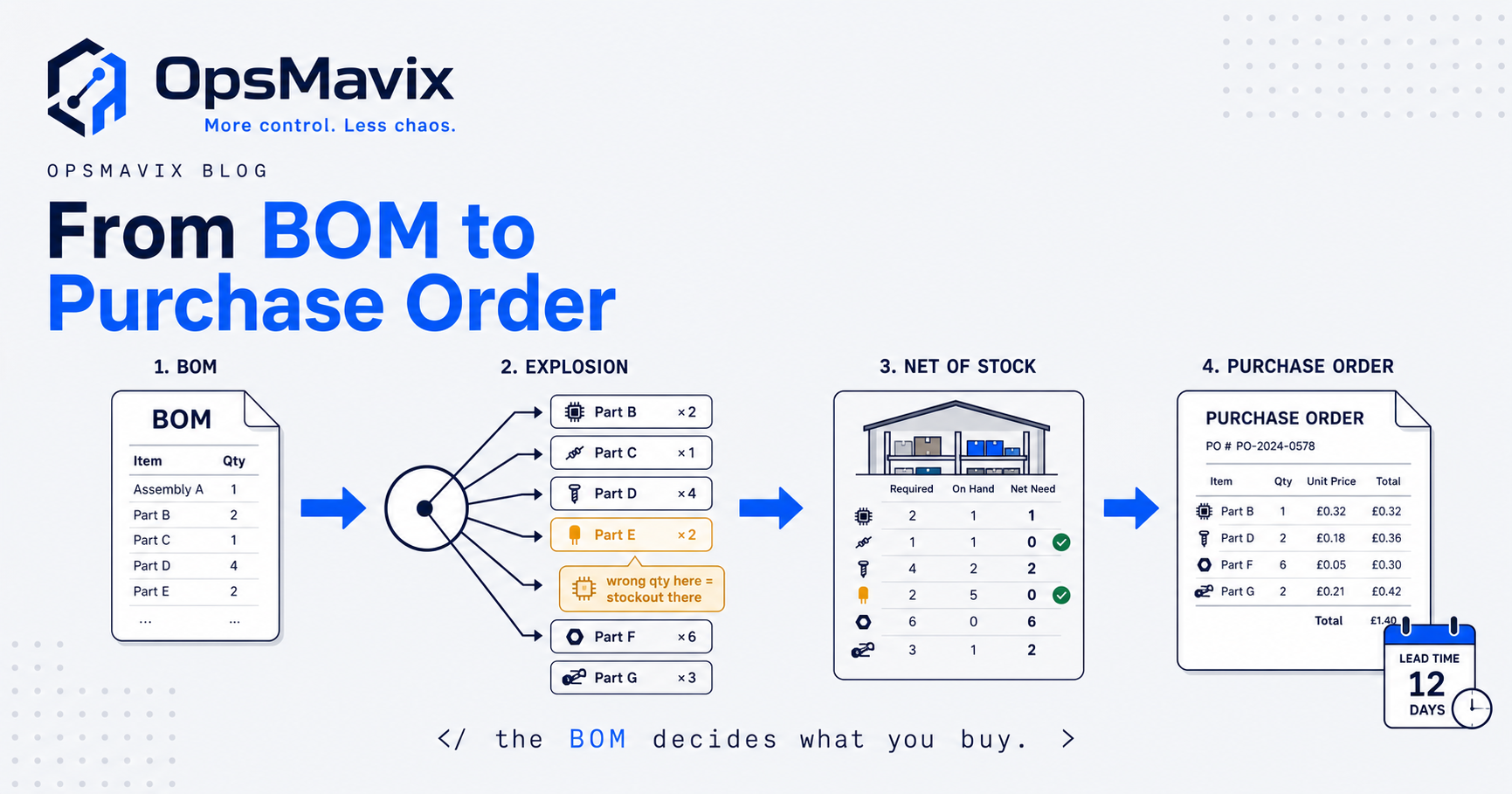
The Bill of Materials in Supply Chain Management: From BOM to Purchase Order
On the shop floor a BOM is a build instruction. On the buying side it decides what you order, how much, and when — through explosion, netting, yield, lead time offsetting and minimum order quantities. This guide follows one 250-unit build from the parts list to the purchase orders it generates.