
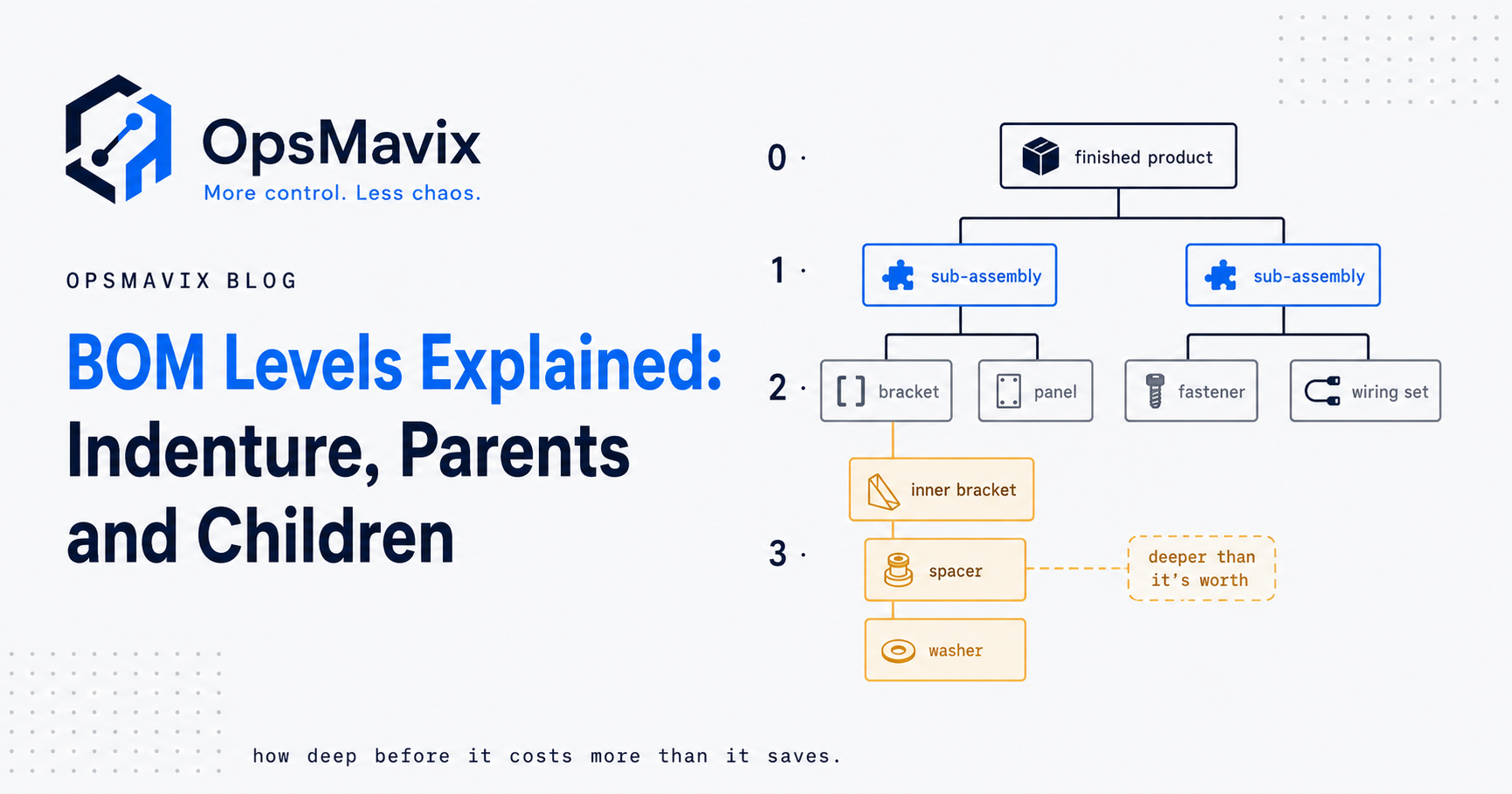
BOM Levels Explained: Indenture, Parents, Children and How Deep to Go
BOM levels are the indenture of a product structure: level 0 is the finished good, and every level below it is something that goes into the level above. This is how the numbering works, how to read an indented BOM without misreading the quantities, and how to decide how deep to nest before the structure costs more to maintain than it returns.
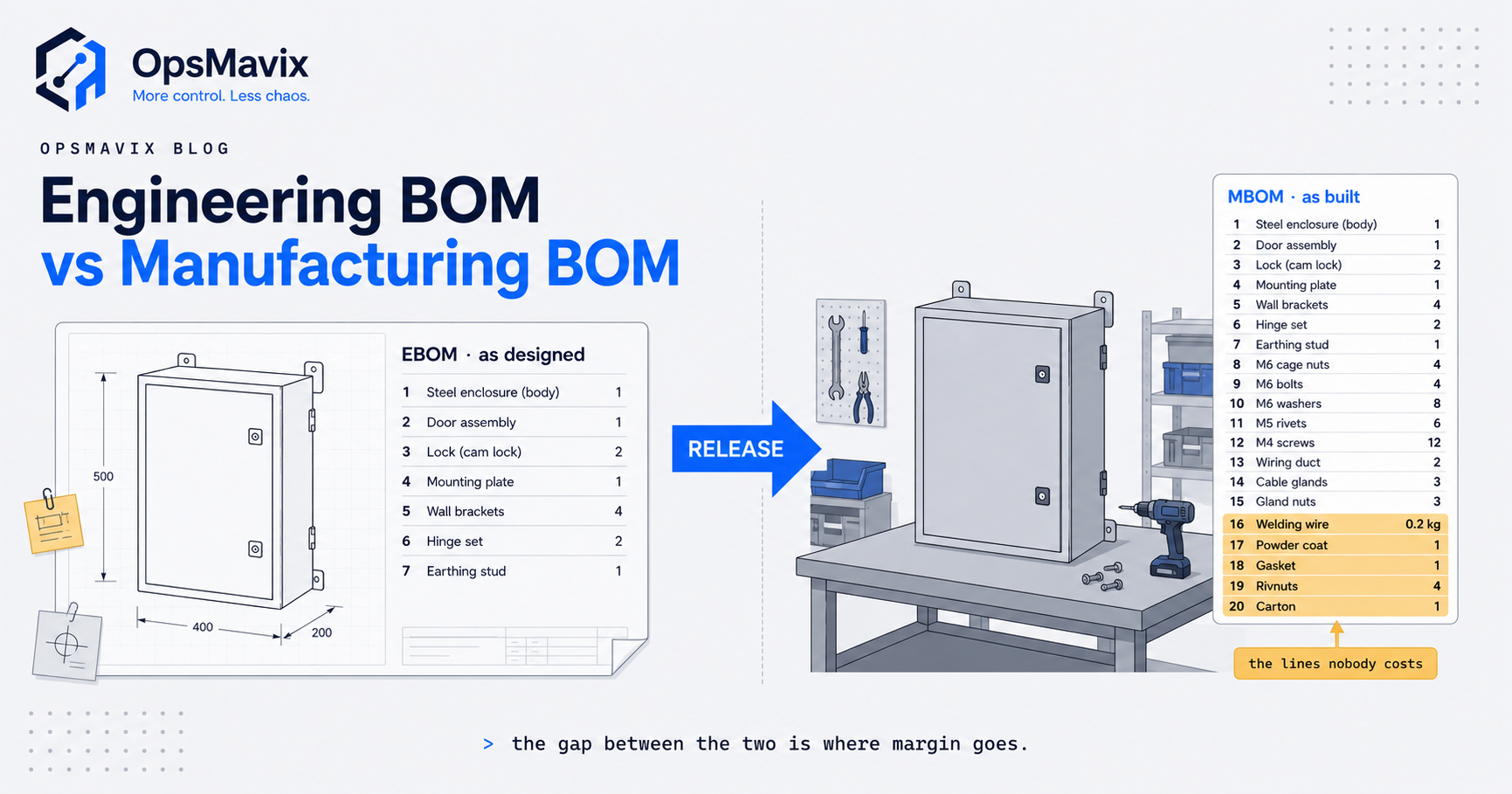
Engineering Bill of Materials vs Manufacturing BOM: What Changes Between Design and the Shop Floor
The engineering bill of materials and the manufacturing BOM describe the same product and should never be identical. This guide walks the handover line by line — what design hands over, what production adds, why the two lists legitimately differ, and what quietly breaks when a business keeps only one of them.
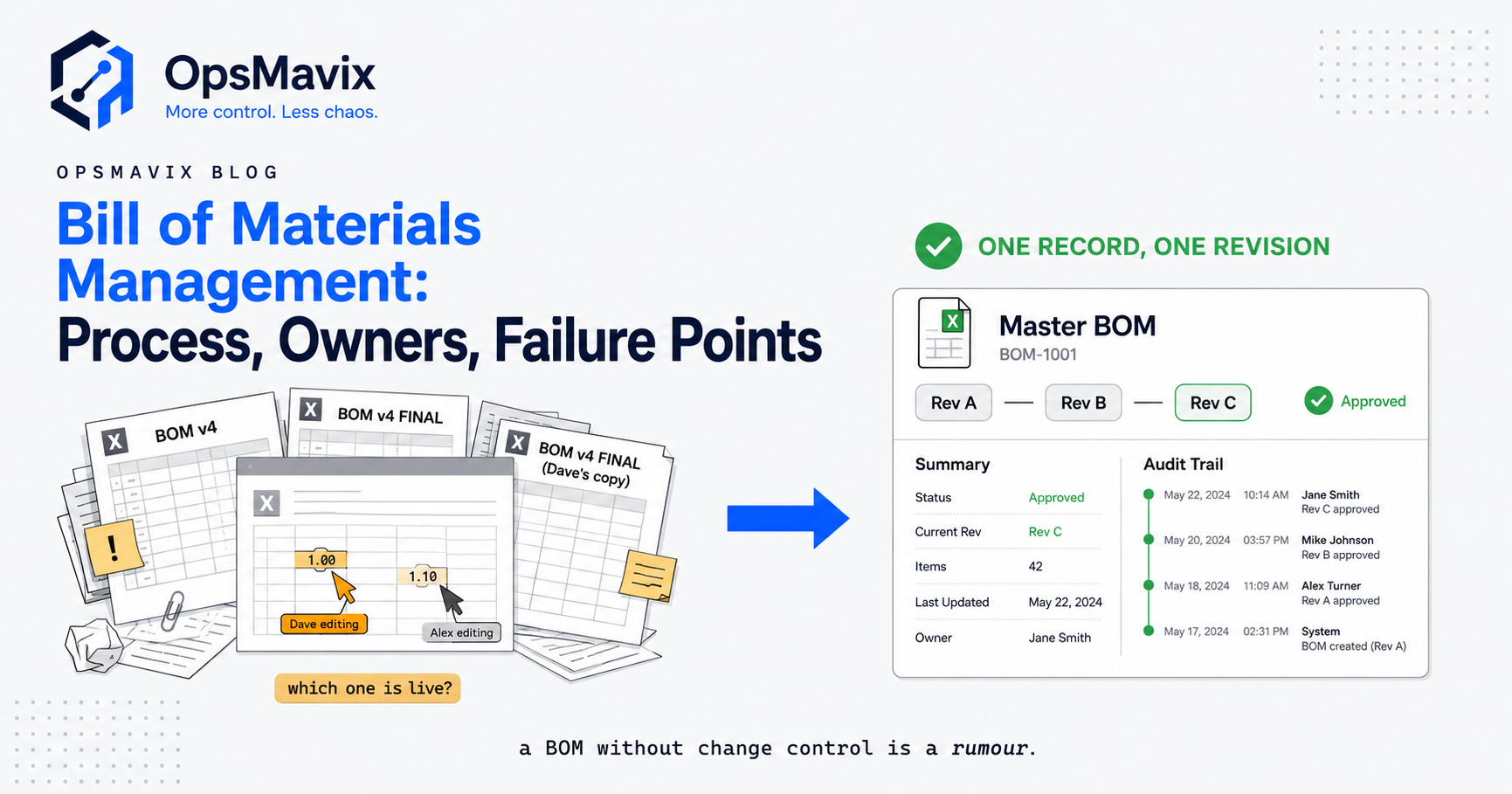
Bill of Materials Management: The Process, the Owners and the Failure Points
Bill of materials management is the process wrapped around the parts list — who may change it, how a change is approved, and from which date or serial number it applies. This guide walks the full loop from change request to first build, and names the specific points where spreadsheet BOMs break.
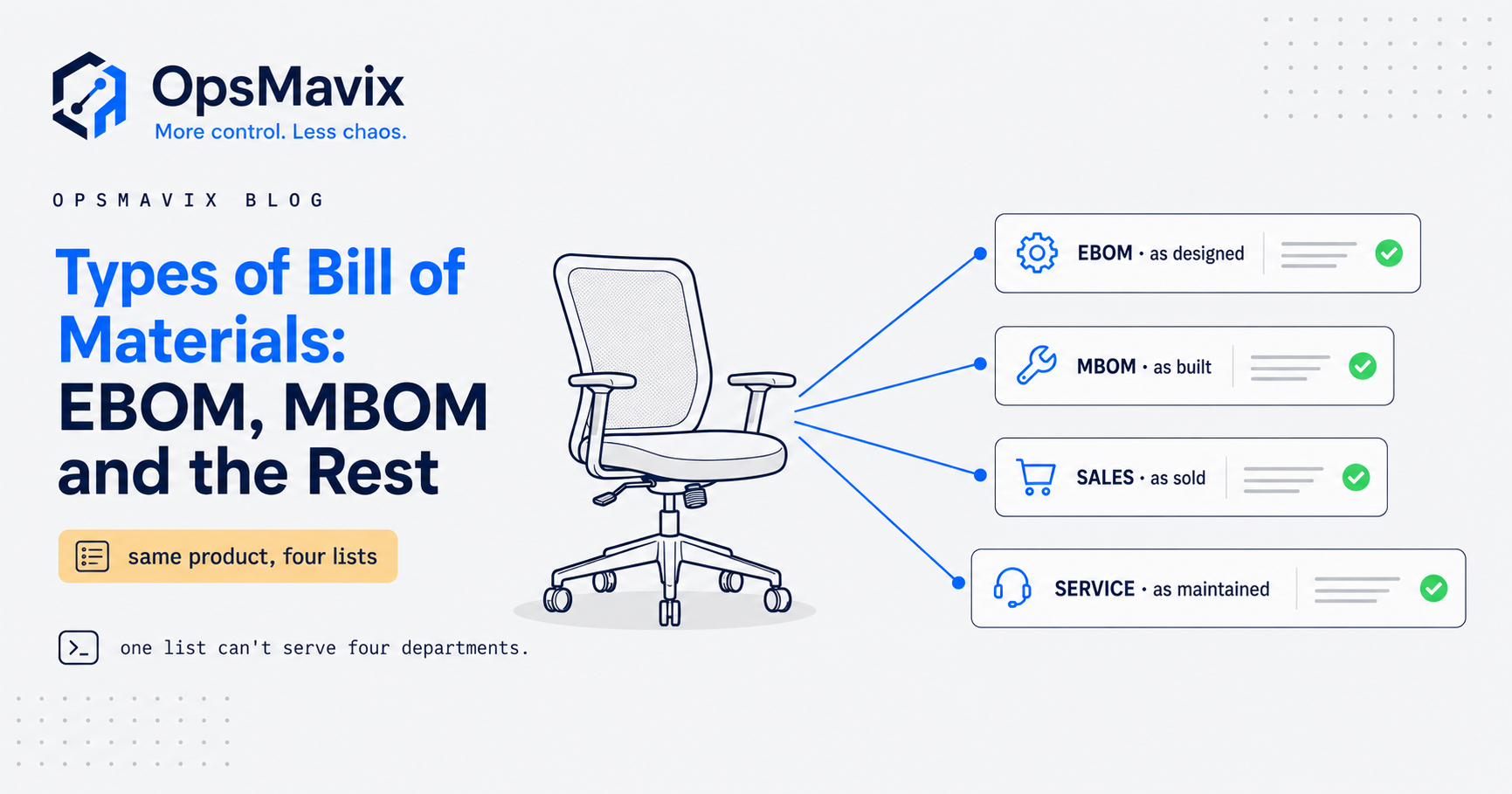
Types of Bill of Materials: EBOM, MBOM, SBOM and the Rest, Explained
There is no single bill of materials — engineering, manufacturing, sales, service, template, assembly and planning BOMs all describe the same product for different jobs. This guide defines each type, names its owner, and says plainly which ones a growing UK manufacturer needs and which are enterprise decoration.
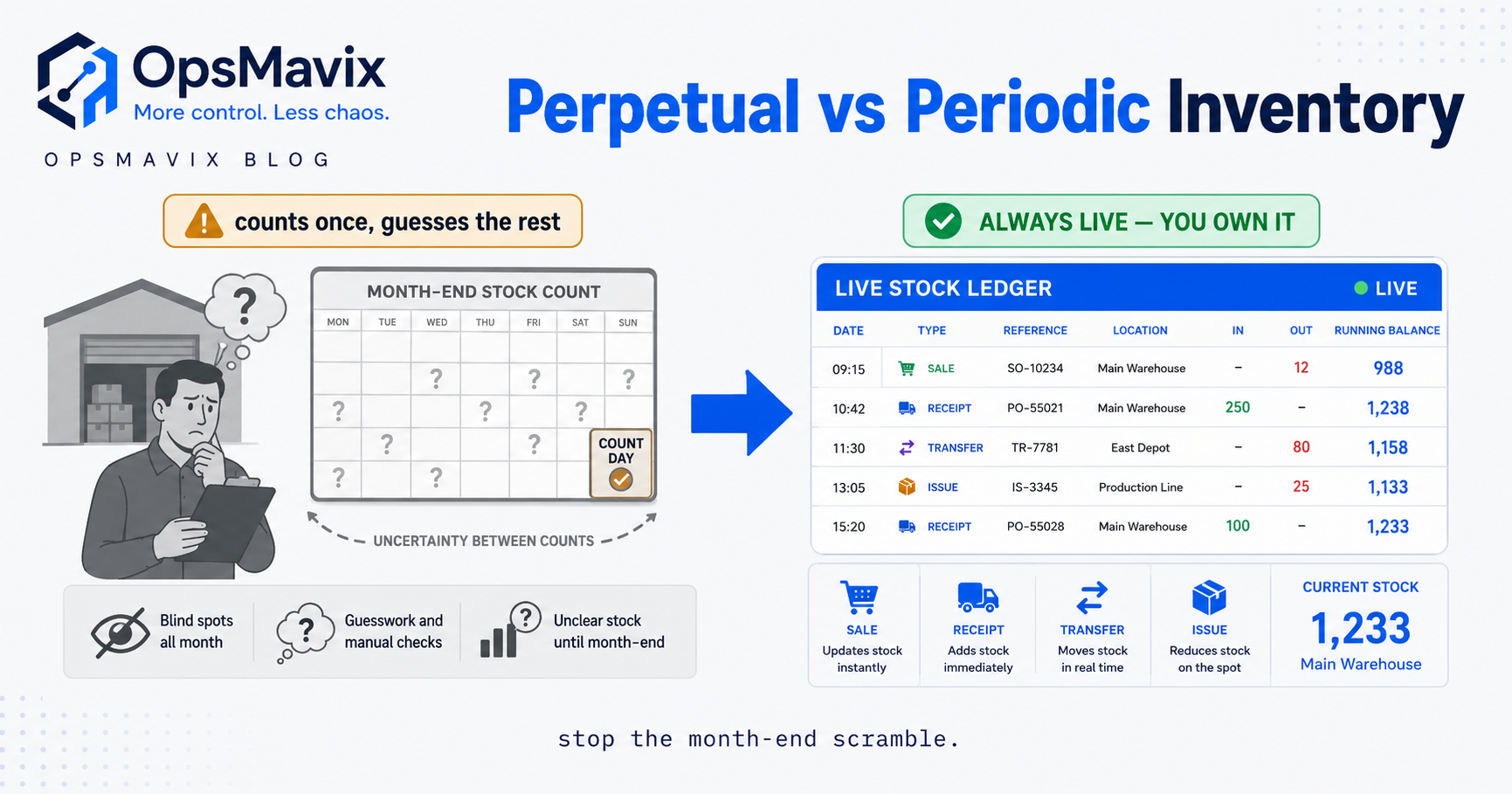
Perpetual vs Periodic Inventory: Which Is Right for Your Business?
Perpetual vs periodic inventory is a choice about when your stock figure is true — continuously, or only at a count. This guide compares both on cost, accuracy and effort, shows which fits which business size, and counts the hidden cost of flying blind between counts.
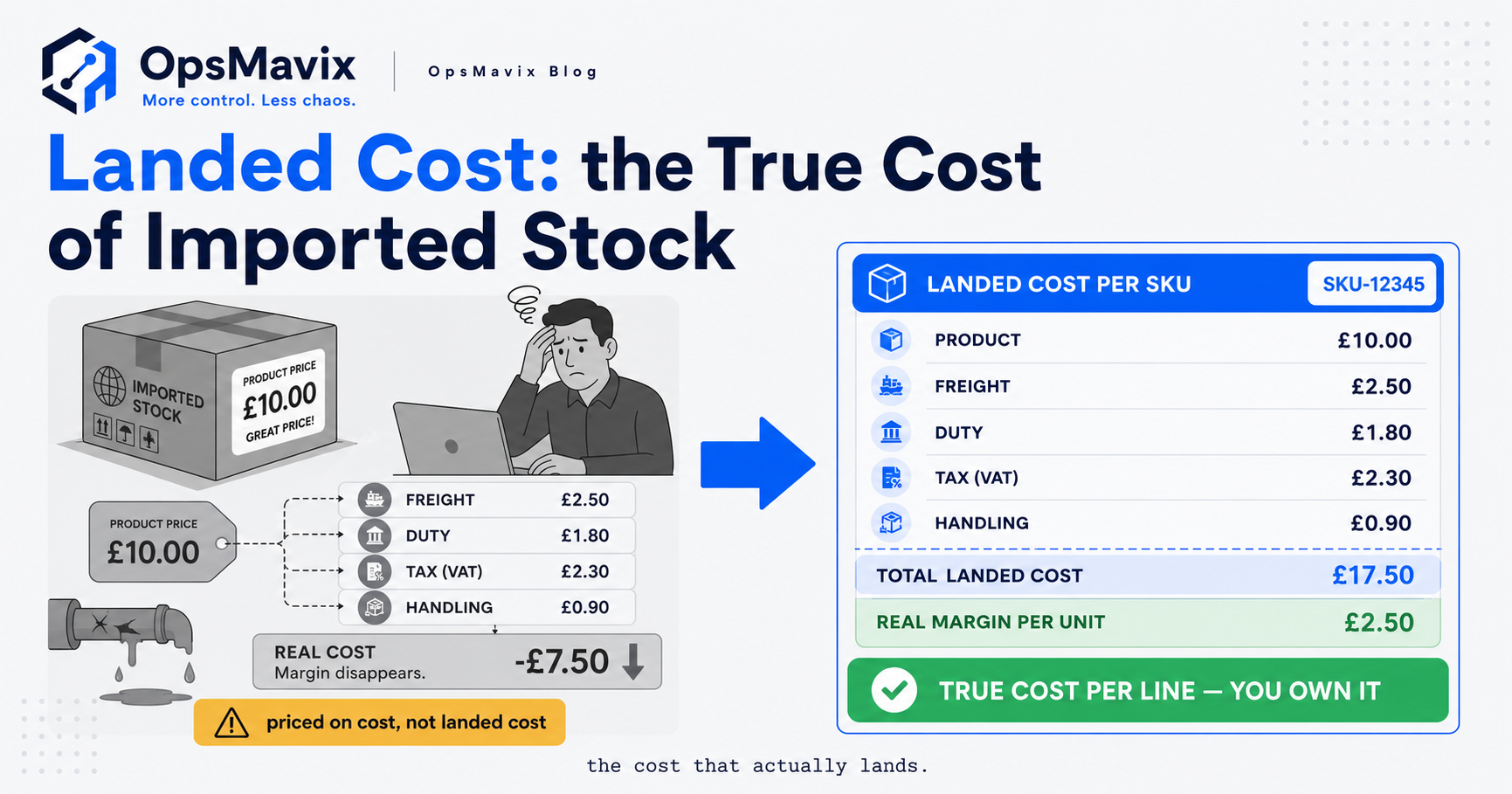
Landed Cost: How to Calculate the True Cost of Imported Stock
Landed cost is the true, all-in cost of getting a product from a supplier to your shelf — product, freight, insurance, duty, handling and more. This guide gives you the full formula, a worked example in pounds, and shows why ignoring landed cost quietly destroys margin on imported lines.
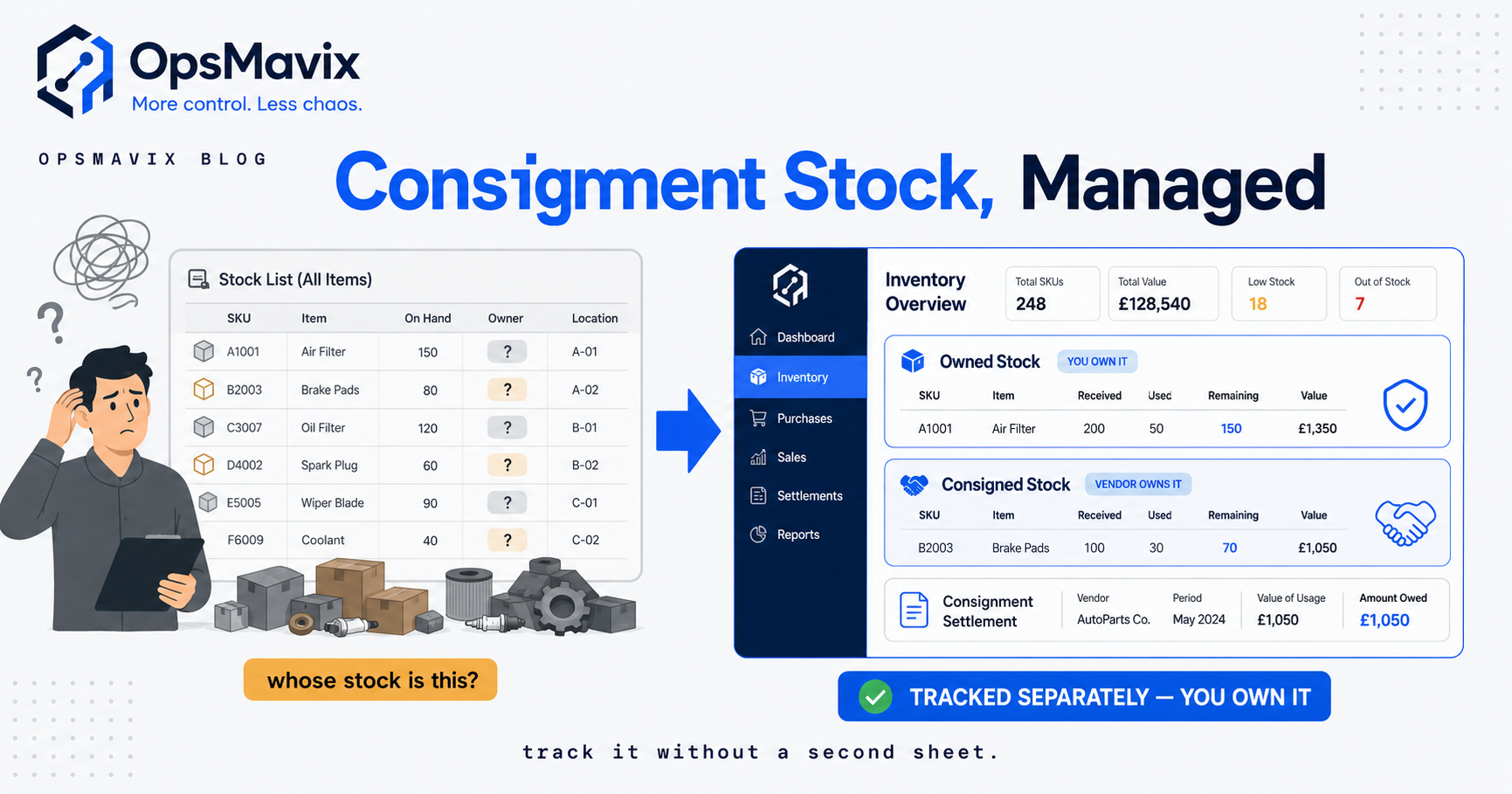
Consignment Stock: How It Works and How to Manage It
Consignment stock is inventory that sits in one company's warehouse but stays owned by the supplier until it sells. This post explains who owns it, the cash-flow benefit for both sides, the UK VAT and accounting nuance most guides skip, and why mixing consigned and owned stock quietly wrecks your numbers — plus how an owned system tracks consignment separately without a second spreadsheet.
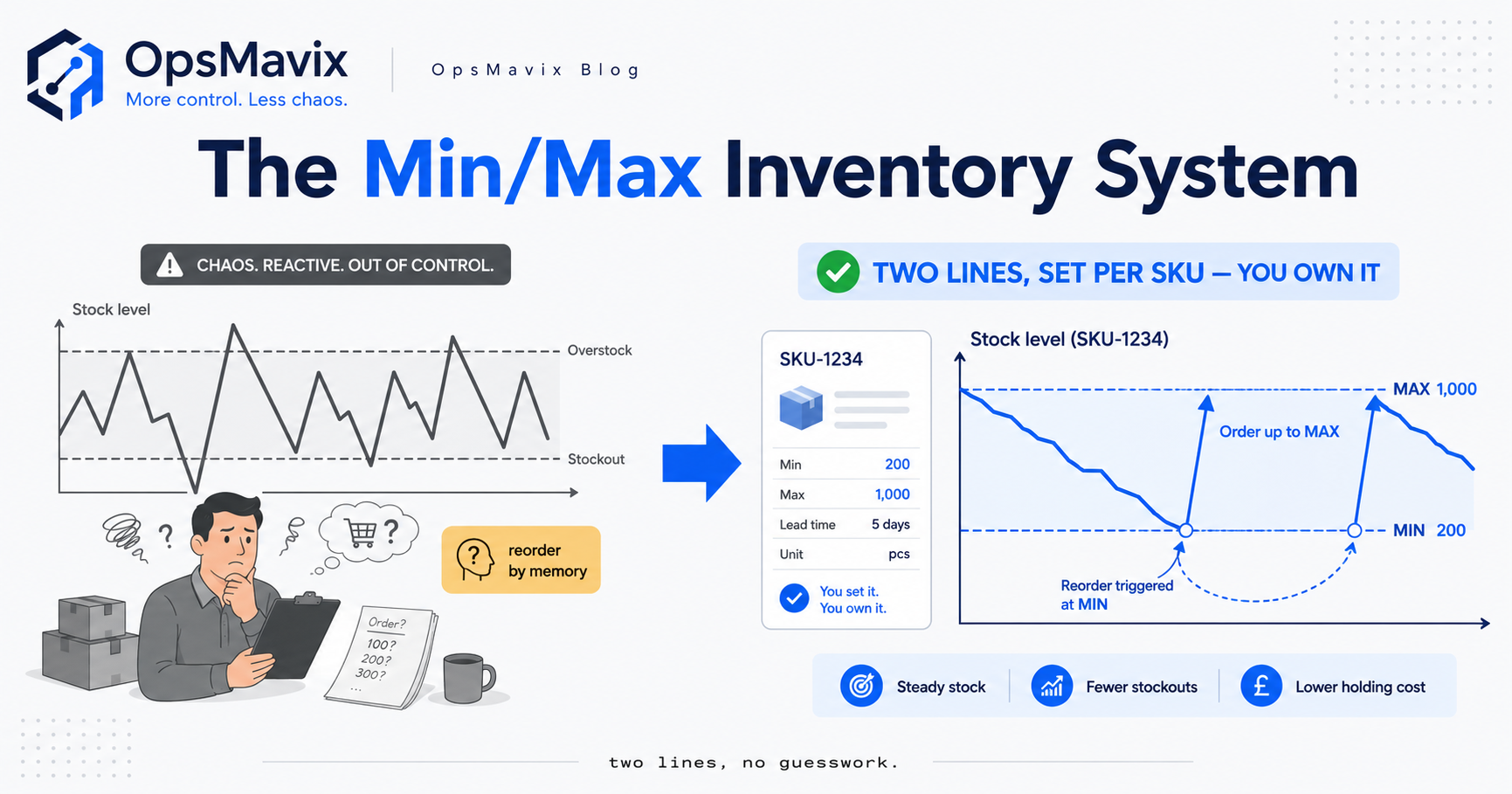
The Min/Max Inventory System: How It Works and When to Use It
A min/max inventory system sets two levels per line — a minimum that triggers a reorder and a maximum you top back up to. This guide covers the order-up-to-max formula with a worked example, how min/max compares to reorder point and EOQ, where the method breaks on demand swings and moving lead times, and how an owned system re-tunes the thresholds per SKU instead of leaving them to rot.
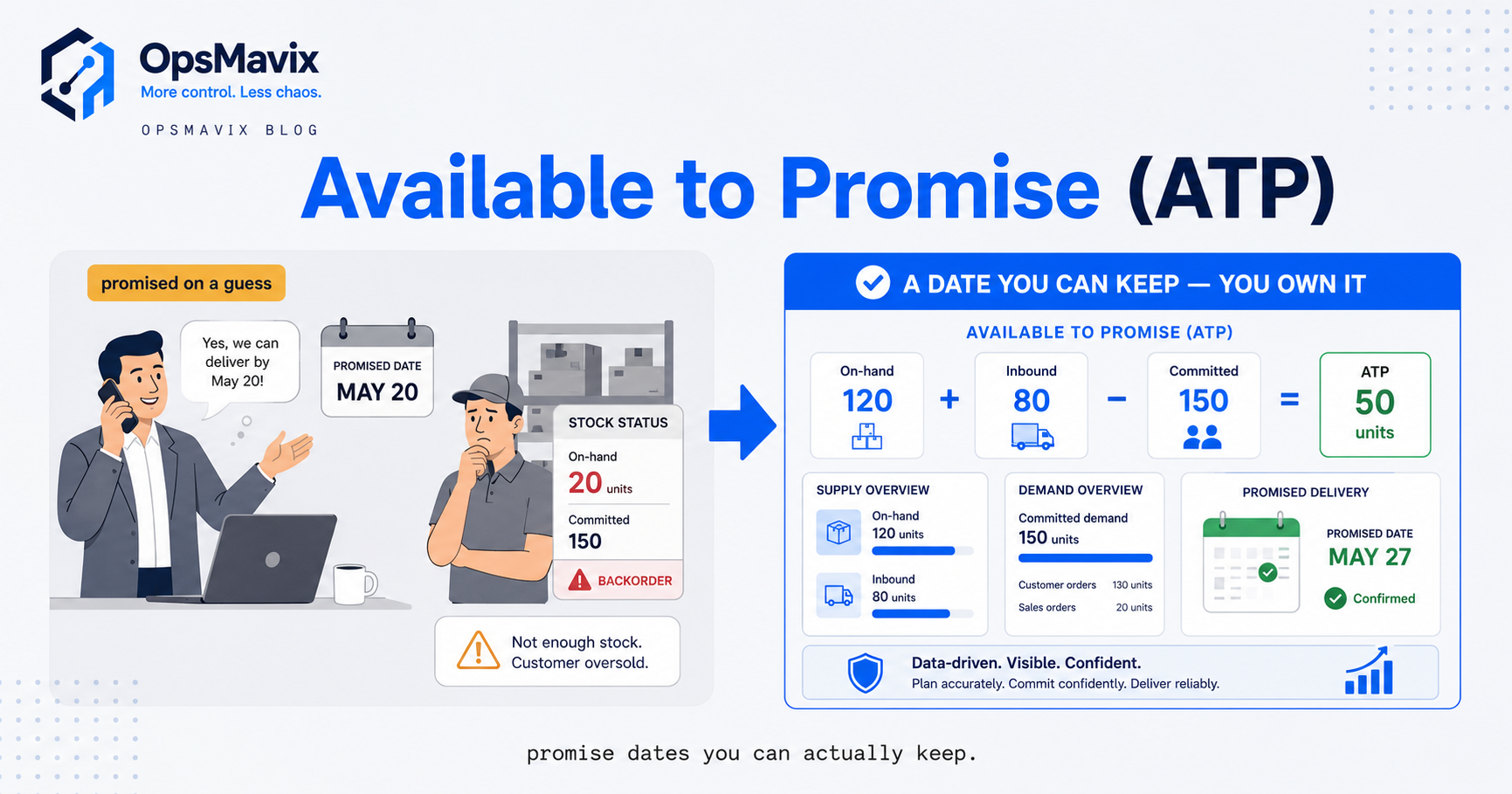
Available to Promise (ATP): What It Is and How to Calculate It
Available to promise (ATP) is the portion of your stock and inbound supply that isn't already spoken for — the quantity you can safely sell without overselling. This post gives you the ATP formula plainly (on-hand + inbound supply − committed demand), a worked example, and why gut-feel promising causes oversells and backorders. It also shows why a spreadsheet can't keep ATP current and how a live owned system computes it per line automatically.