
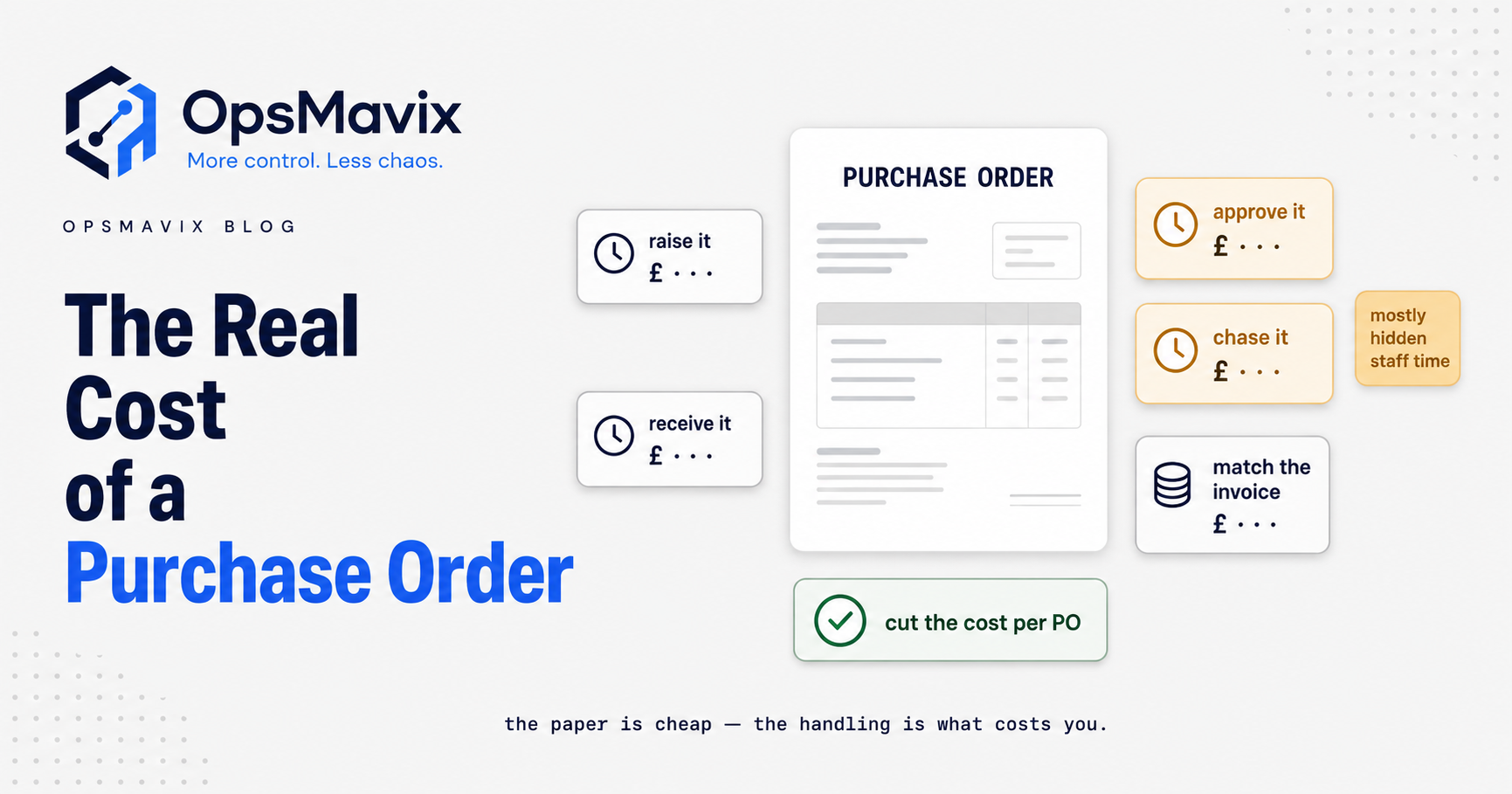
What Does It Actually Cost to Process a Purchase Order?
The cost of processing a purchase order has almost nothing to do with the price of what you're buying — it's the hidden labour of raising, approving, chasing, receiving and matching every order, plus the extras nobody counts (maverick spend, wrong quantities, late deliveries). This guide breaks the per-PO cost into its real components, gives you a transparent £ worked build-up you can plug your own numbers into, and shows how tightening the requisition-to-match flow cuts what each order costs to handle.
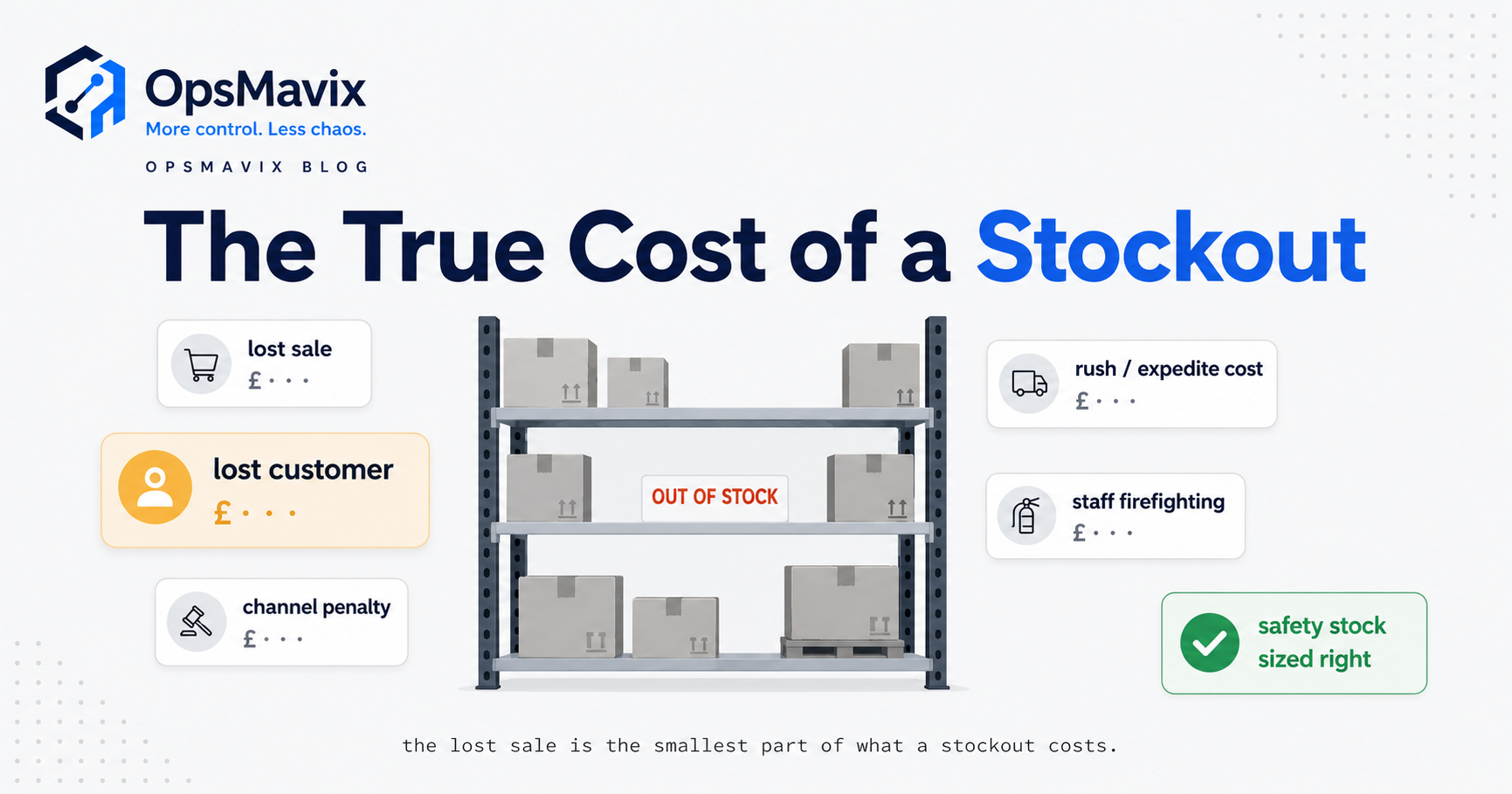
The True Cost of a Stockout (and How to Stop Overselling)
A stockout does not cost you one sale. It costs the margin on that sale, sometimes the customer for good, a dent in your marketplace ranking, a rush-freight bill to recover, and hours of staff firefighting. This guide breaks the full cost down into five parts, gives you a simple £ framework to estimate it for your own business, separates a true stockout from a phantom-stock oversell, and lays out the operational fixes.
Operations Planning and Control: What It Means in Practice (Not the Textbook)
Operations planning and control is two halves of one loop — planning decides what should happen (demand, capacity, purchasing, scheduling) and control makes the actual match the plan (tracking, variance, correction). This guide maps the concept onto real daily operations with two worked examples, explains why spreadsheets quietly break the control half, and shows how an owned operations system closes the loop.
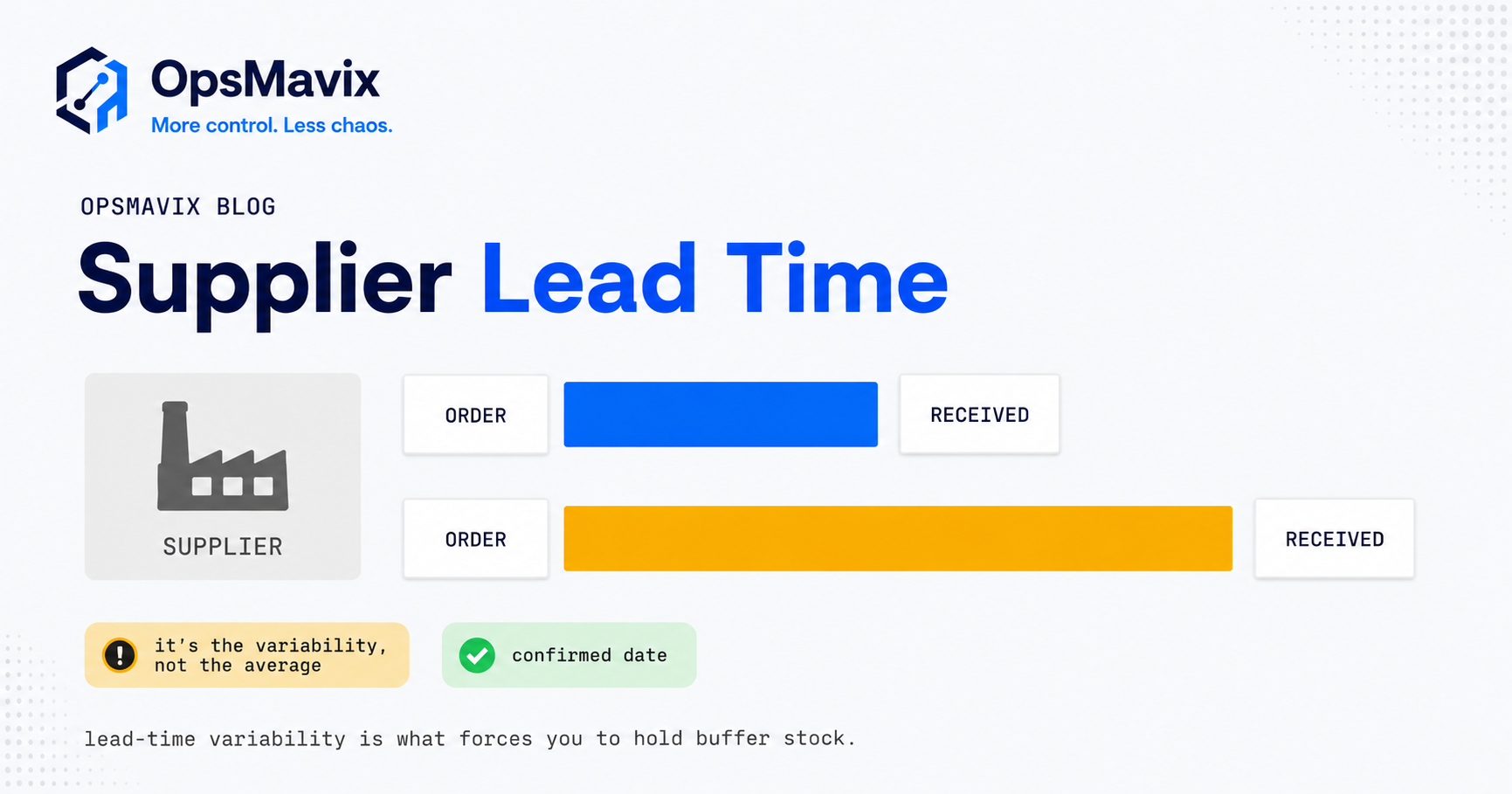
Supplier Lead Time: How to Measure It, Why Variability Hurts, and How to Reduce It
Supplier lead time is the clock from placing an order to the goods being sellable on your shelf — and it is the number that quietly sizes your safety stock, your reorder points and the cash frozen in buffer. This guide breaks it into its four components, shows how to measure it from your own purchase-order and goods-received dates, explains why the variability matters far more than the average, and gives the practical levers that reduce and stabilise it.
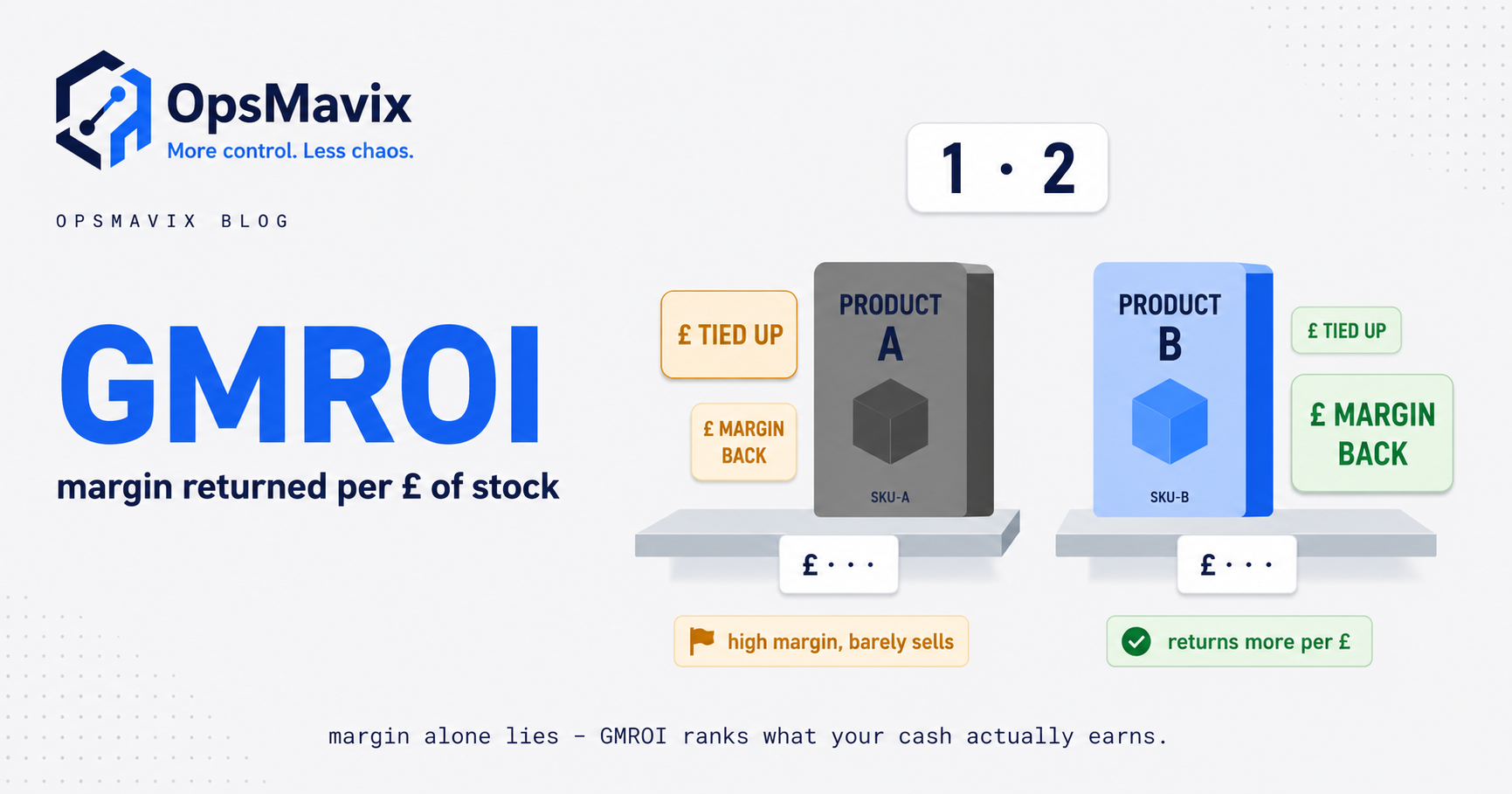
GMROI Calculation: The Inventory Metric That Ties Stock to Profit
GMROI answers the one question margin and turnover each answer only half of: for every pound sitting in stock, how many pounds of gross margin does it earn you back? This is the formula, a plain-English worked example in pounds, why a low-margin fast-mover can beat a high-margin slow-mover, and how to use GMROI to rank products and cull ranges.
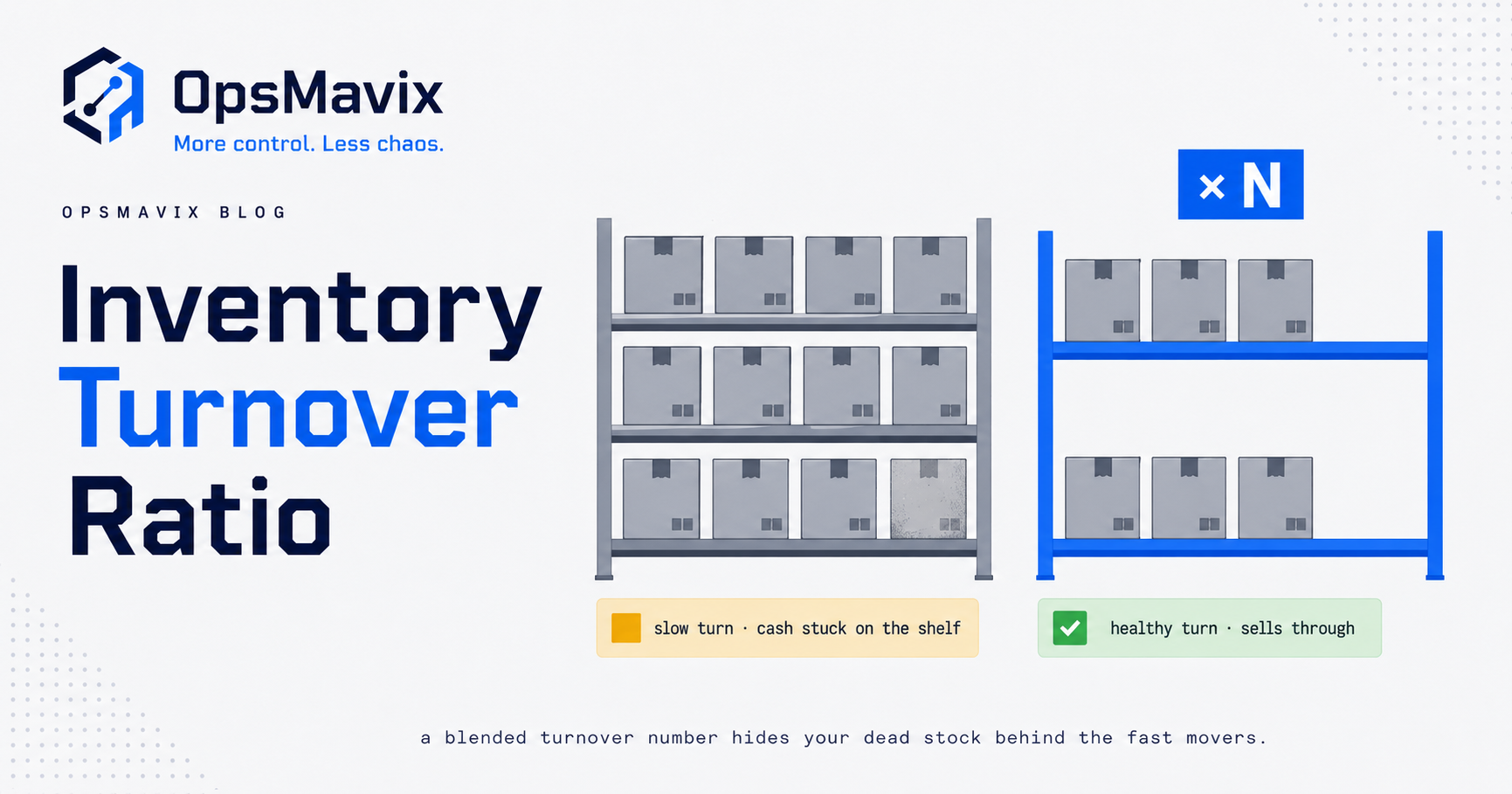
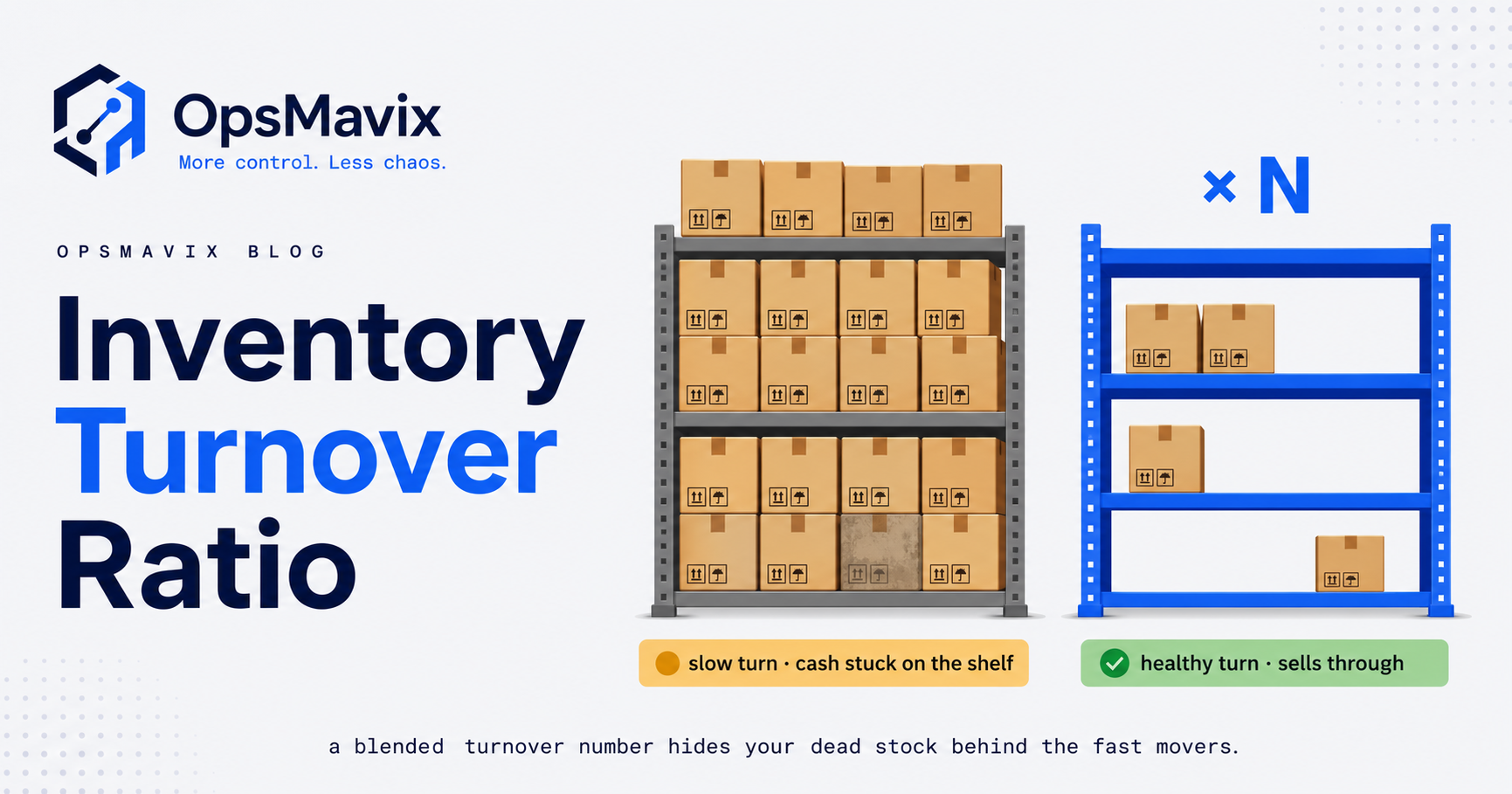
Stock Turnover Formula: How to Find Your Inventory Turnover Ratio
Inventory turnover ratio is cost of goods sold divided by average inventory — how many times you sell and replace your stock in a year. This guide calculates it with a worked £ example, explains days inventory outstanding as the flip side, and shows why a single blended figure hides dead stock behind fast movers, plus what to actually do about a low or high number.
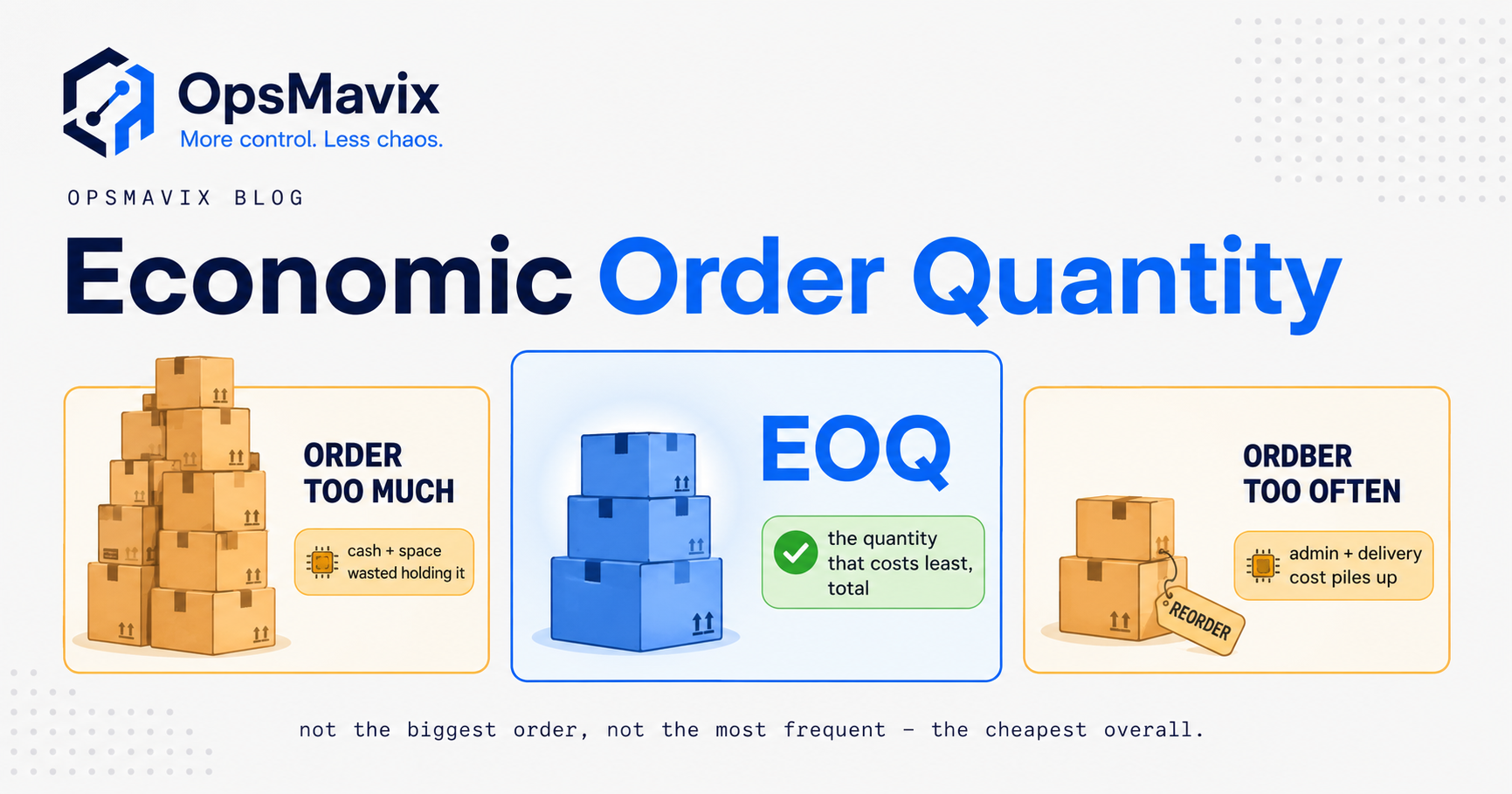
Economic Order Quantity (EOQ): The Formula, a Worked Example, and Its Limits
Economic order quantity is the order size that makes the total of your ordering costs and your holding costs as small as possible. This is the formula with every term explained, a worked example in £, how EOQ answers 'how much' while your reorder point answers 'when' — and, more usefully, the four assumptions that make textbook EOQ wrong for most small businesses and how to use it anyway.
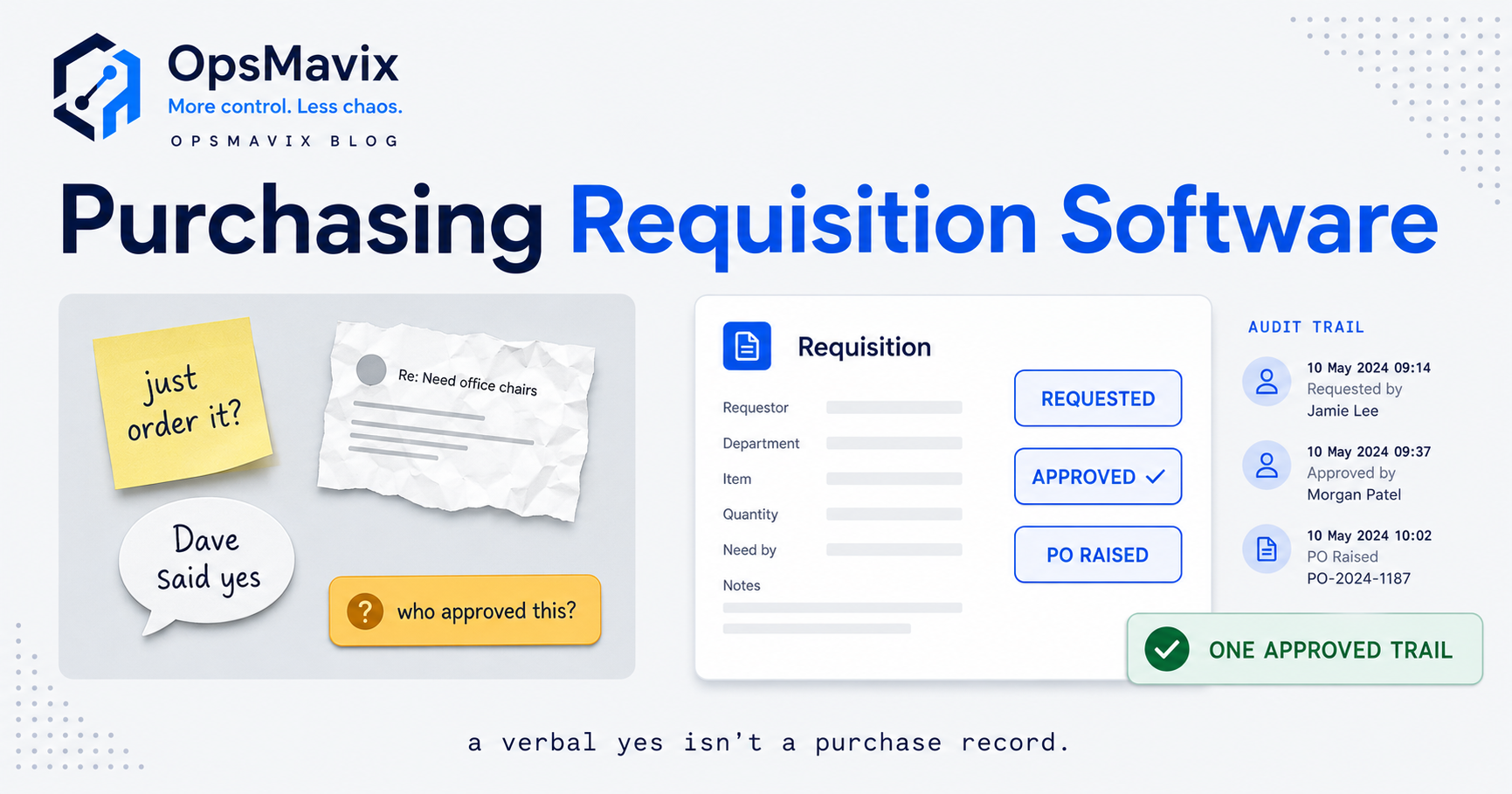
Purchasing Requisition Software: What to Look For (and When You Need It)
A purchase requisition is a request to buy; a purchase order is the committed order that goes to the supplier. Purchasing requisition software runs the bit in between — request, approve, convert to a PO — and the best of it keeps going through receipt and invoice match. This guide covers the features that actually matter for a growing product business, the point where a spreadsheet stops being enough, and how an owned system builds the flow around how you already buy.
Output Control in Management: What It Is and How to Apply It
Output control is managing by measurable results rather than by supervising every step. This guide defines it, sets it against behaviour and input control, shows where it fits in operations — targets, KPIs, exception thresholds — and covers the trap that ruins it: measuring the wrong output. Then it looks at what it takes to make output control live rather than a monthly spreadsheet post-mortem.