
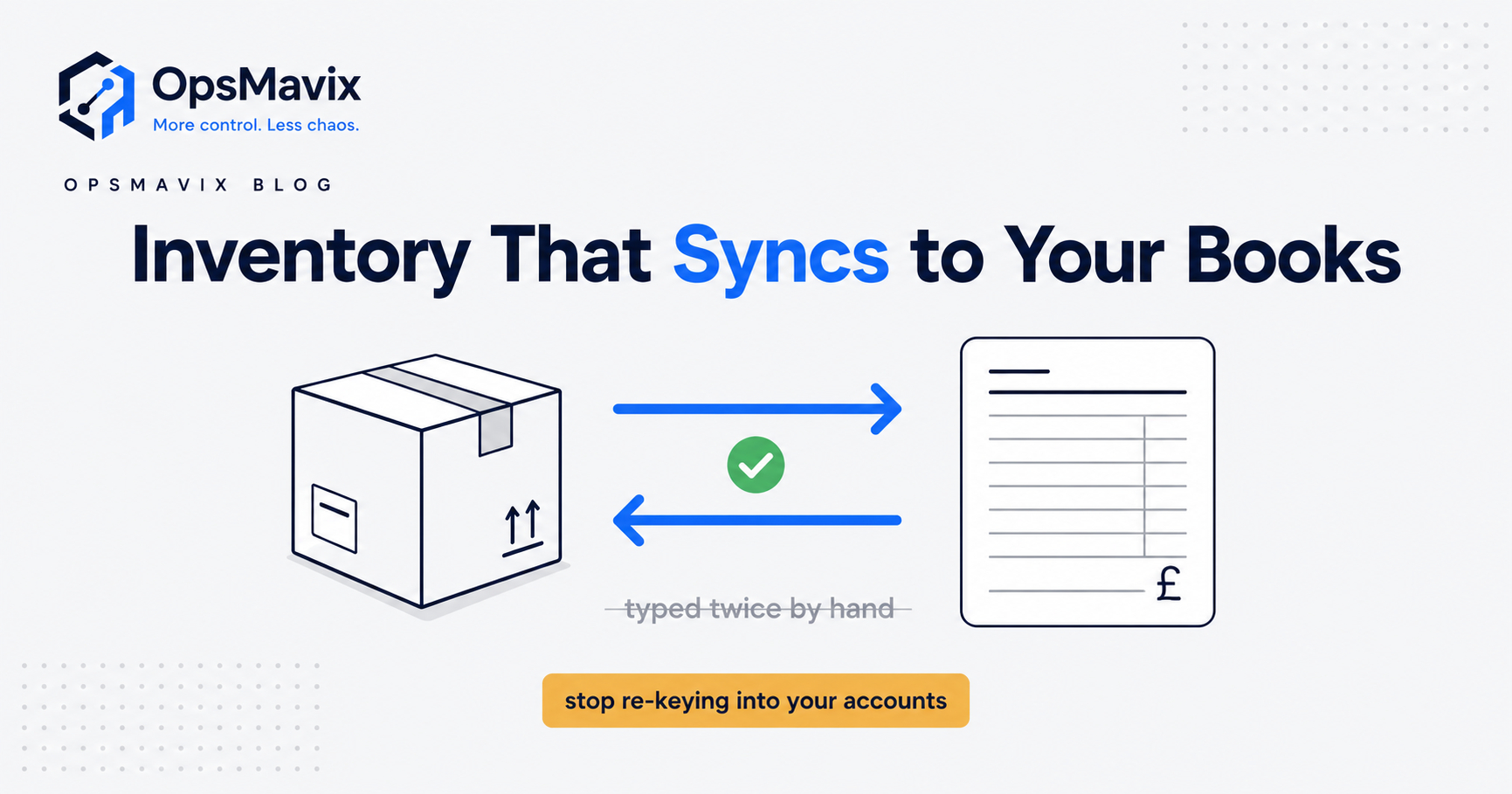
Best Inventory Management Software That Integrates With QuickBooks
QuickBooks is a strong ledger and a weak stockroom, which is why so many businesses end up running inventory in a spreadsheet beside it — and re-keying, mismatches and wrong COGS follow. This is the honest guide to what the best inventory software for QuickBooks actually looks like: two-way sync of stock movements, COGS and valuation flowing through, no double data entry, and one true stock figure across every channel.
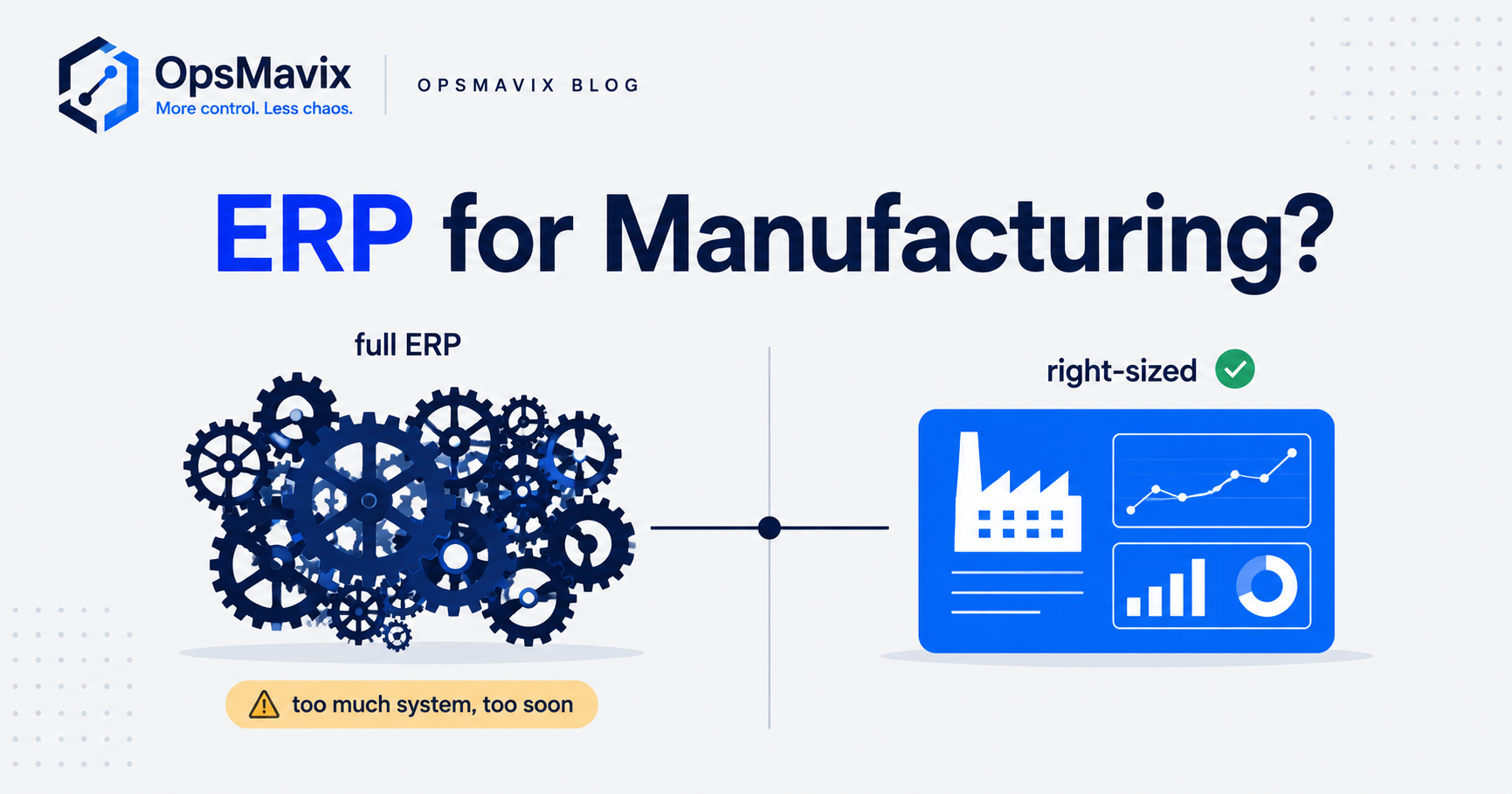
Best ERP for Manufacturing — or Do You Actually Need One?
Most guides to the best ERP for manufacturing are ranked lists that assume you have already decided to buy one. This is the honest version: when a manufacturer genuinely needs a full ERP, when it is overkill, what the real options (Odoo, NetSuite, SAP and the rest) actually cost in money and implementation pain, and what to do if you sit in the gap — outgrowing spreadsheets and disconnected tools.
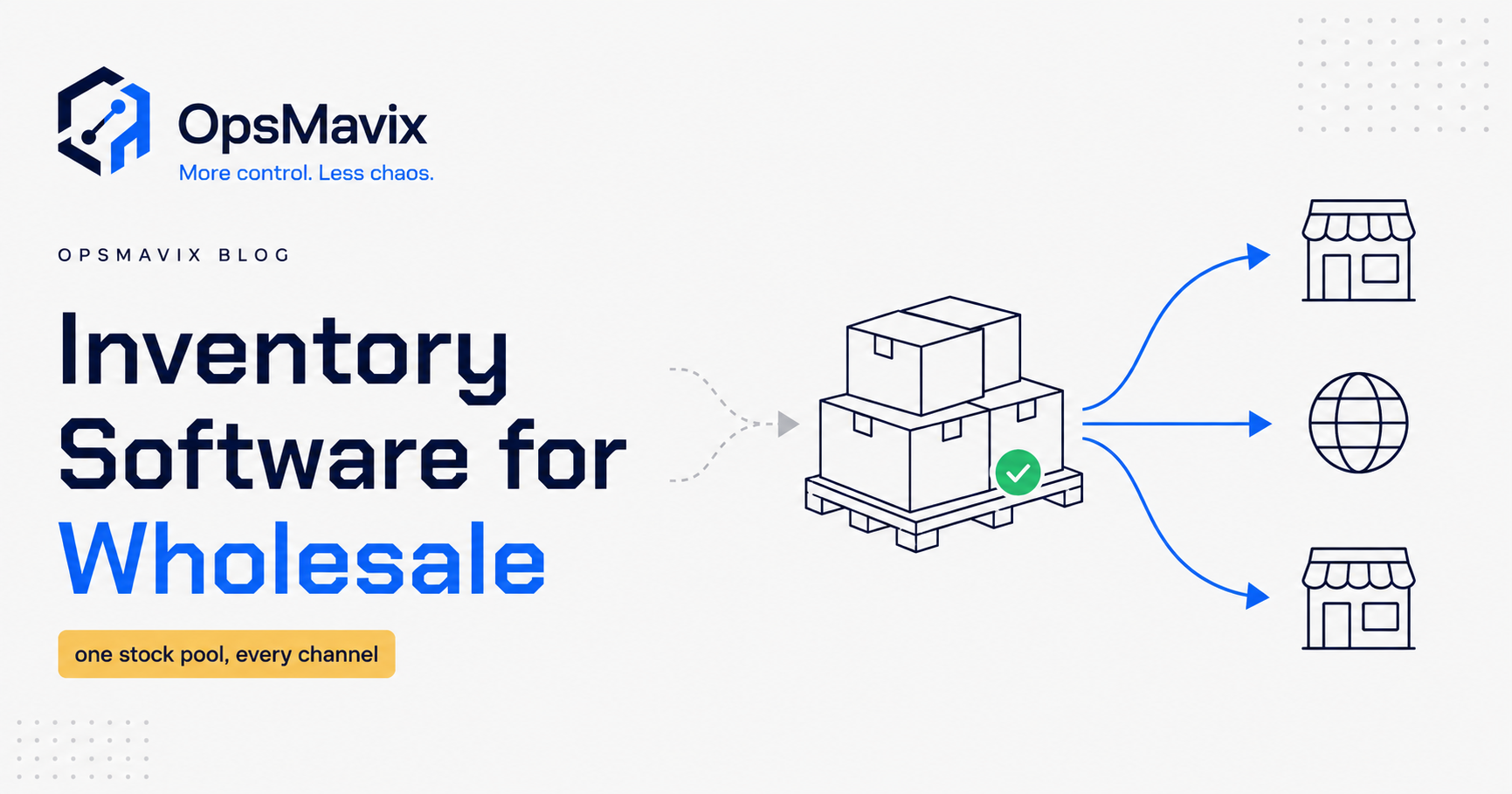
Wholesale Inventory Management Software UK: Costs & Buying Guide
Compare six wholesale inventory software options, understand their pricing and test the workflows that matter—from customer-specific prices to partial deliveries and returns.
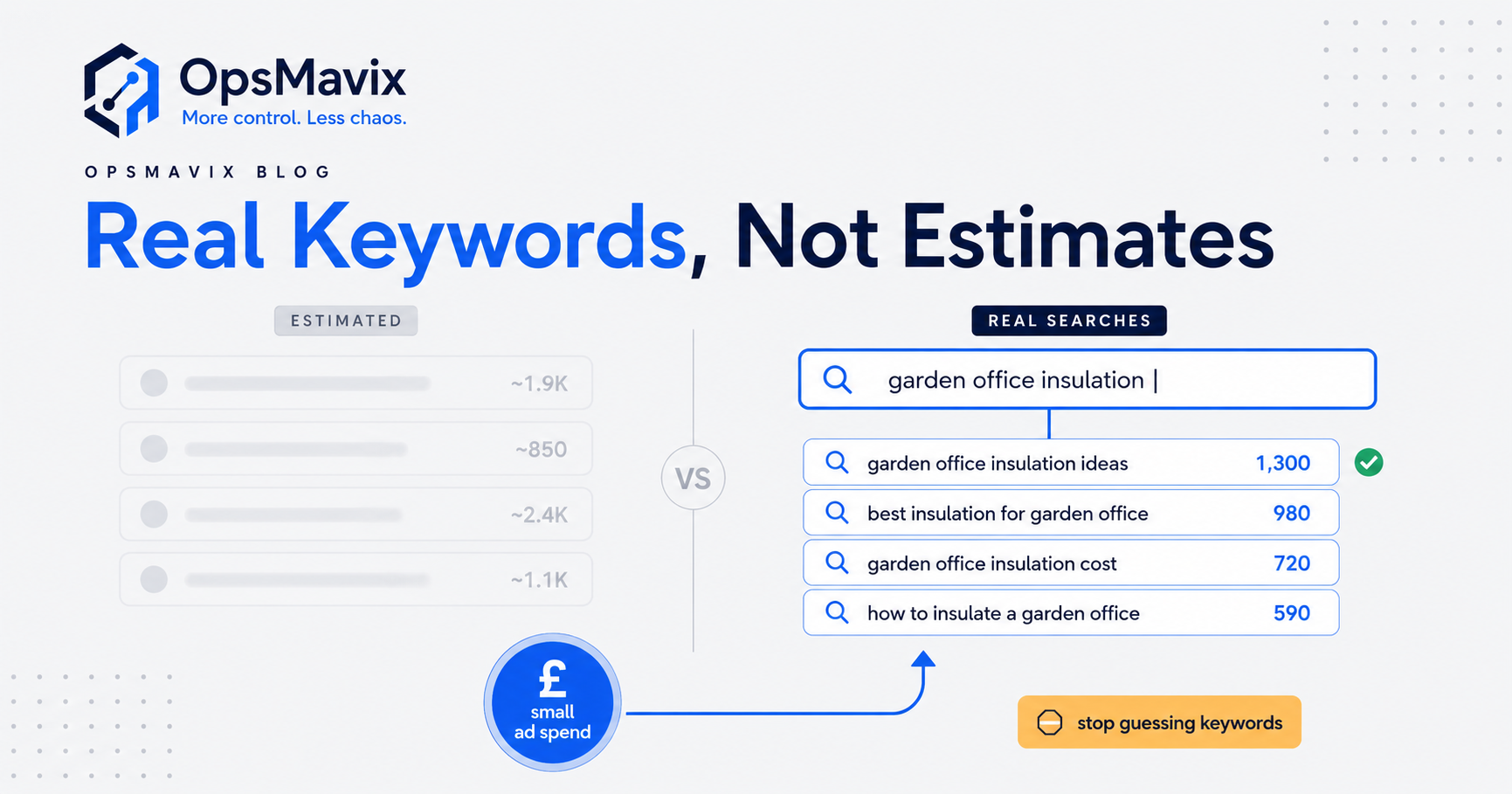
Use Google Ads to Find Real SEO Keywords (Not Estimated Ones)
Most SEO stalls because it's built on guessed keywords from third-party tools that only estimate what people search. A small Google Ads search campaign hands you the exact terms real people typed to reach your kind of service. This guide walks the full method — seed research, a one-to-two week ad campaign, harvesting the real search terms, then content, on-page and backlinks — so you're targeting genuine demand from month one instead of waiting three to six months to find out you guessed wrong.
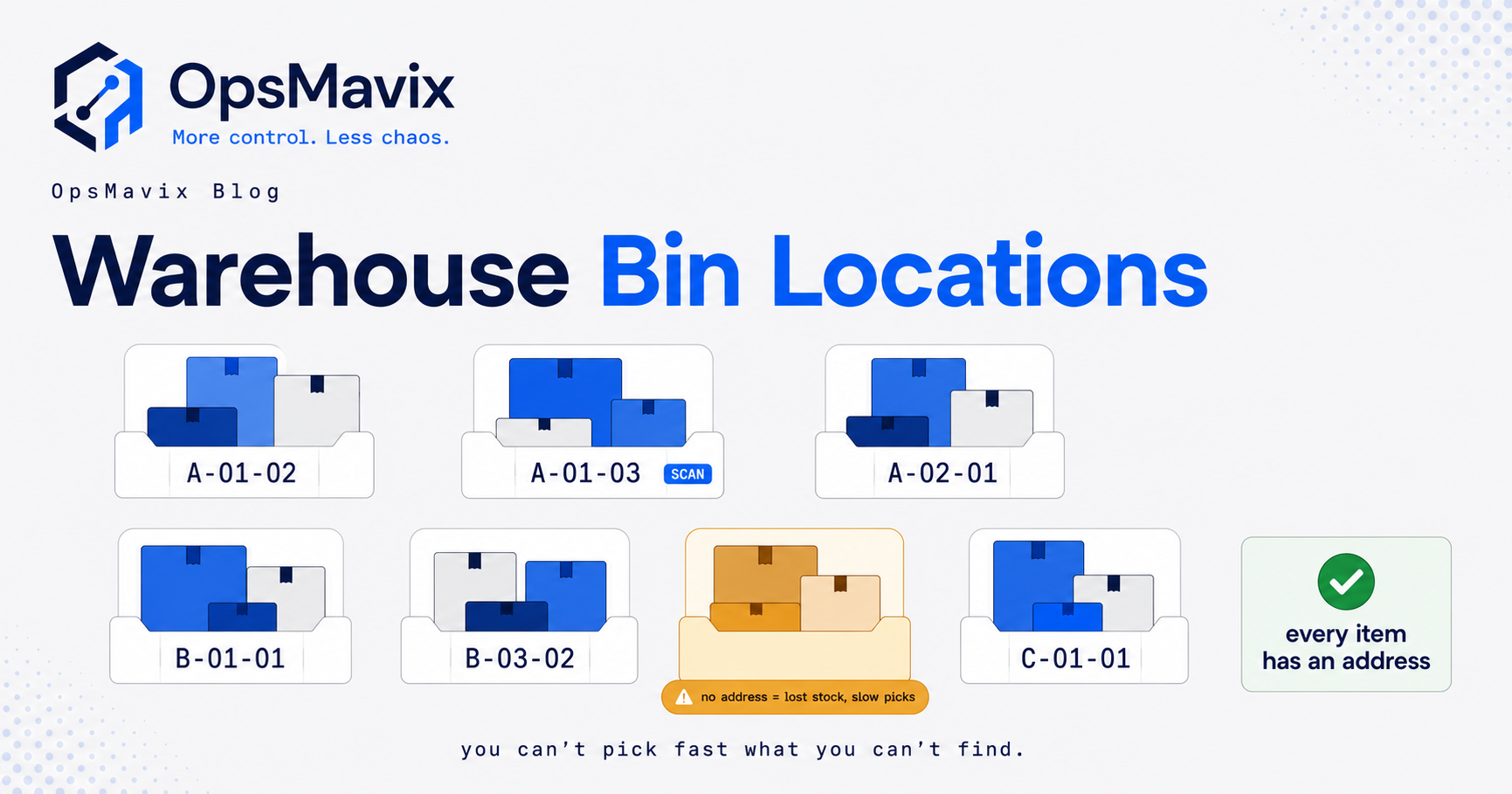
Warehouse Bin Locations: The Addressing System That Speeds Up Every Pick
A practical guide to warehouse bin locations — giving every place stock can live a consistent address, why a random or memory-based layout wrecks picking speed and stock accuracy, a simple zone-aisle-bay-shelf-bin naming convention with worked examples, how to roll one out in a growing warehouse without stopping picking, and how good locations become the foundation that slotting, faster picking and reliable cycle counts all sit on.
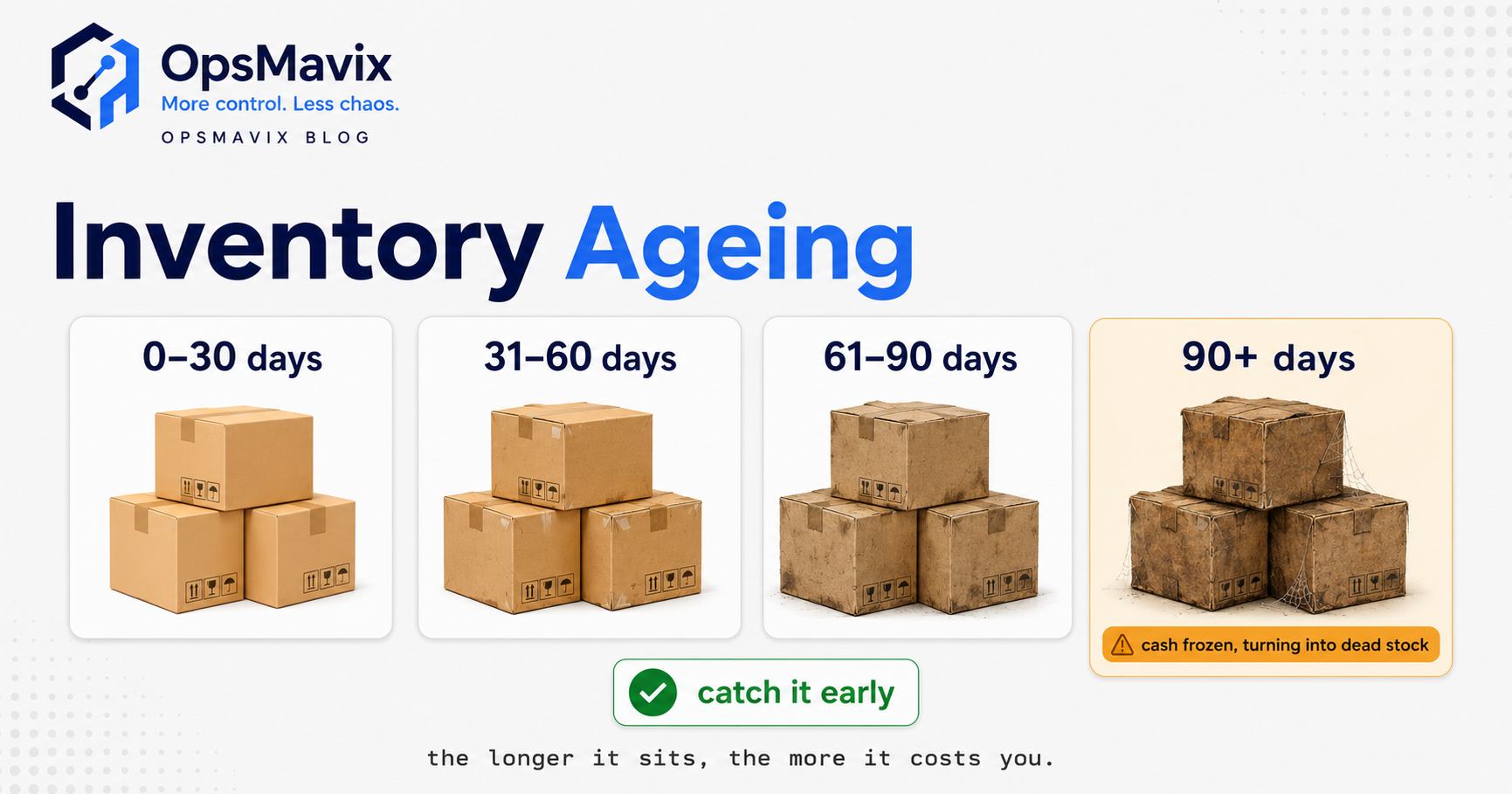
Inventory Ageing Analysis: Find the Stock That's Quietly Costing You
An inventory ageing analysis groups every SKU by how long it has sat unsold, so you catch slow movers while there is still time to act instead of finding out at stocktake. This walks through building the report from your own data, reading each ageing bucket, deciding what to do with each one — mark down, bundle, stop reordering, return to supplier — and keeping a live system flagging ageing stock automatically.
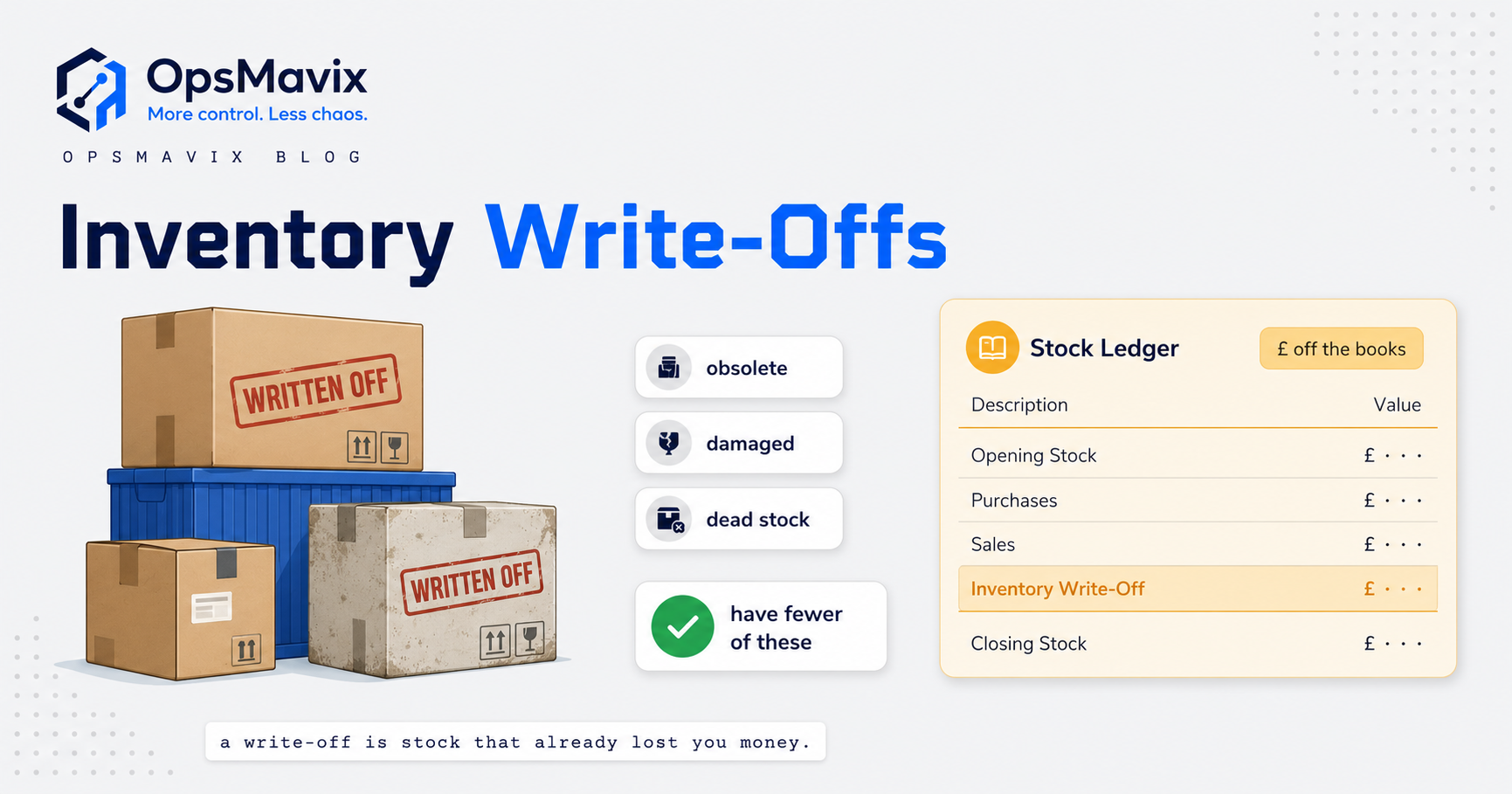
Inventory Write-Offs: When, How, and How to Have Fewer
An inventory write-off removes stock from your books once it can no longer be sold — lost, damaged, obsolete or stolen. Most guides stop at the accounting entry. This one joins the entry to the operational causes and, more usefully, to how you have fewer write-offs next year.
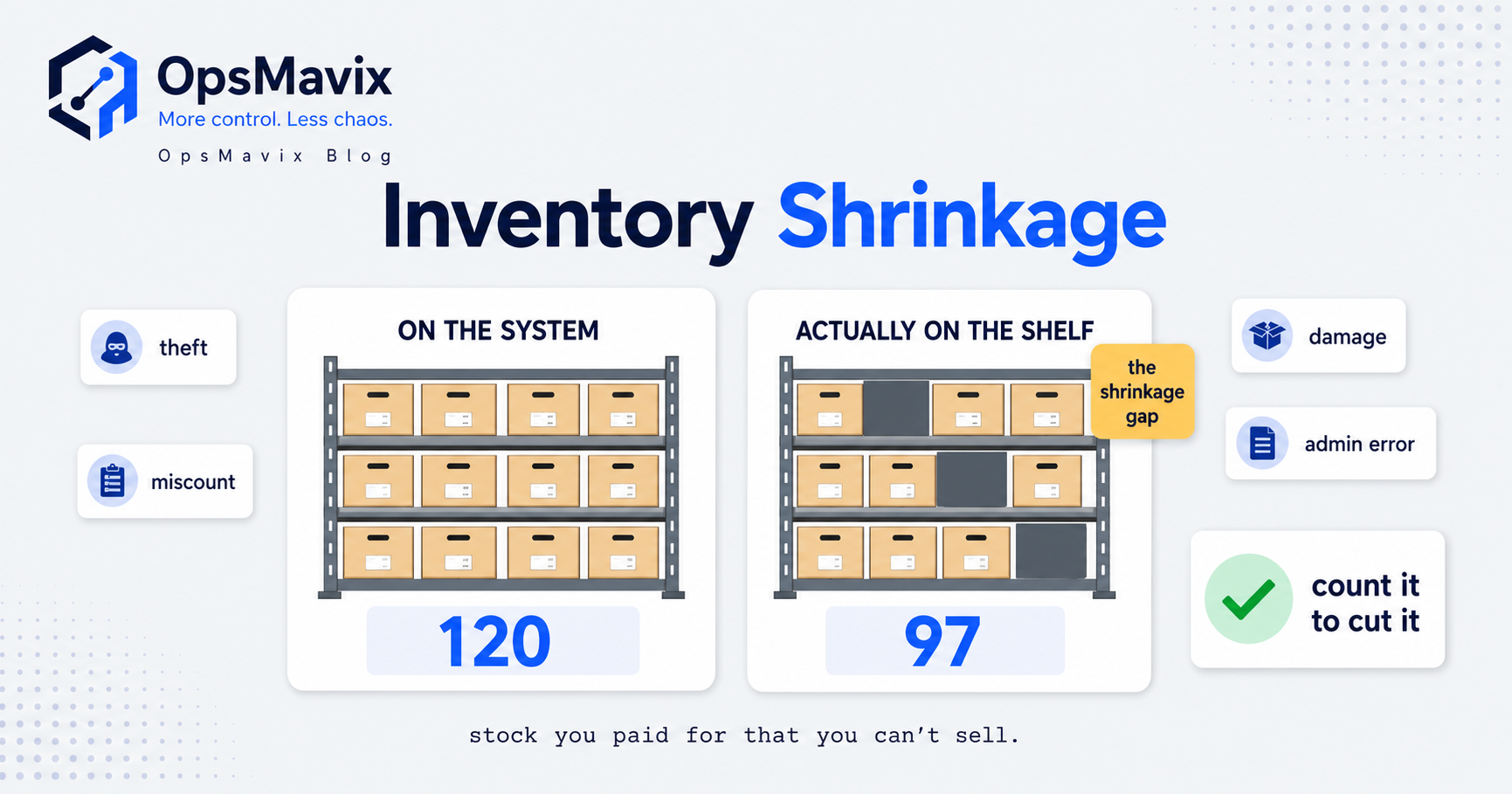
Inventory Shrinkage: What It Is, What Causes It, and How to Cut It
Inventory shrinkage is the gap between the stock your records say you own and the stock you actually have — units you paid for but cannot sell. This is the practical guide: the shrinkage-rate formula worked through in £, the real causes (theft, admin error, damage, supplier short-shipment, miscounts), how to measure it honestly, and how to cut it with accurate stock records, disciplined cycle counts and ABC focus on the high-value lines. It also draws the line most articles blur: shrinkage is the loss, a stock discrepancy is the count mismatch that reveals it.
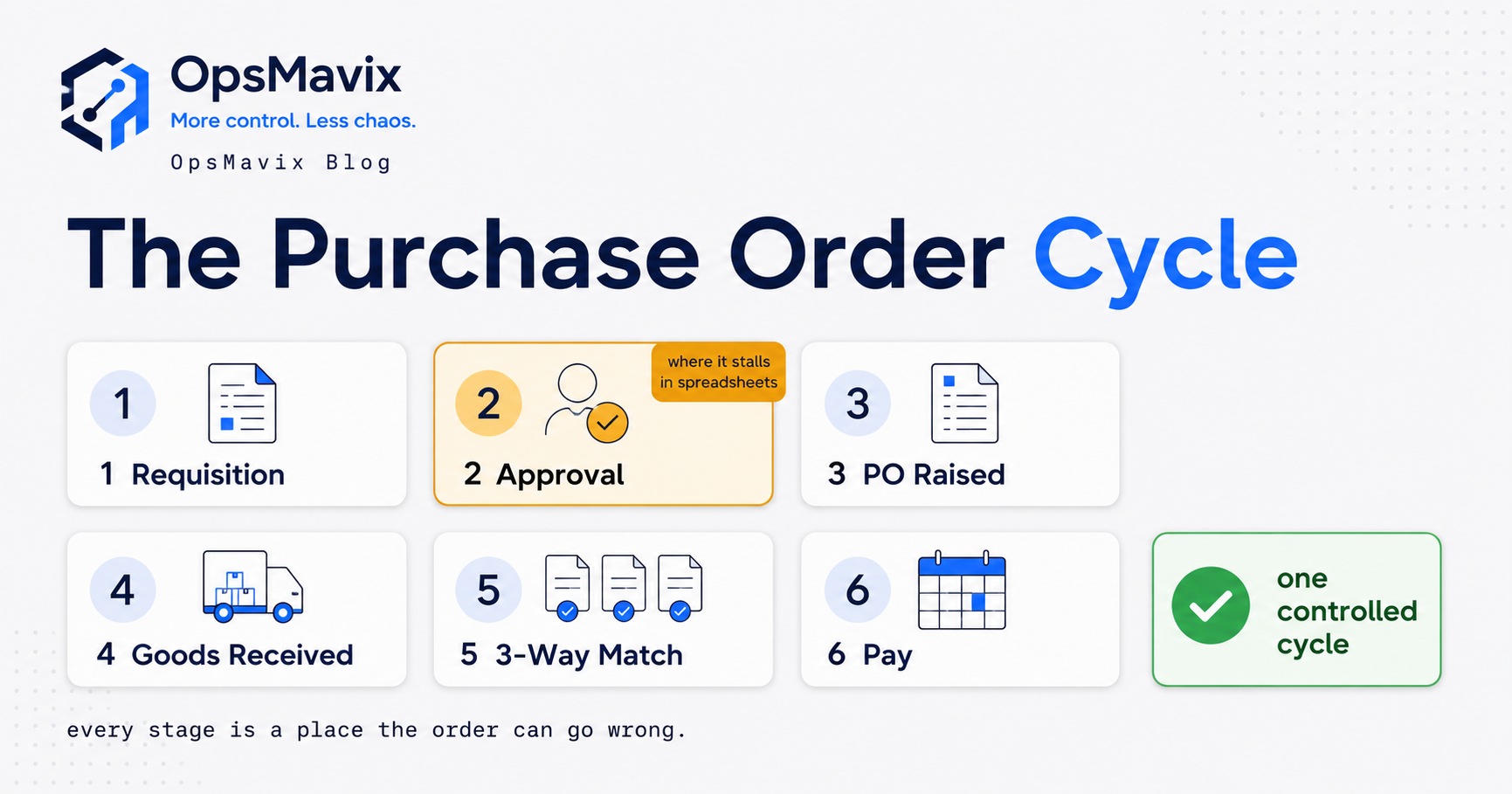
The Purchase Order Cycle, End to End (Procure-to-Pay)
The purchase order cycle runs from the moment someone identifies a need to the moment the order is paid and closed — requisition, approval, PO raised, sent to supplier, goods received, three-way match, invoice, payment, close. This guide walks every stage end to end, explains what each one is for and who owns it, shows exactly where each stage breaks when it lives in email and spreadsheets — missed approvals, wrong quantities, unmatched invoices — and how an owned system controls the whole cycle from one view instead of nine disconnected steps.