
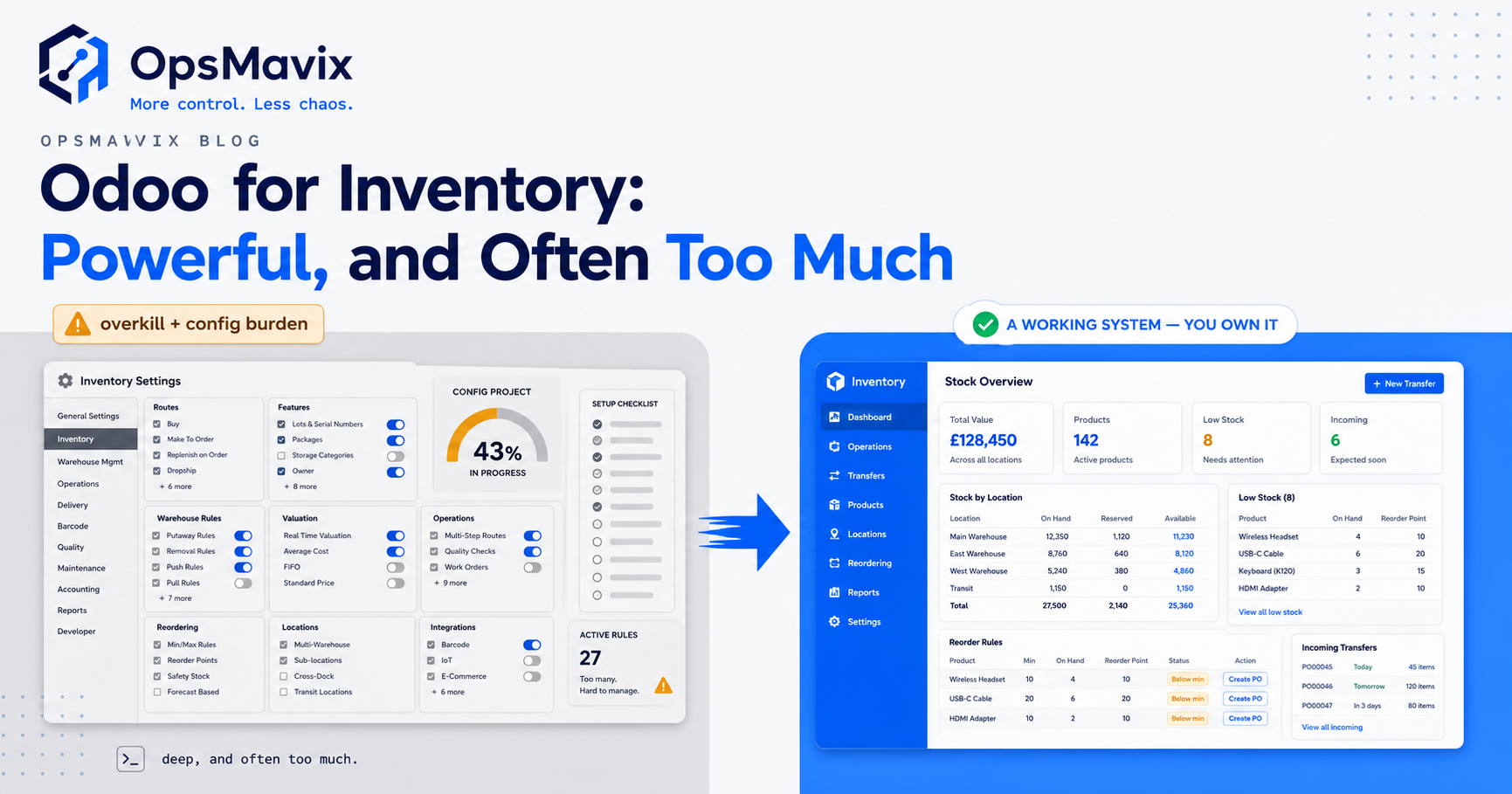
Odoo for Inventory: Powerful, and Often Too Much
Odoo Inventory is a genuinely deep stock and warehouse module — routes, putaway rules, multi-step flows, reordering, lot and serial tracking, the lot. The trouble for a smaller business isn't capability, it's fit: you inherit a configuration project instead of a working system, get warehouse-grade depth where you needed a clear count, and awkward gaps where your operation is actually specific. Here's what Odoo Inventory really does, where it overshoots an SME, and what a right-sized stock system does instead.
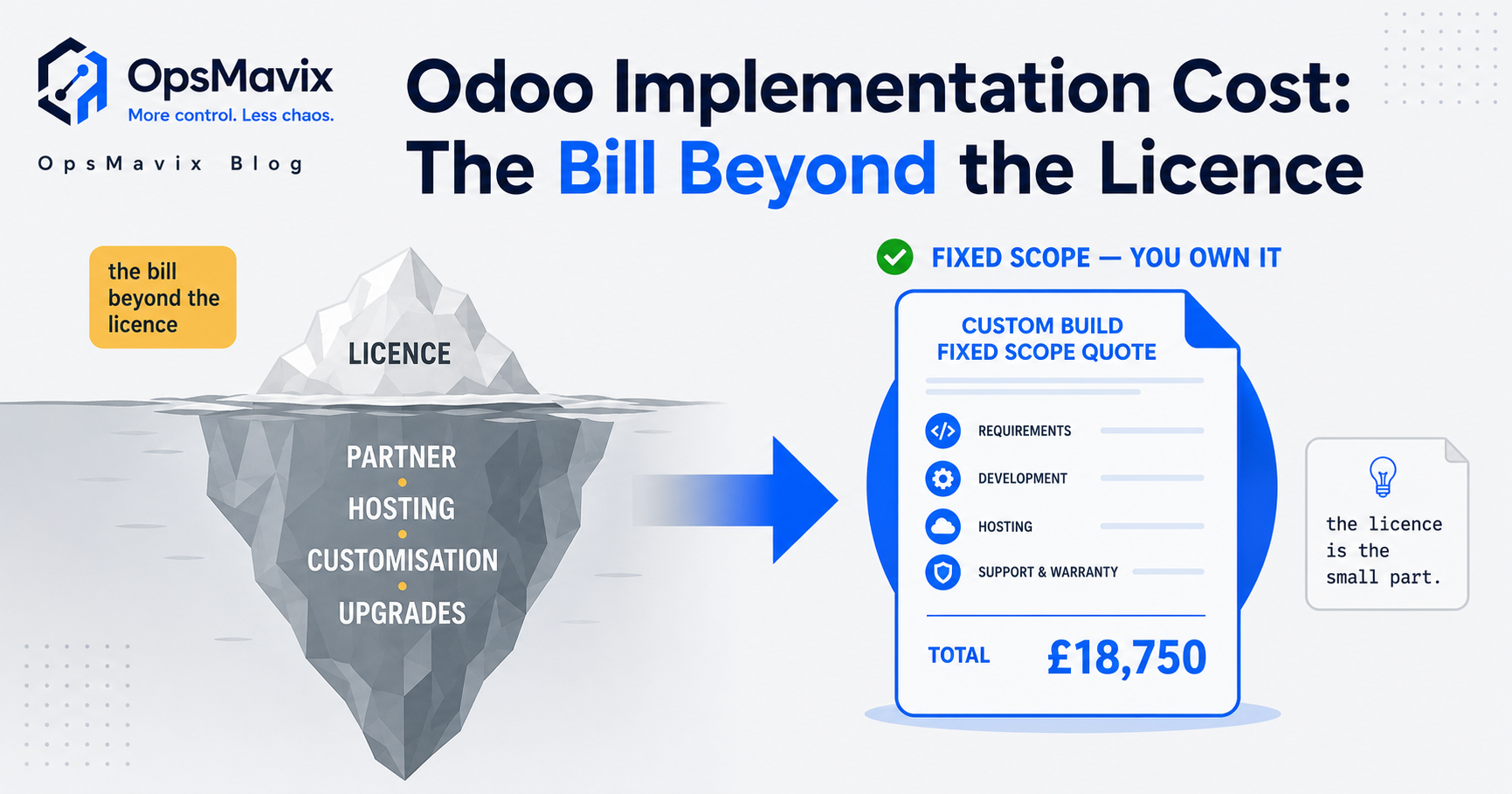
Odoo Implementation Cost: The Bill Beyond the Licence
The Odoo implementation cost people quote you is the per-user licence — the small, predictable part. The real bill is the partner implementation, the customisation to make it fit, the hosting, the third-party apps, and the upgrade tax you pay every version. Here's how the cost is structured, why an open-ended config project drifts, and how to compare it fairly against a fixed-scope custom build.
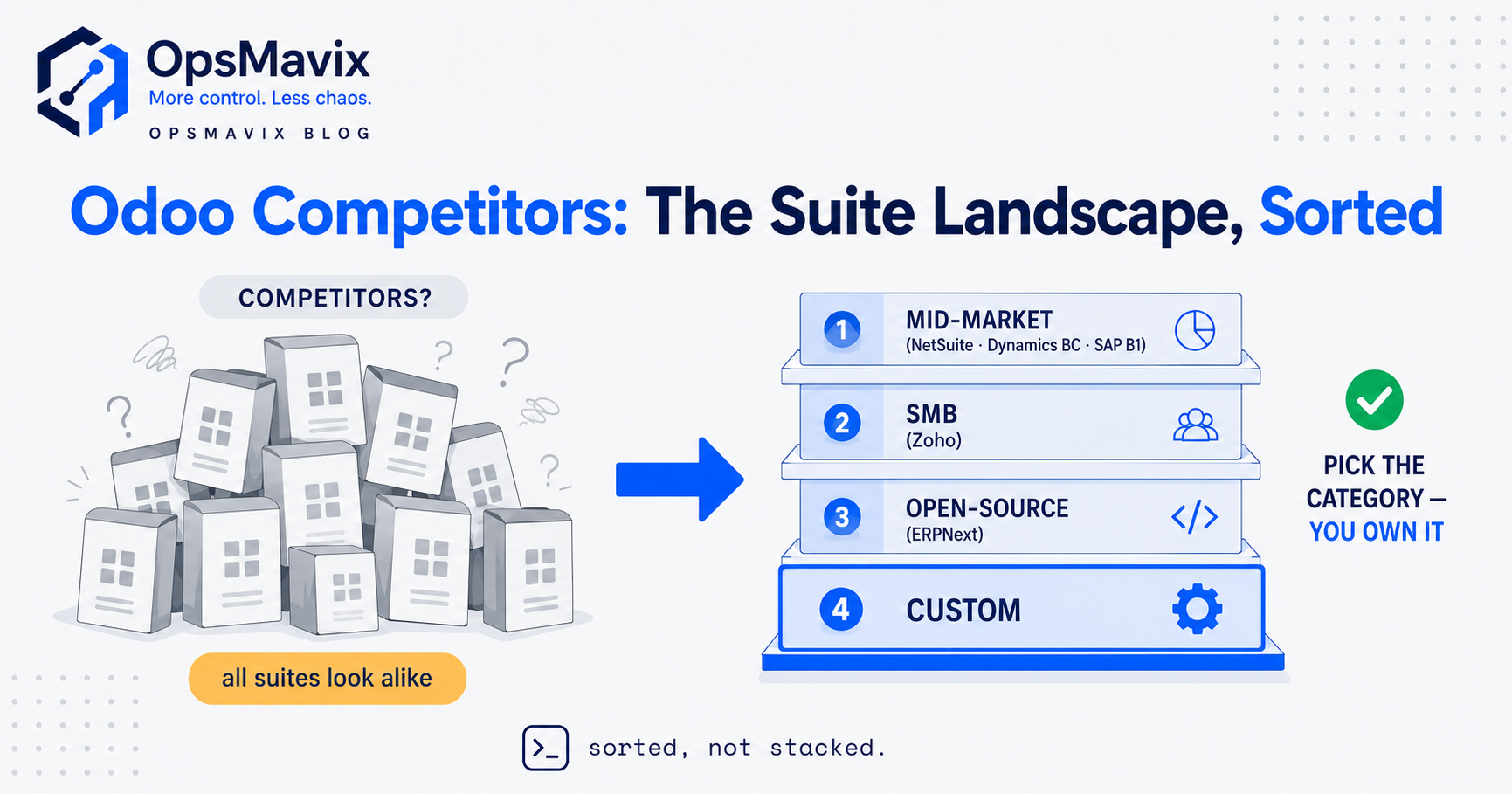
Odoo Competitors: The Suite Landscape, Sorted (and Where a Build Fits)
Odoo competitors aren't one list — they're different categories of suite answering different questions. Mid-market ERPs like NetSuite, Dynamics 365 Business Central and SAP Business One sit above SMB suites like Zoho One and open-source options like ERPNext. This is an even-handed map of who each one suits and where it stops, why picking the category matters more than any feature comparison, and where a right-sized custom operations system fits for firms that don't need the whole suite.
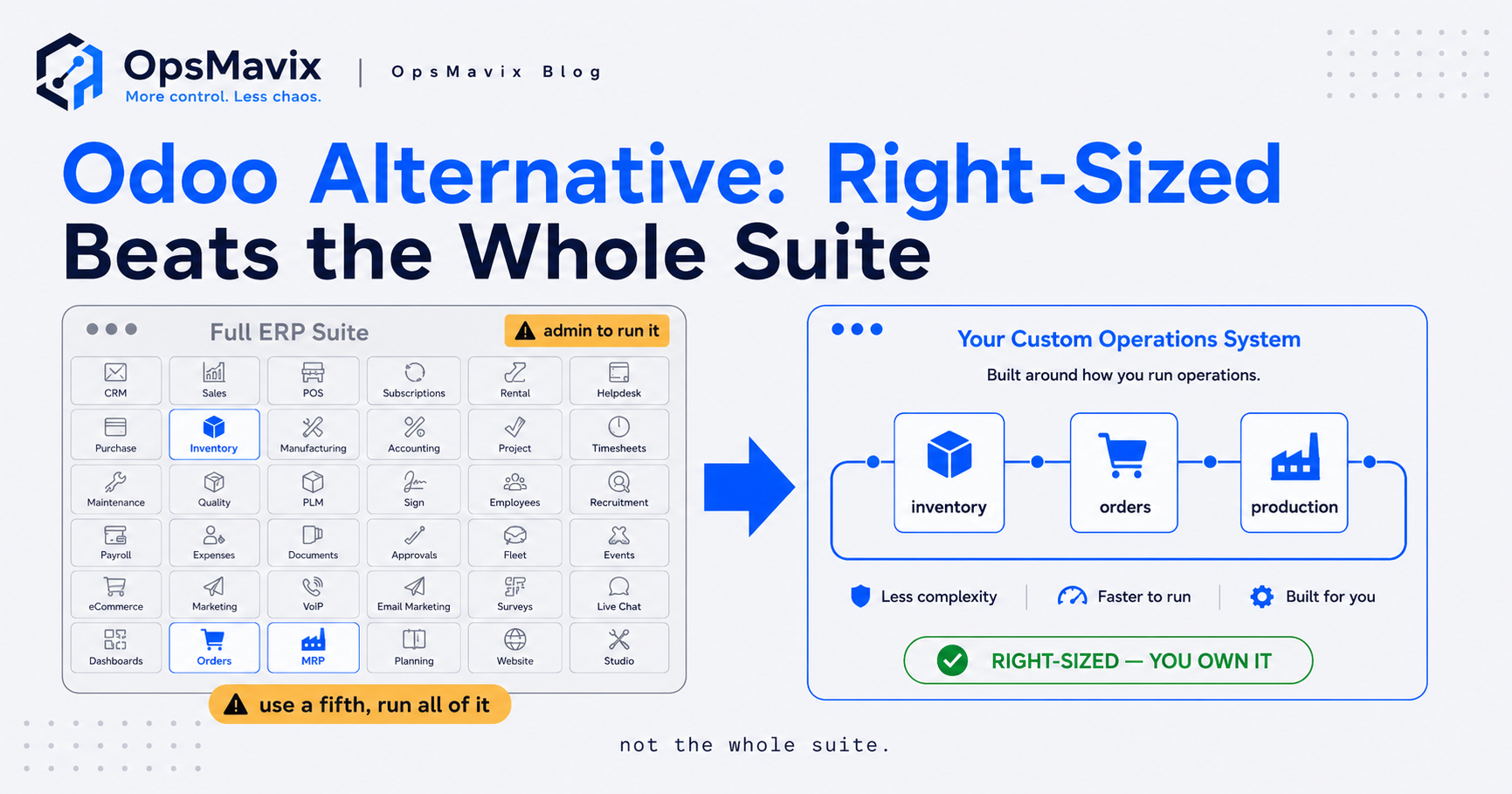
Odoo Alternative UK: Right-Sized Beats the Whole Suite
An Odoo alternative isn't a cheaper version of the same thing — it's a different answer to the question. Odoo gives you a suite of dozens of apps, most of which you'll never switch on, plus the admin of running them. A focused custom operations system covers what you actually do without the suite overhead. Here's where Odoo genuinely fits, the run-cost most buyers miss, and how to decide.
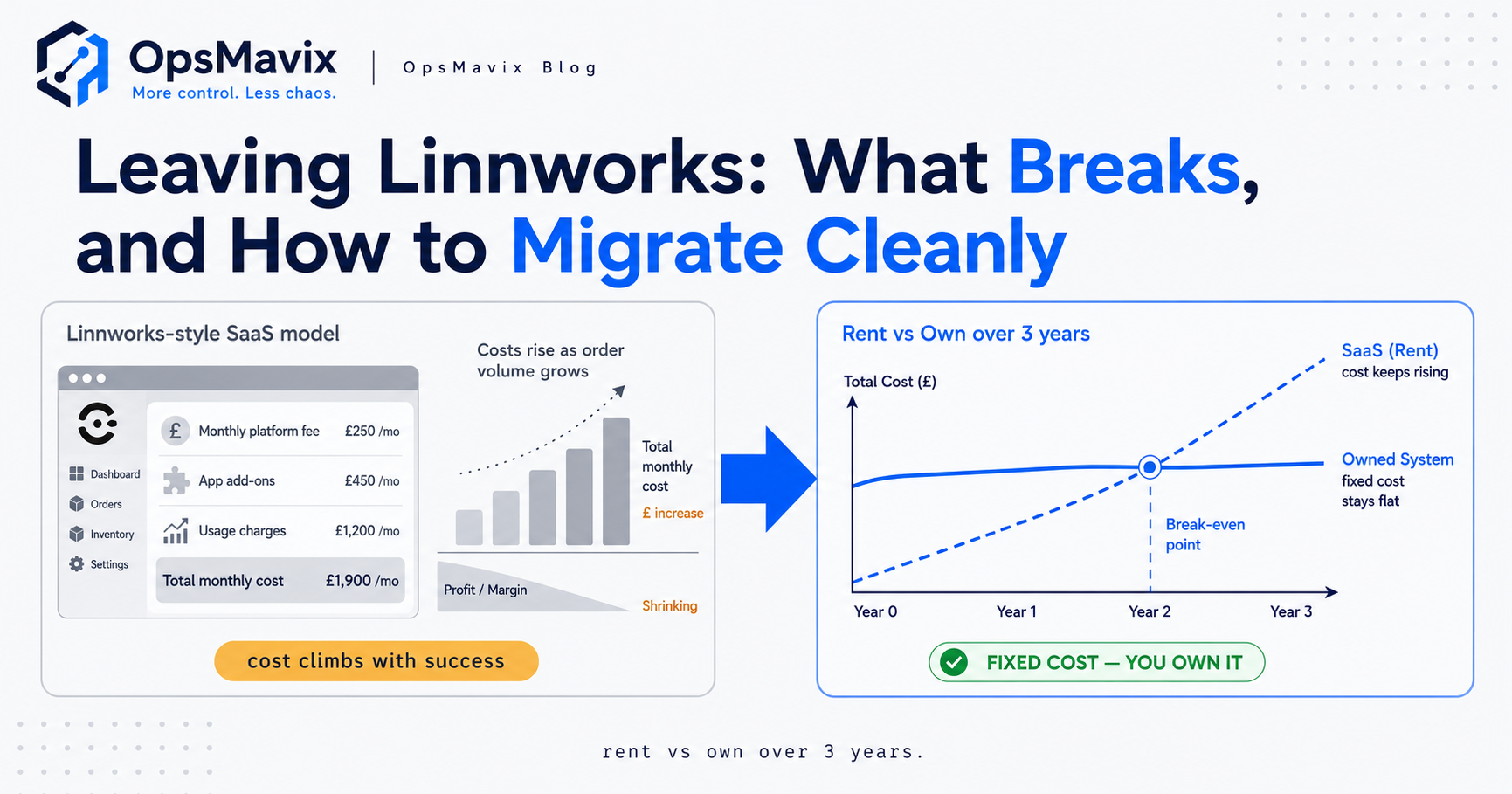
Leaving Linnworks: What Breaks, and How to Migrate Cleanly
Linnworks problems tend to build slowly — a workaround here, a stock figure that won't reconcile there — until moving off starts to look like the only fix. This is the honest exit guide: which pains are fit versus config, what to export before you leave, how to map your data into a new system, and how to run a phased cutover without losing history or throwing your stock into chaos.
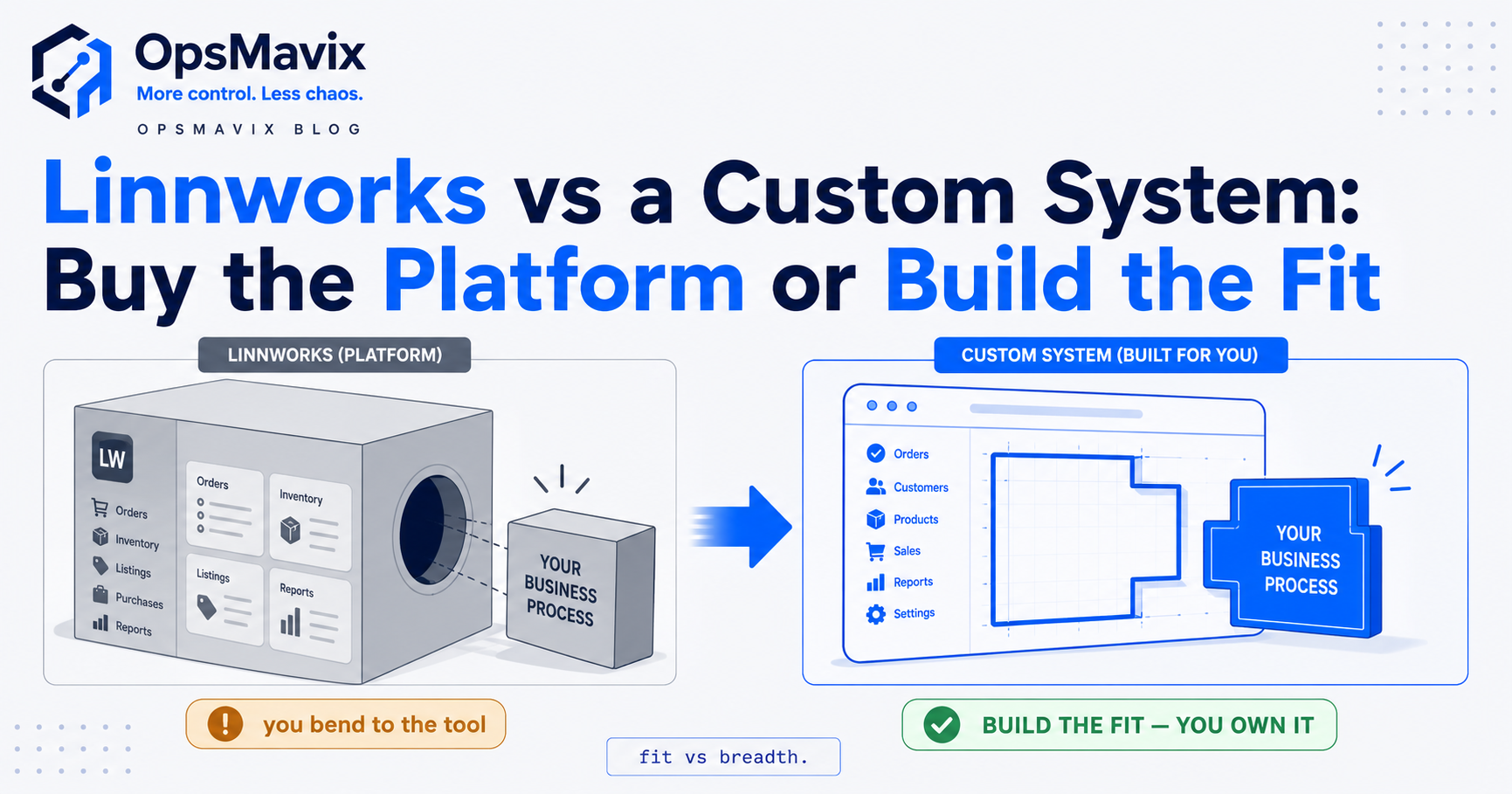
Linnworks vs a Custom System: Buy the Platform or Build the Fit
Linnworks vs a custom system isn't a contest with a winner — it's a trade-off between the breadth and speed-to-start of a SaaS platform and the exact fit and ownership of a system built around your flow. Here's what each side genuinely wins on, the real cost and risk over time, the price of bending to the tool, and a checklist to decide honestly.
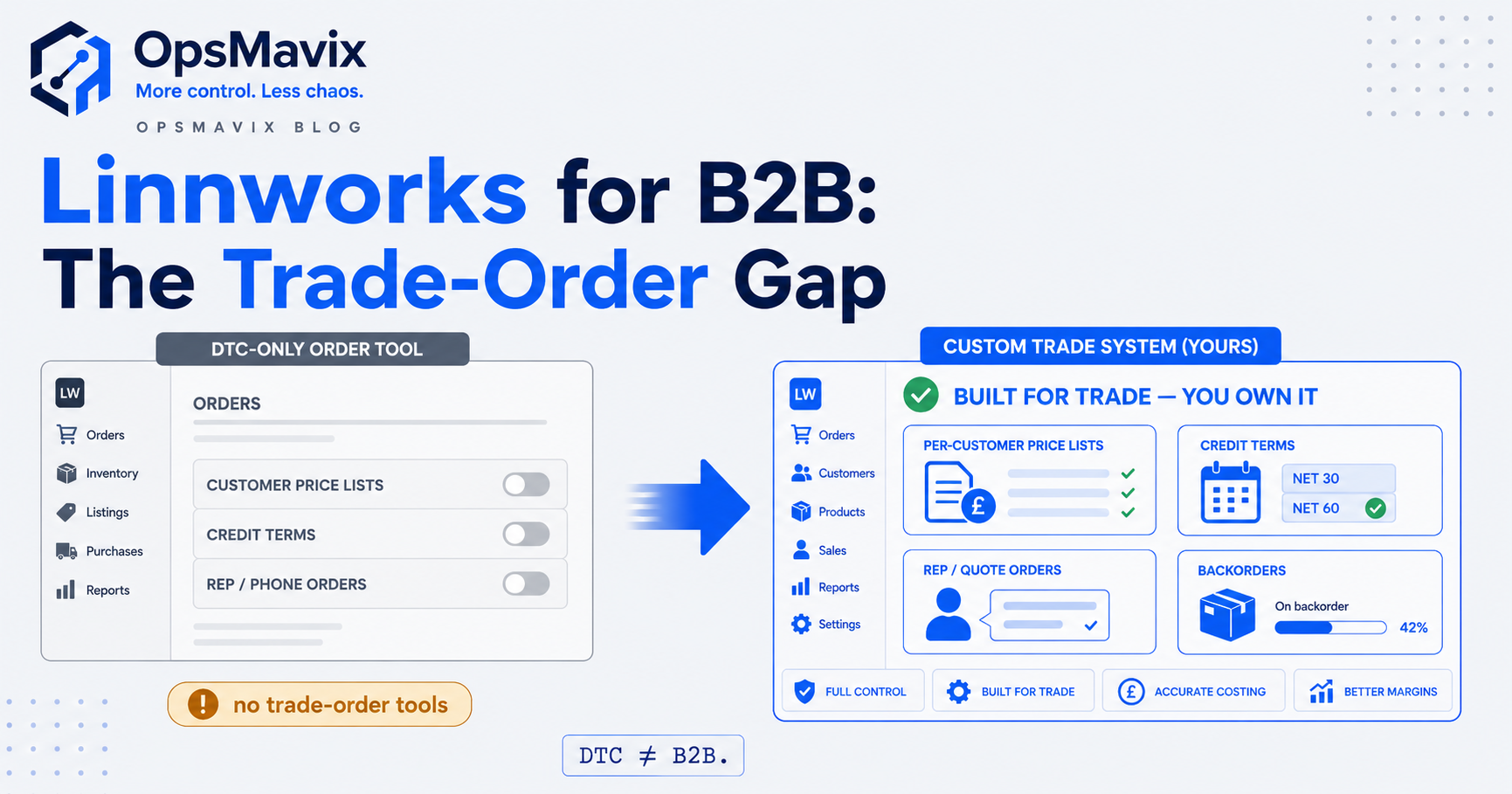
Linnworks for Wholesale & B2B: The Trade-Order Gap
Linnworks is strong multichannel software built for direct-to-consumer selling, but the moment you sell to trade the fit gets awkward. Per-customer price lists, credit terms, rep and phone orders, minimum-order rules and backorders are the everyday shape of wholesale — and they're the parts a DTC platform handles thinly or not at all. Here's exactly where the trade-order gap opens, and what a system shaped to how you actually sell does instead.
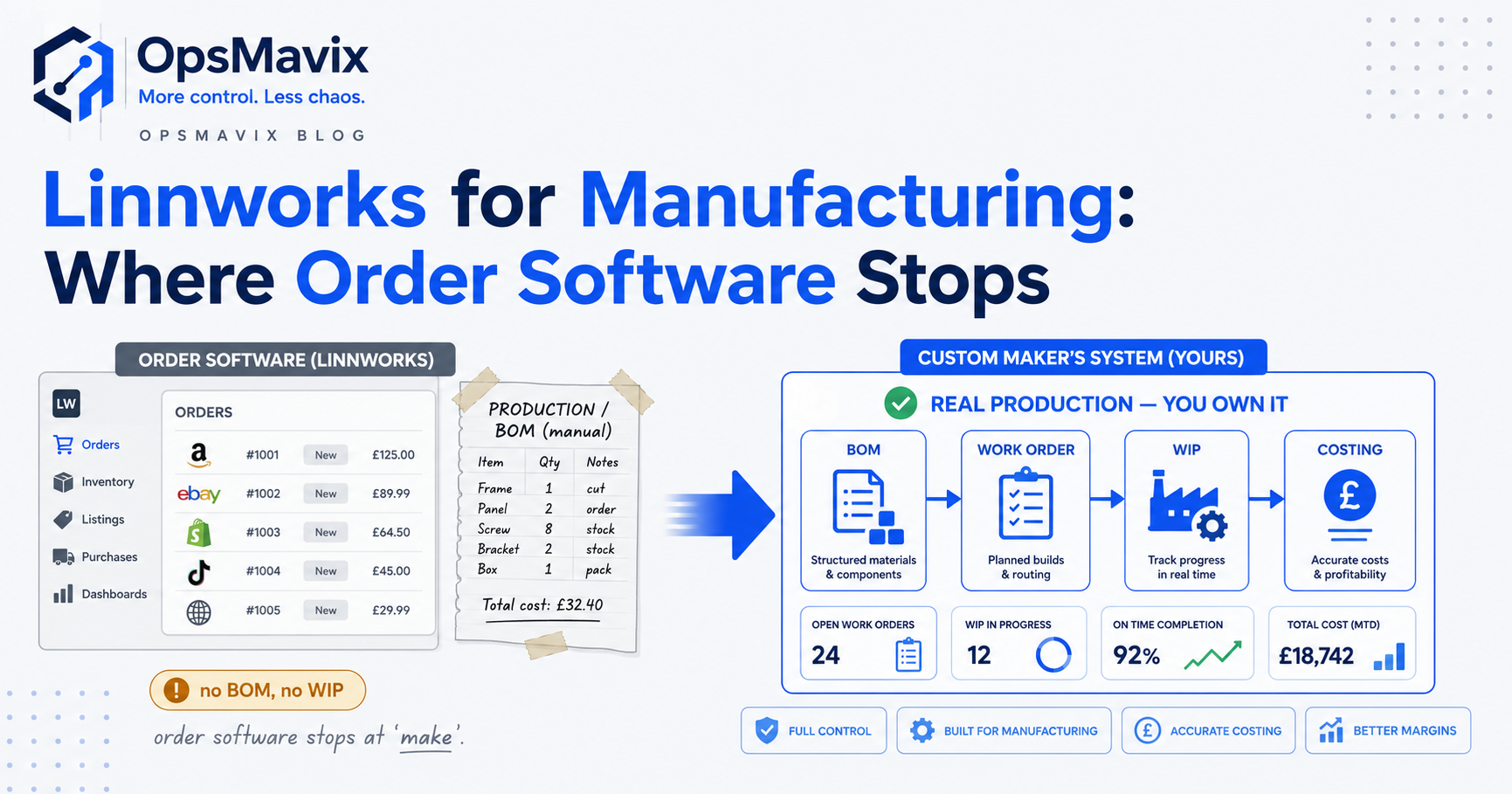
Linnworks for Manufacturing: Where Order Software Stops
Linnworks for manufacturing runs into a wall the moment you stop selling stock and start making it. The platform is strong at multichannel orders, inventory sync and warehouse fulfilment, and its kitting handles bundles — but there's no true multi-level BOM, no work orders, no WIP and no material costing. Here's exactly where order software stops, why makers end up running production on a spreadsheet beside it, and how to tell whether light kitting is enough or you need a system shaped to how you make things.
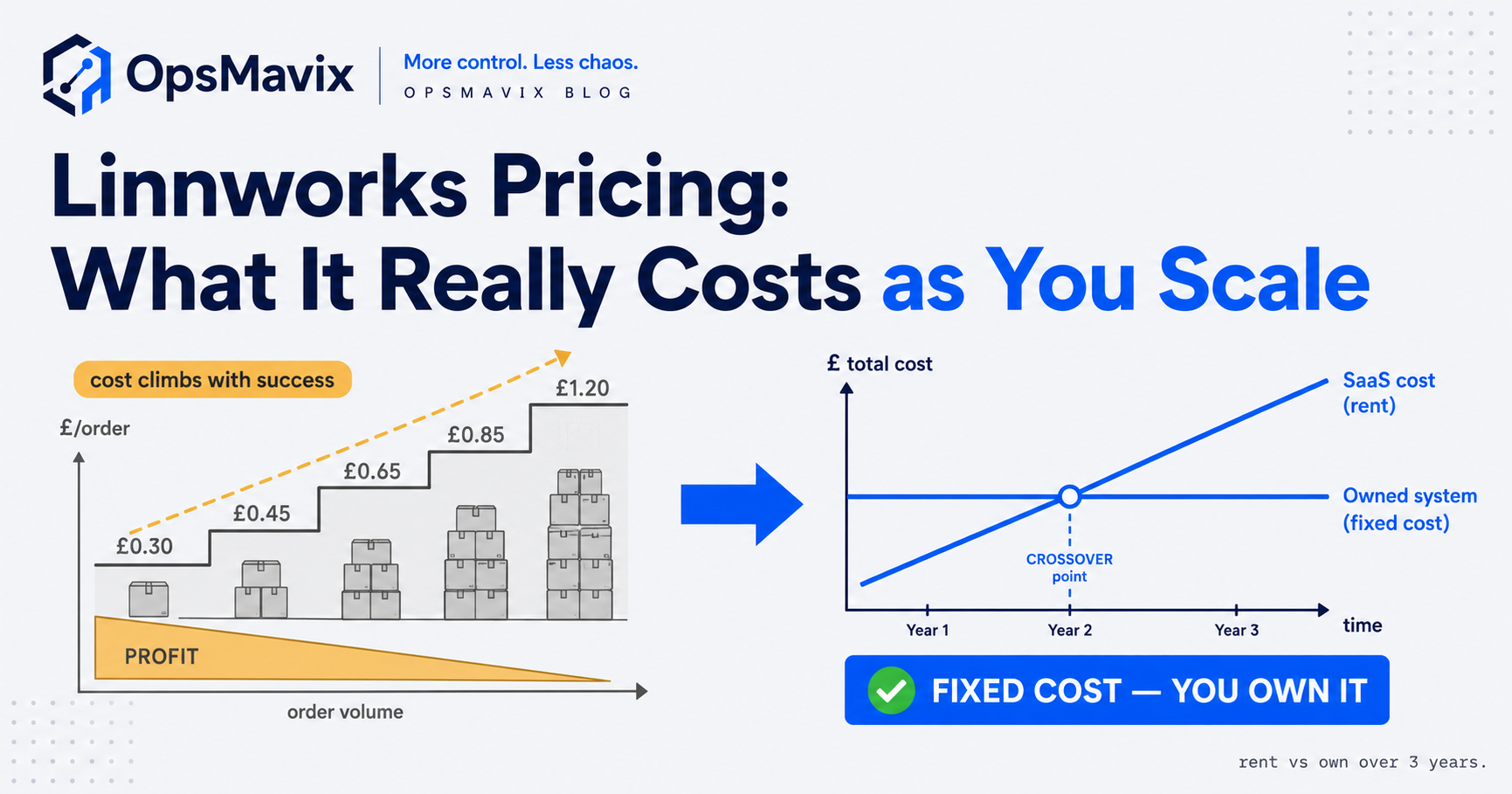
Linnworks Pricing: What It Really Costs as You Scale
Linnworks pricing is built around your monthly order volume, with paid add-ons for listings, warehouse and forecasting stacked on top and overage charges when you cross a tier. That model stays cheap while your volume is low and predictable — and quietly turns your own growth into a rising bill. Here's how the pricing structure works, the costs that don't show on the headline quote, and the point where a fixed-cost system you own becomes the cheaper answer over three years.