
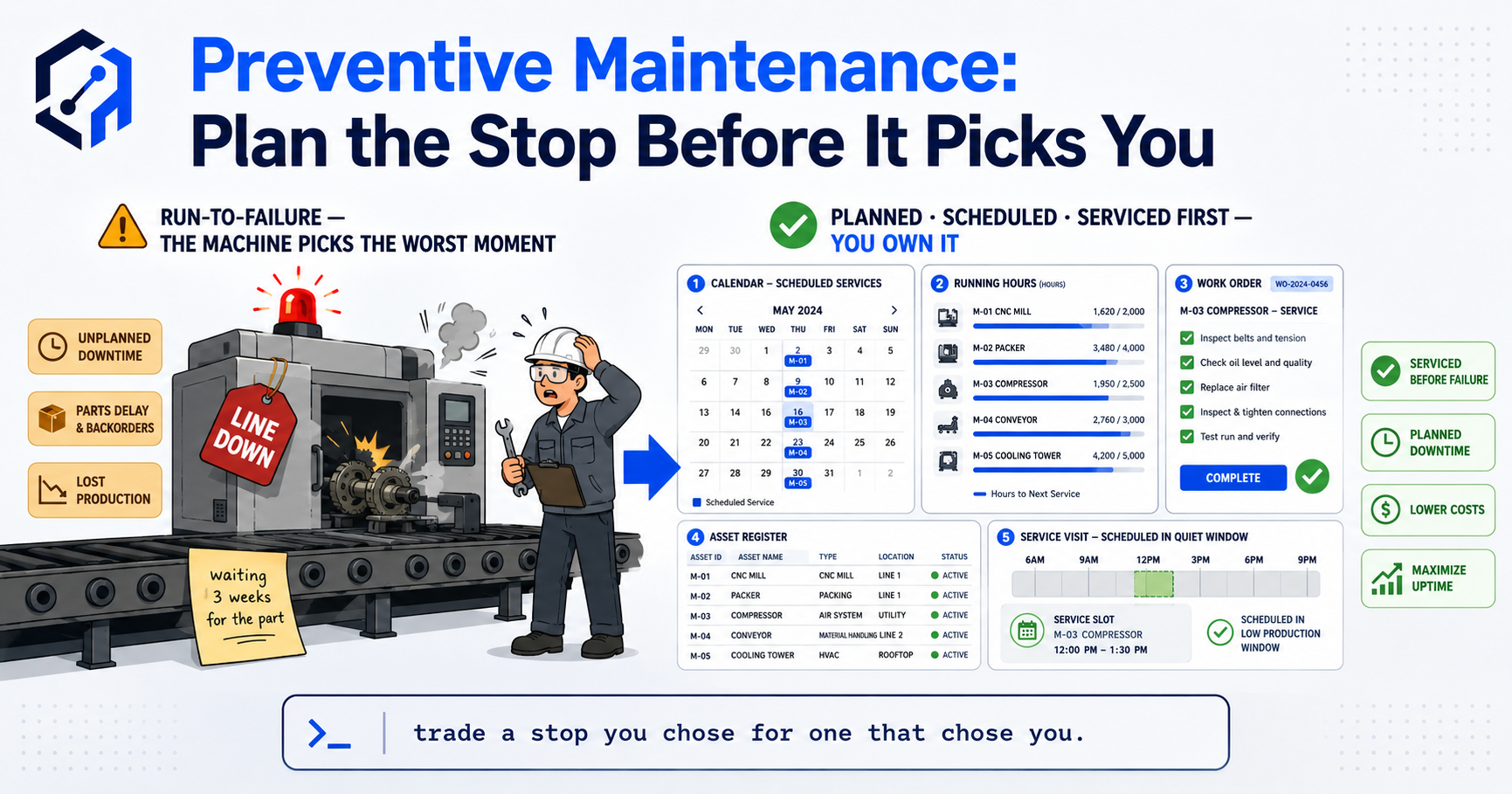
Preventive Maintenance Software: Scheduling Repairs Before They Become Breakdowns
Preventive maintenance is servicing equipment on a planned schedule — by calendar time or by usage — so it gets attention before it breaks, not after. Most small manufacturers run their machines to failure and pay for it in stopped lines. Here's how time-based and meter-based PM schedules, a real asset register, maintenance work orders with checklists, and the right spares on the shelf move you off the breakdown treadmill.
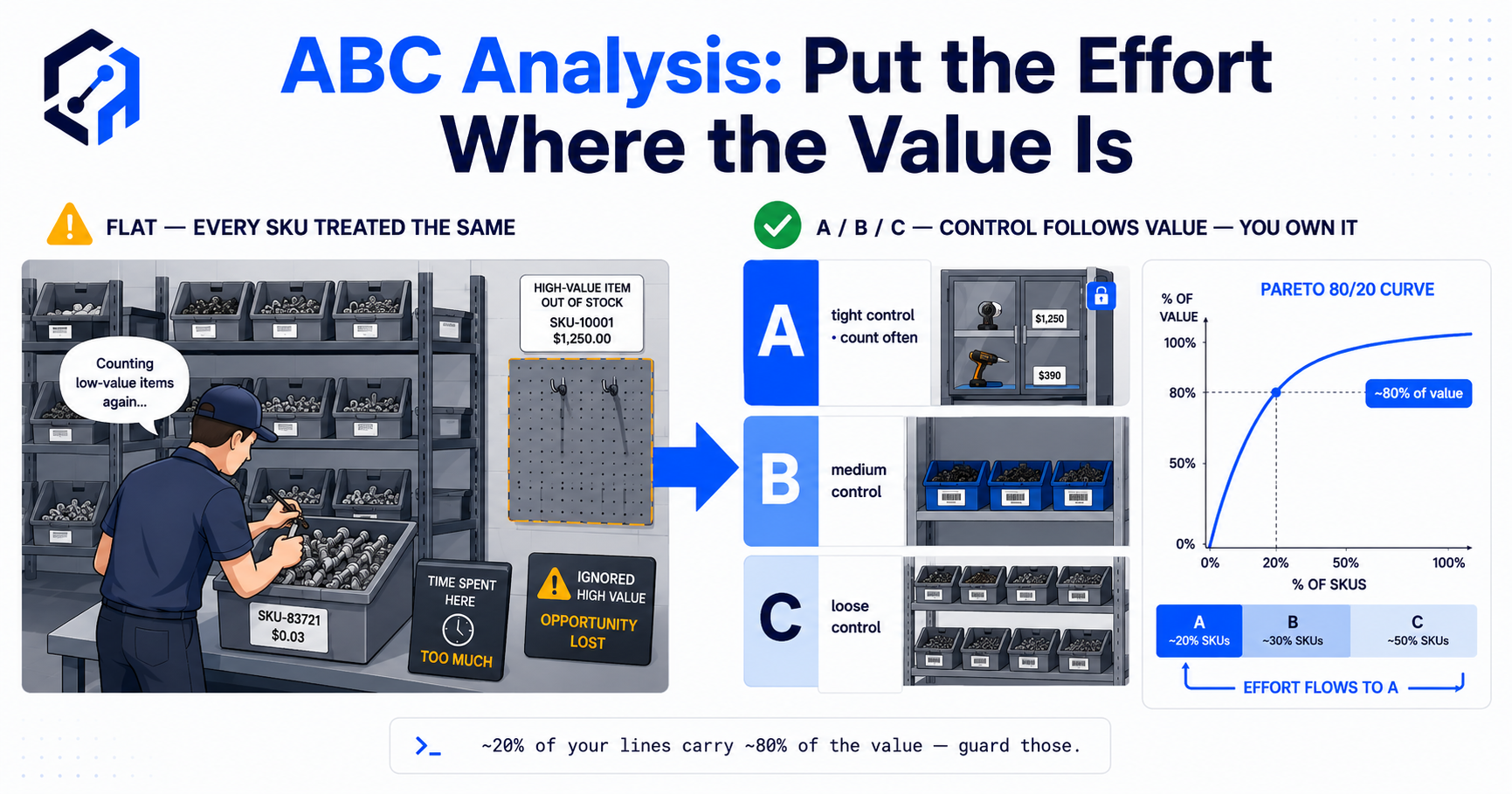
ABC Analysis for Inventory: Put Your Control Where the Value Is
ABC analysis sorts every SKU into three classes by annual usage value, so the stock that ties up most of your cash gets most of your attention and the long tail gets left alone. Here's how to rank the lines, where to draw the A/B/C cut-offs, and what you actually do differently for each class once you have.
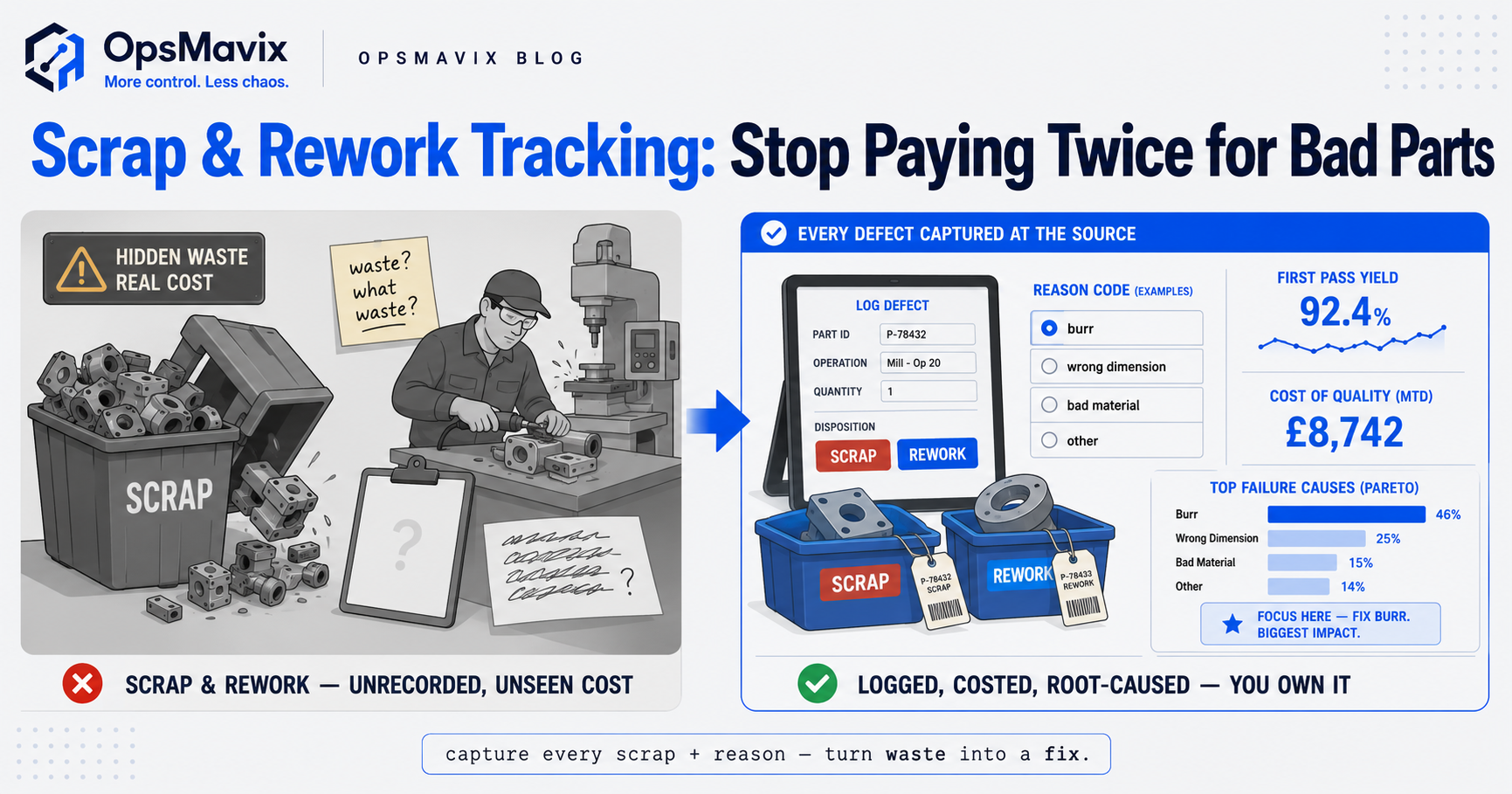
Scrap and Rework Tracking: Turning Wasted Material Into Root-Cause Fixes
Scrap and rework tracking means logging every binned or fixed part with a reason code at the moment it happens, so you can see where and why parts fail. Most shops only find out from the month-end material variance. Here's how to capture scrap and rework on the floor, cost it properly, and turn the data into fixes instead of a number nobody can explain.
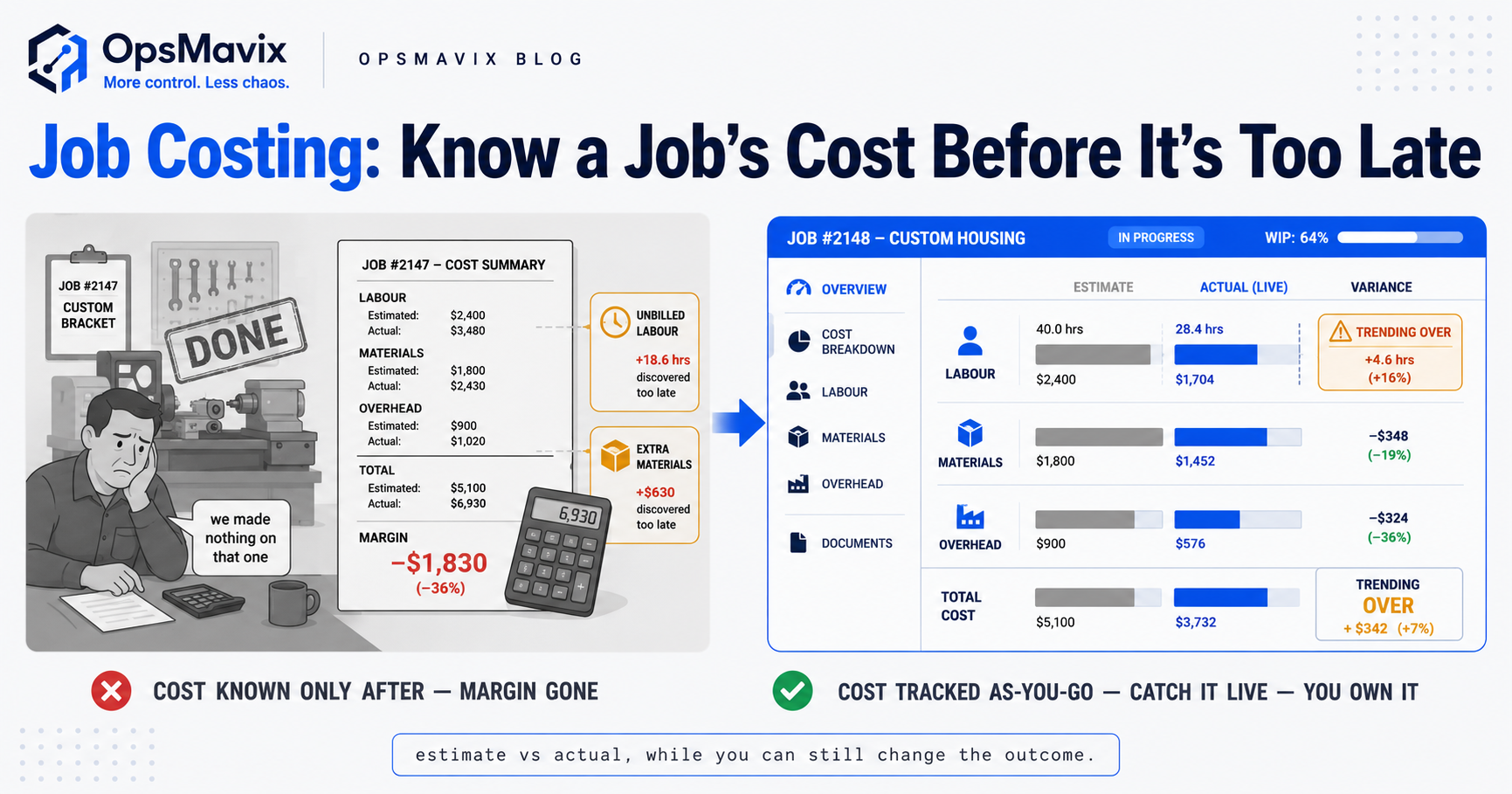
Job Costing Software: Tracking True Cost Per Job as You Go
Job costing software captures labour, materials and overhead against a specific job as the work happens — so you see estimate vs actual while the job is still live, catch it going over before delivery, and quote the next one sharper. Here's how it works.
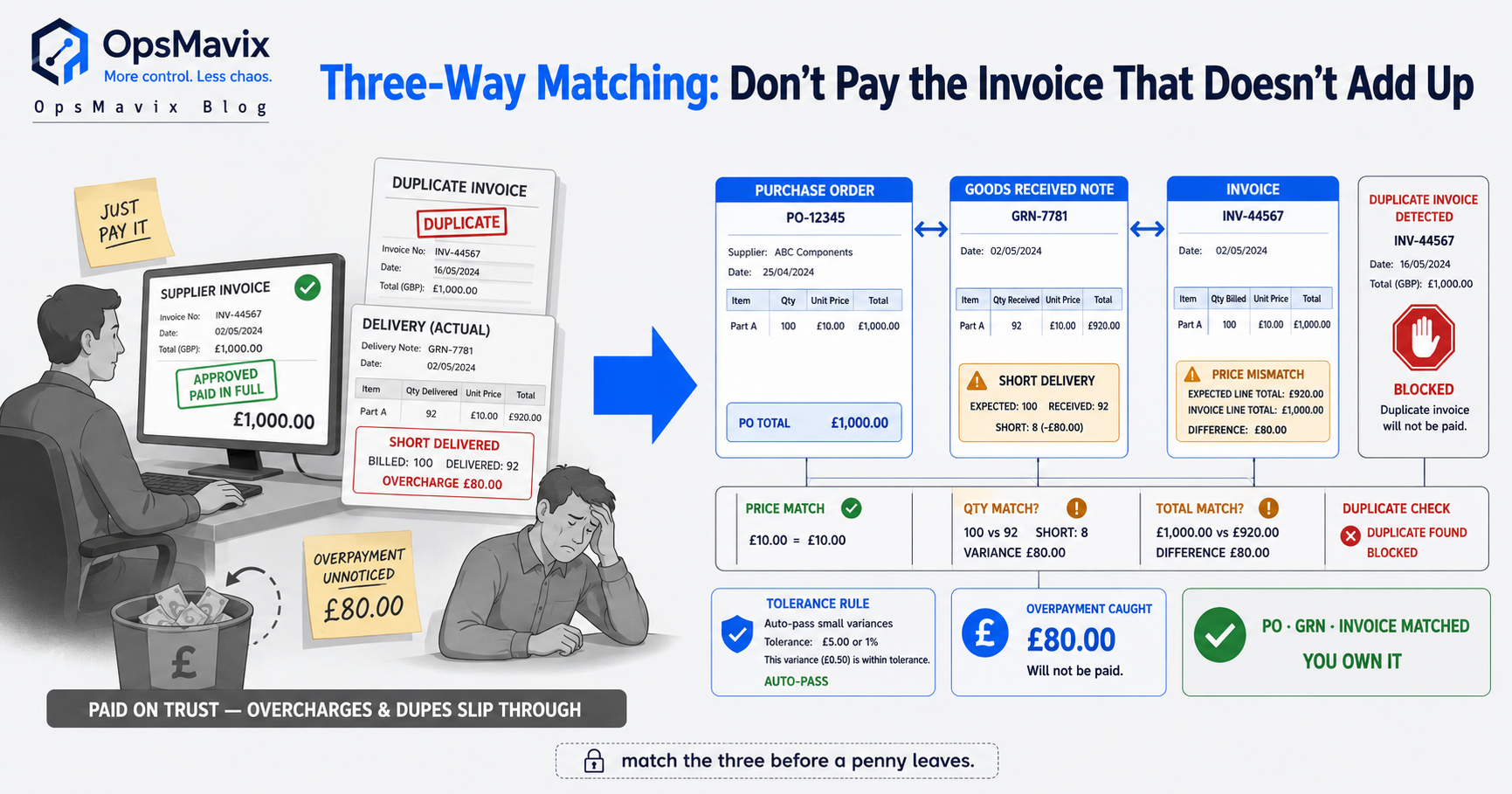
Three-Way Matching: Catching the Invoices That Don't Add Up
Three-way matching is the check that lines up the purchase order, the goods received note and the supplier invoice — so you never overpay, double-pay, or pay for goods that never arrived. Here's how the match actually works, where tolerances belong, and why doing it by eye collapses the moment your volume climbs.
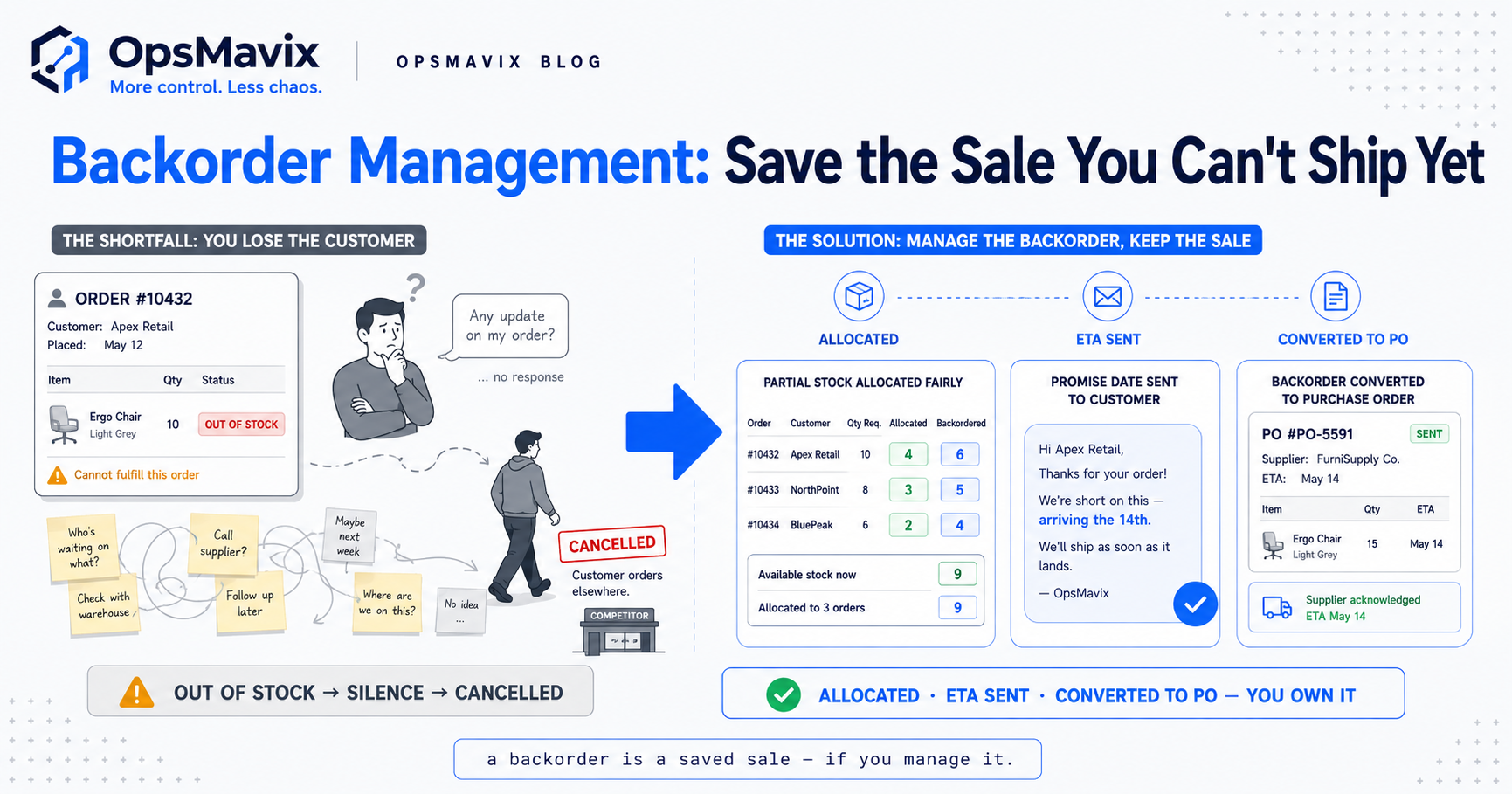
Backorder Management: Handling Orders You Can't Fulfil Yet
Backorder management is how you hold onto orders you can't fill today instead of losing them. Fair stock allocation across customers, honest promise dates, proactive comms, and turning backorders into purchase orders — here's how growing businesses stop silent backorders bleeding revenue.
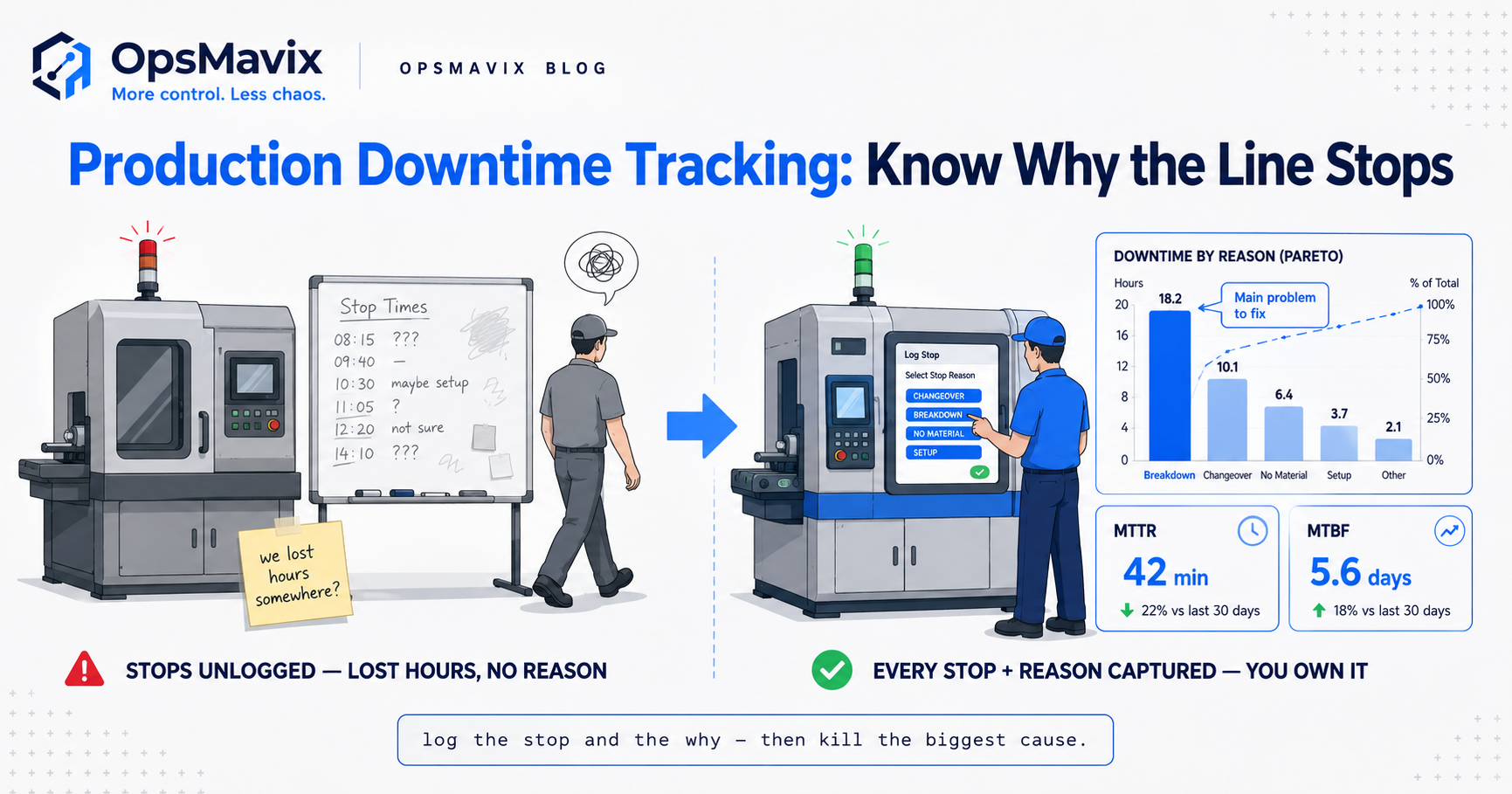
Production Downtime Tracking: Catching Every Stop Before It Costs You
Production downtime tracking is the discipline of logging every machine stop, why it happened, and how long it lasted — as it happens, not from memory. Most shops guess. Here's how to capture real stop reasons, split planned from unplanned, read MTBF and MTTR in plain terms, and turn the data into a Pareto of causes you can actually fix.
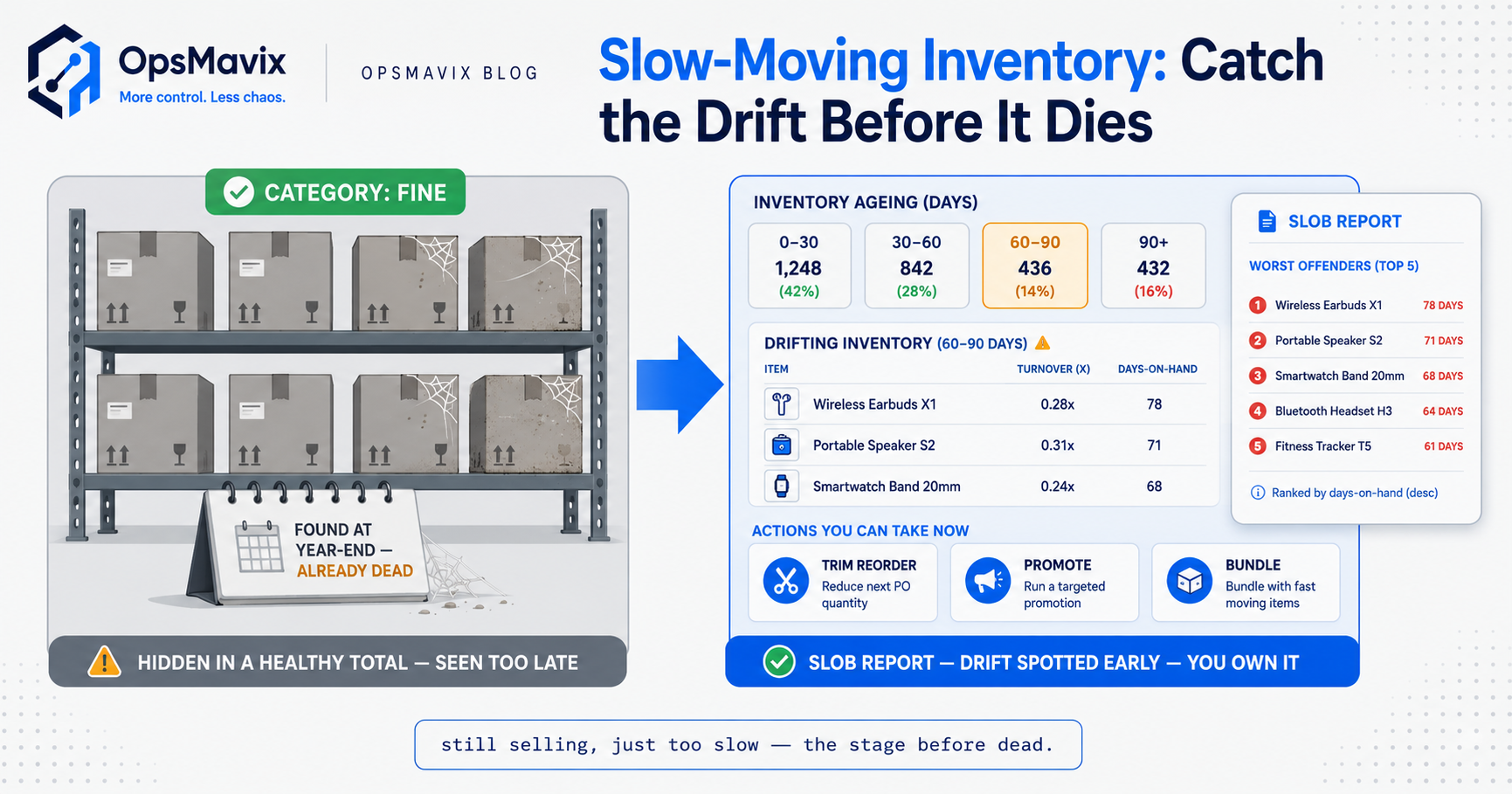
Slow-Moving Inventory: Spotting the Drift Before It Dies
Slow moving inventory is stock that still sells, just far too slowly — the early-warning stage before it goes dead. Here's how to measure it with stock turnover, days-on-hand and ageing buckets, build a SLOB report, and set per-category thresholds so the drift shows up while there's still time to act.
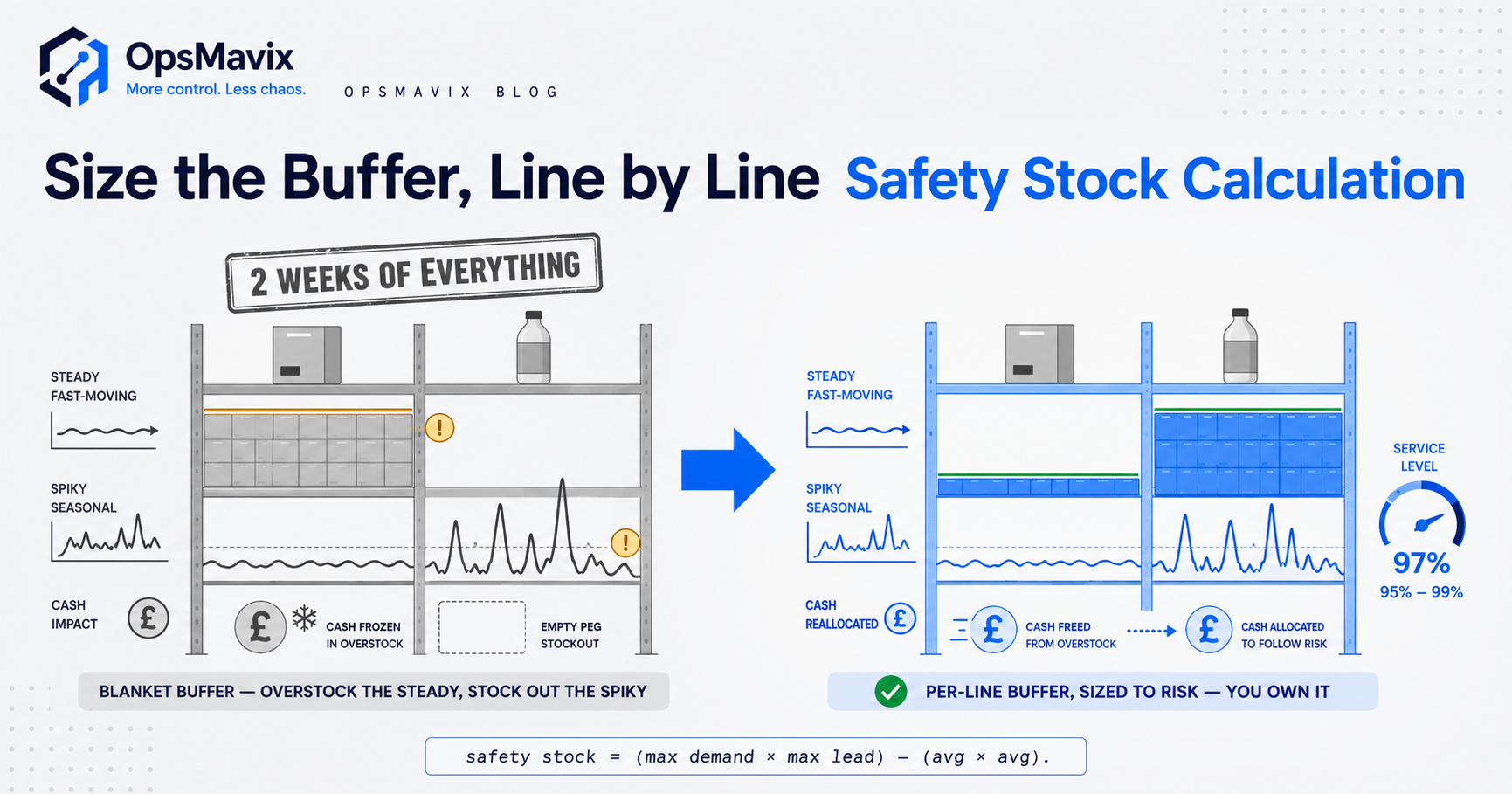
Safety Stock Calculation: How to Size the Buffer Per Line
A safety stock calculation sizes the buffer each line needs to survive a demand spike or a late delivery — without a blanket "two weeks of everything" quietly overstocking you. Here are the formulas in plain terms, the service-level trade-off, and how to size per line.