
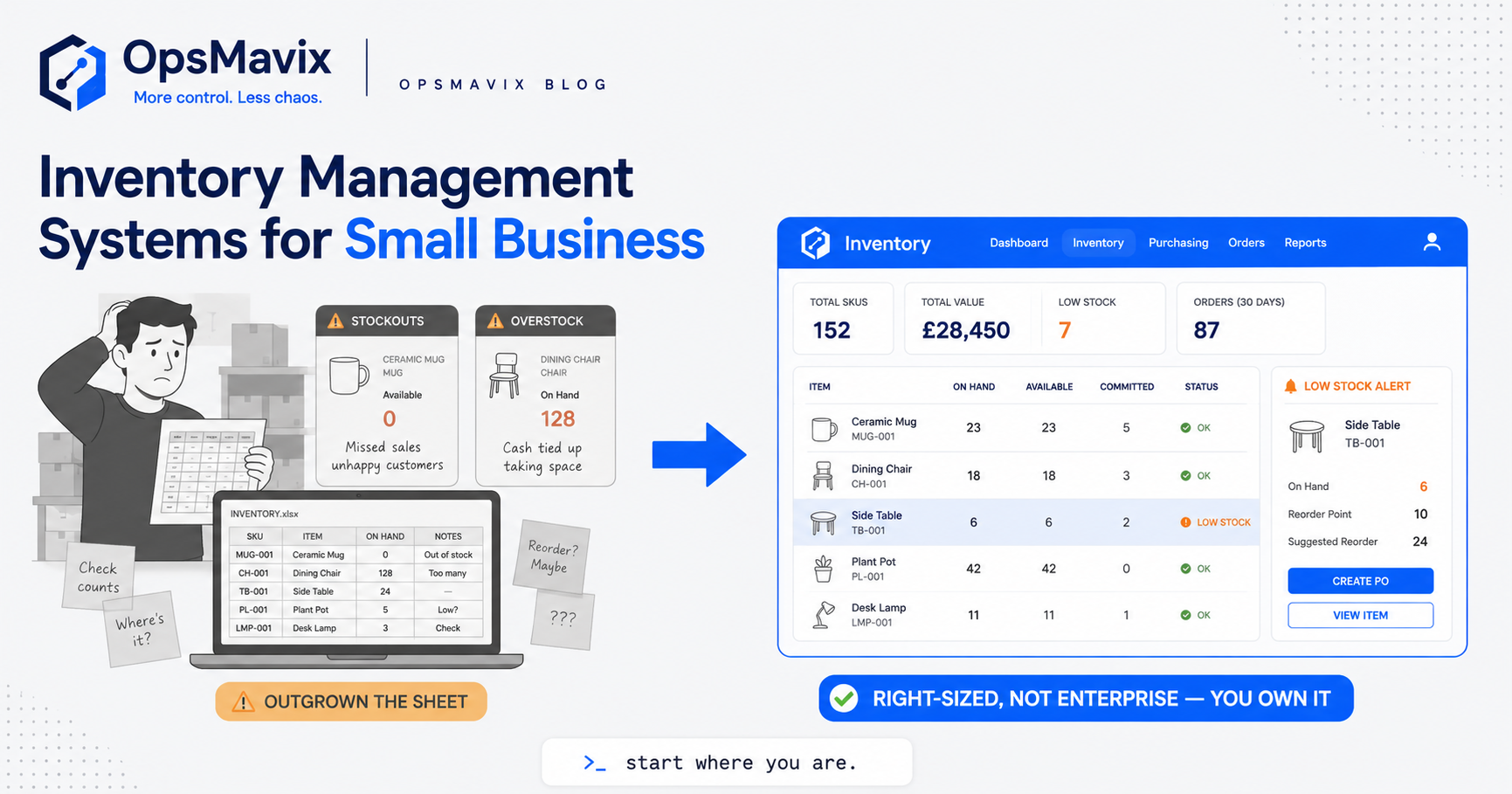
Inventory Management Systems for Small Business: How to Choose Without Overbuying
Choosing between inventory management systems for small business is really a shortlist decision: a spreadsheet, a cheap app, or a right-sized owned system. This guide is honest about when each one wins, so you buy the cheapest thing that fixes your leak instead of a full ERP you don't need. Most small firms are outgrowing spreadsheets and disconnected tools.
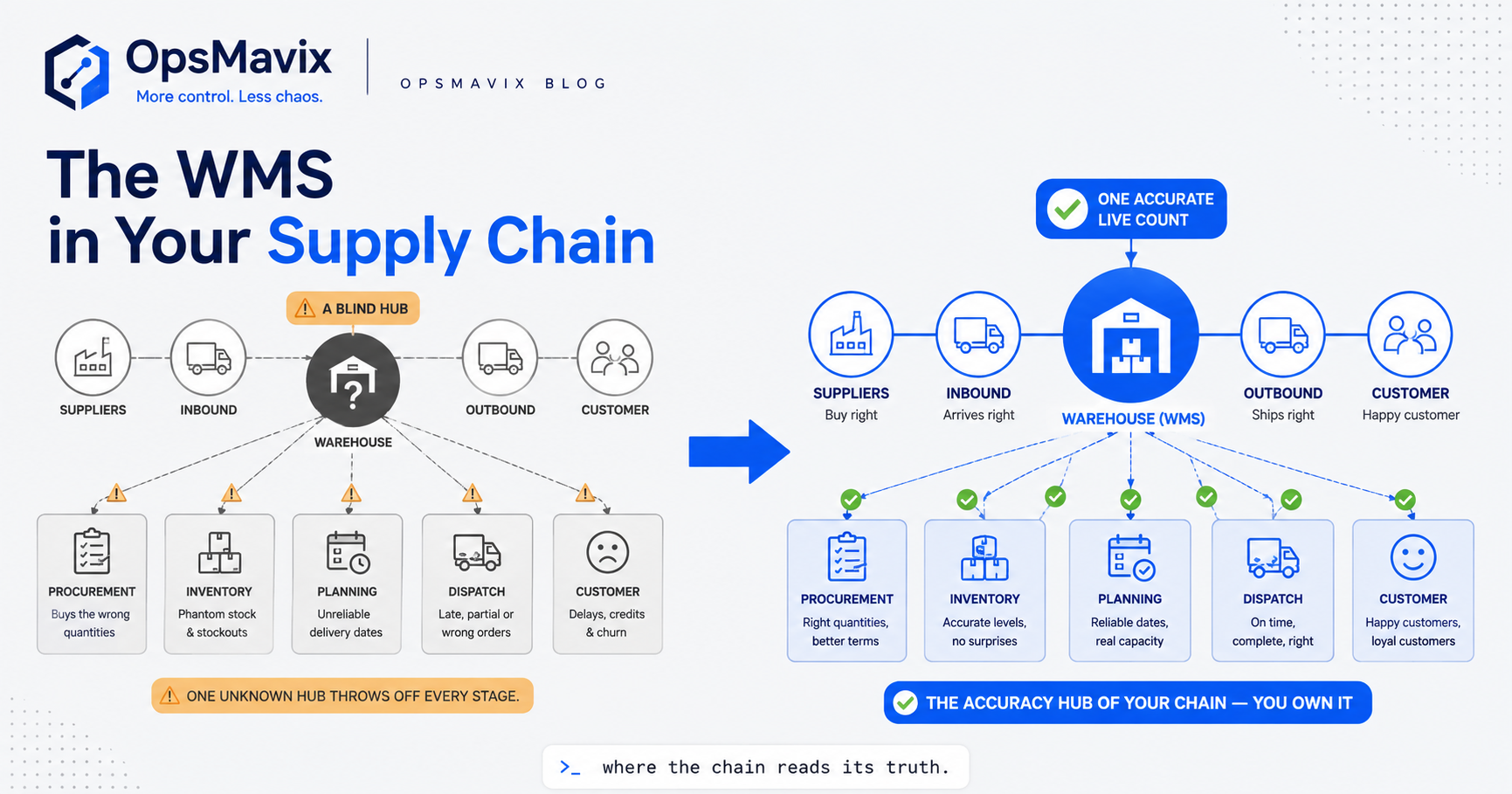
The Warehouse Management System in the Supply Chain: Where It Sits and Why It Matters
A warehouse management system in the supply chain is the point where physical stock and digital records are meant to agree, and where the truth for every stage upstream and down is decided. This guide shows where the WMS sits in the end-to-end chain, why it is the accuracy hub, and how a right-sized owned system fixes it for businesses that have outgrown spreadsheets and disconnected tools.
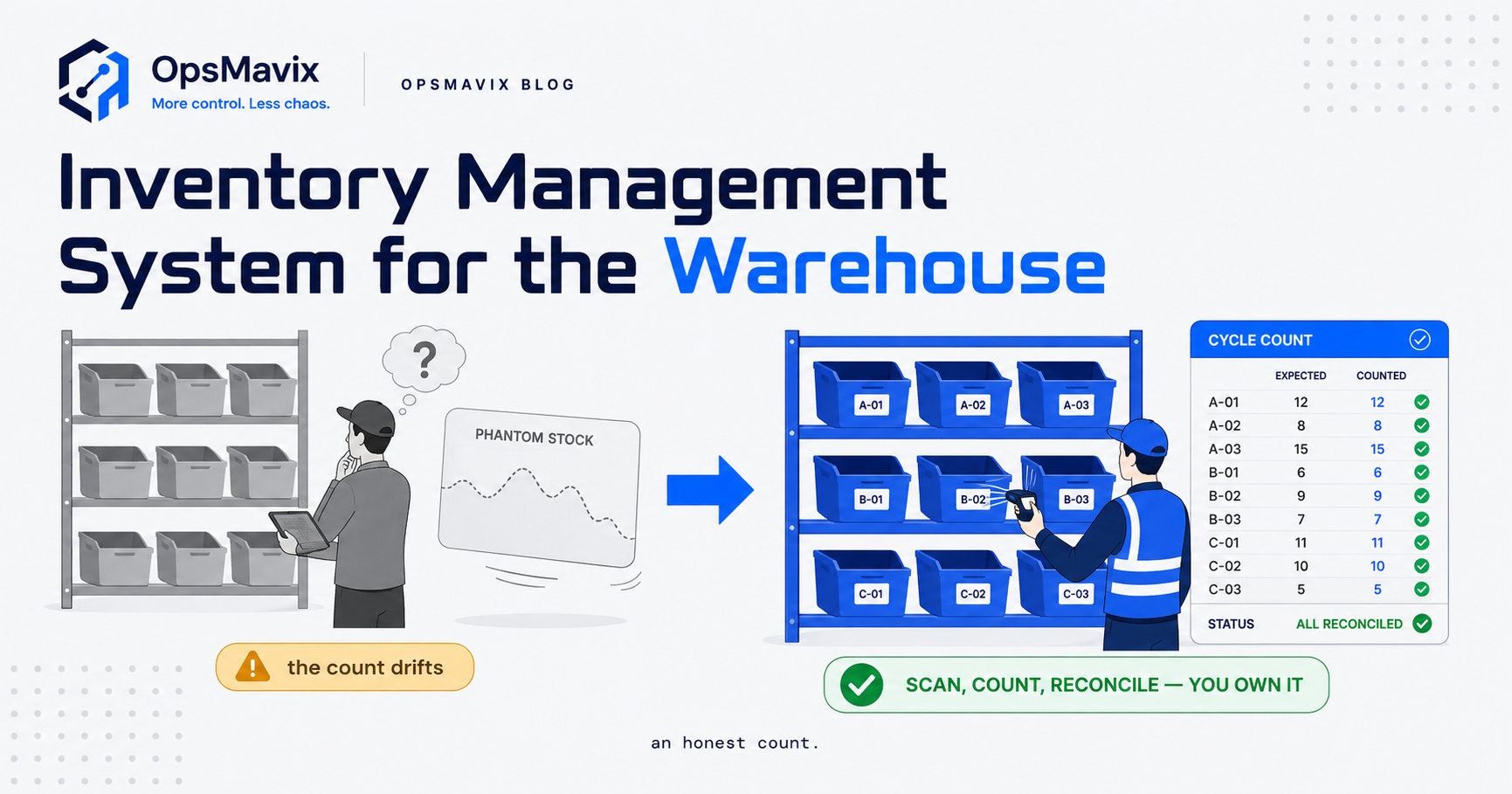
Inventory Management System for Warehouse: Making the Count Honest
An inventory management system for warehouse teams is really a machine for keeping one number honest: what's actually on the shelf. This is for the growing operation that's outgrowing spreadsheets and disconnected tools, and needs the count it can trust.
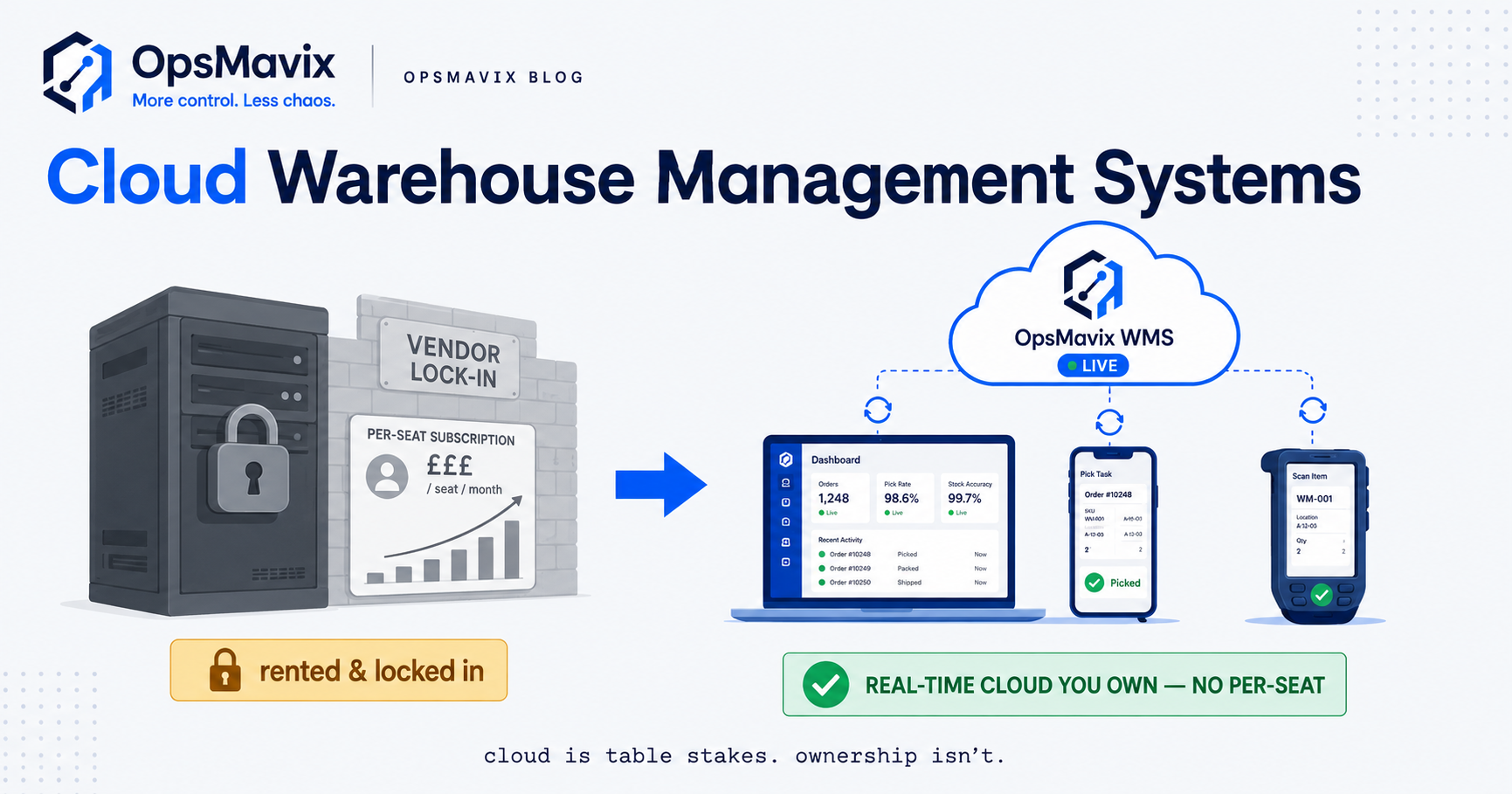
Cloud Based Warehouse Management Systems: What They Actually Fix (and What They Don't)
Cloud based warehouse management systems promise real-time stock visibility from any device, any site, with no server in a cupboard. This guide cuts through the marketing so you can pick one that fits a business that has outgrown spreadsheets and disconnected tools.
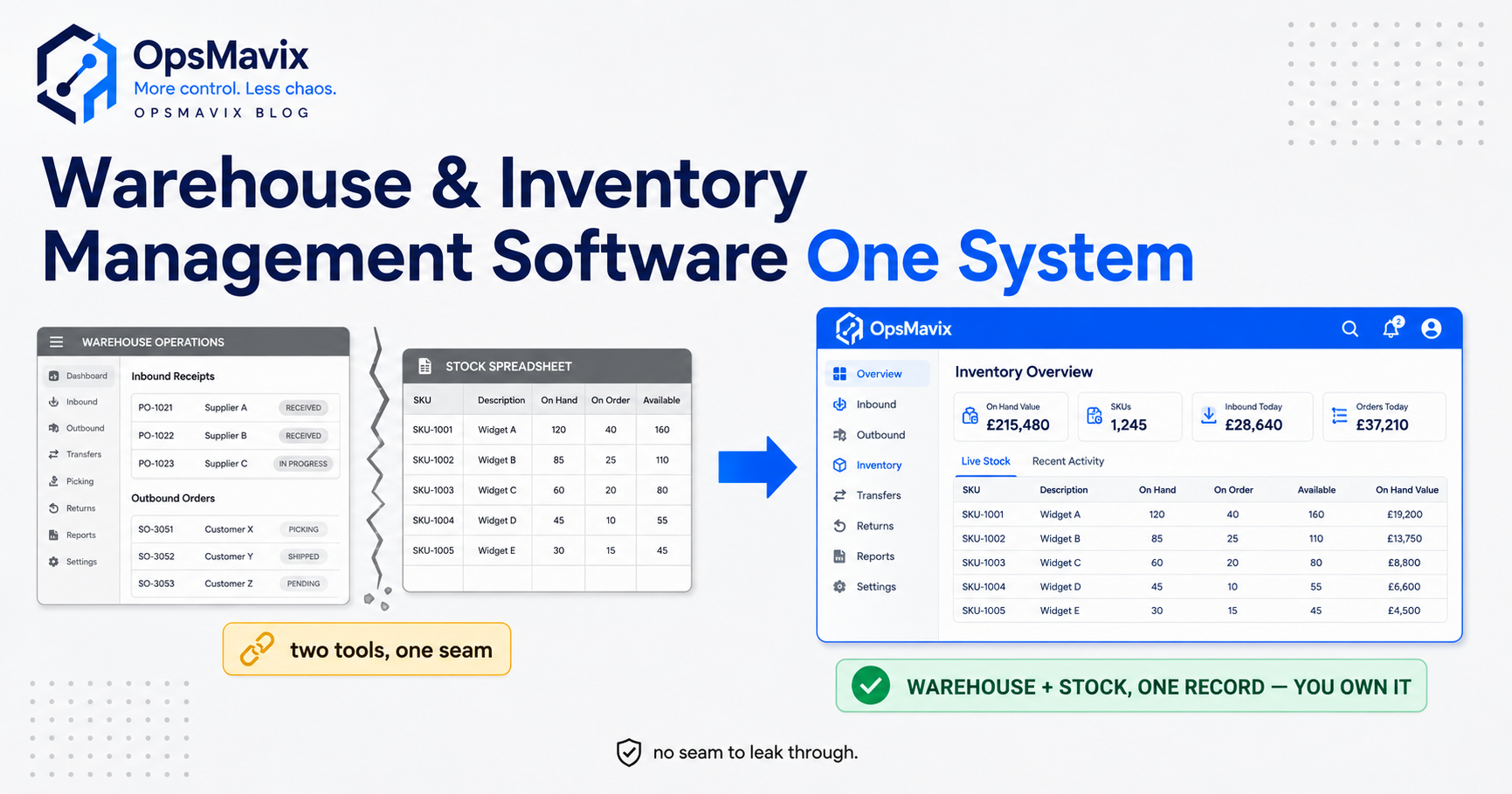
Warehouse and Inventory Management Software: The Combined Buyer's Guide
Warehouse and inventory management software should do two jobs at once: run the physical work on the floor — bins, picking, dispatch — and keep a live, accurate stock count as a result. This guide is for growing UK businesses that have outgrown spreadsheets and disconnected tools, and it shows why a WMS bolted onto a separate stock tool leaks at the seam, and when a right-sized owned system is the smarter buy.
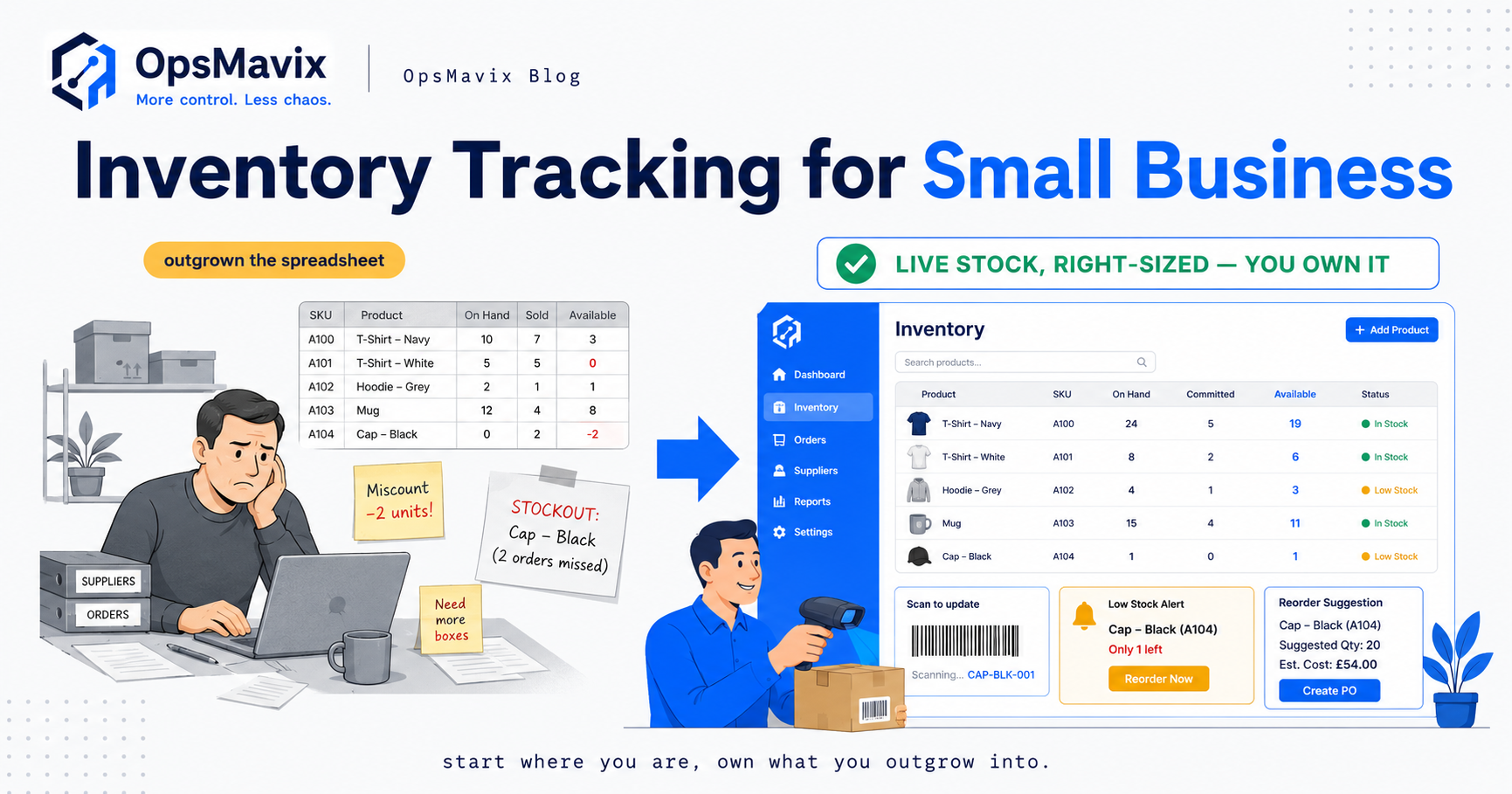
Inventory Tracking System for Small Business: An Honest Guide
An inventory tracking system keeps a live count of what you hold, where it is and when to reorder — instead of a spreadsheet you patch by hand. This guide is honest about when a spreadsheet or a cheap app is the right call, the concrete signs you've outgrown them, and when a right-sized owned system for small business finally earns its place.
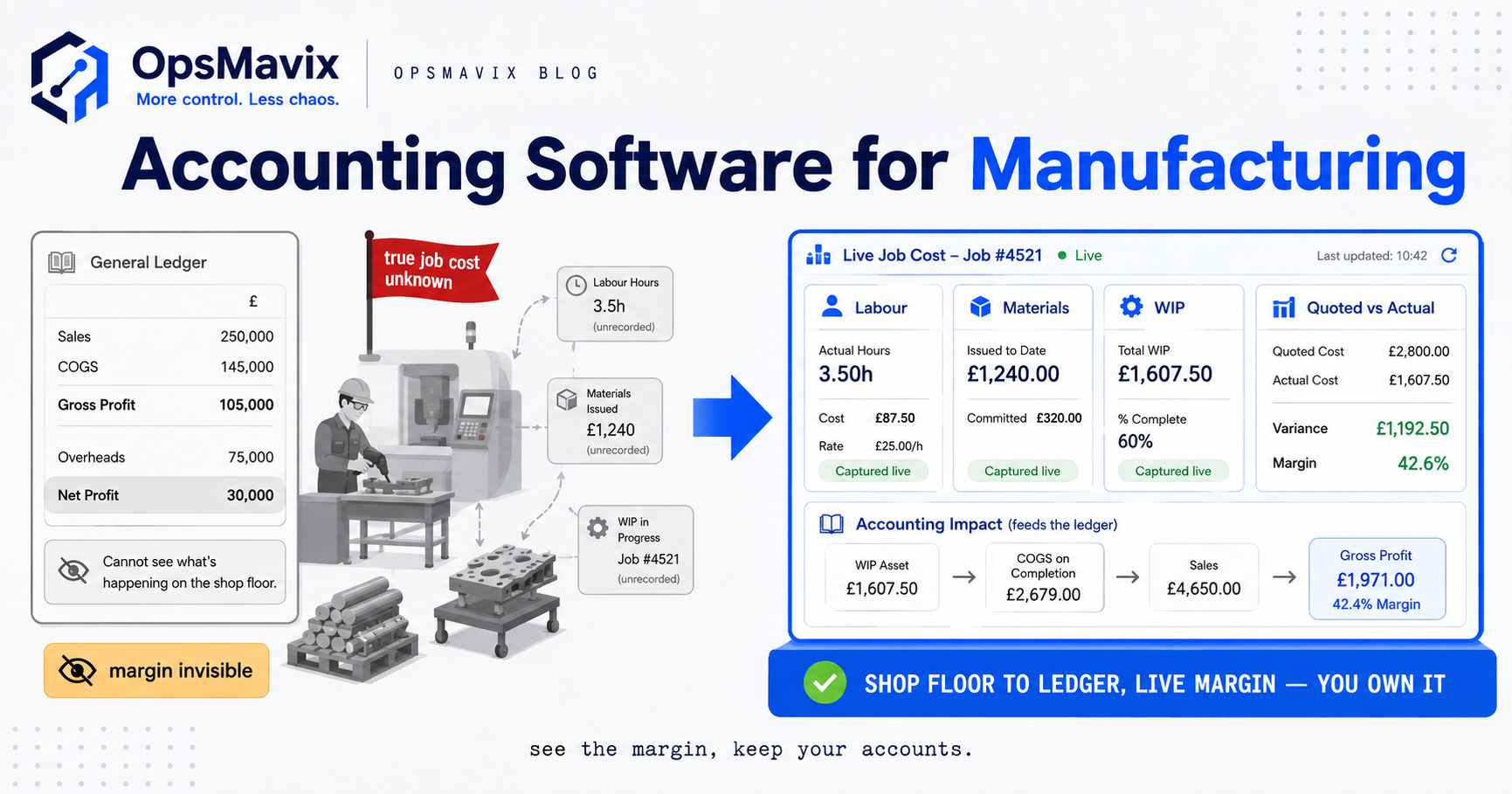
Accounting Software for the Manufacturing Industry: The Margin Blind Spot
Generic accounting software for the manufacturing industry keeps a clean ledger but cannot see the shop floor, so under-costed jobs and unbilled extras leak margin quietly. This is an honest look at what manufacturing accounting really needs, and the right-sized owned system that feeds real production cost into the tools you already run.
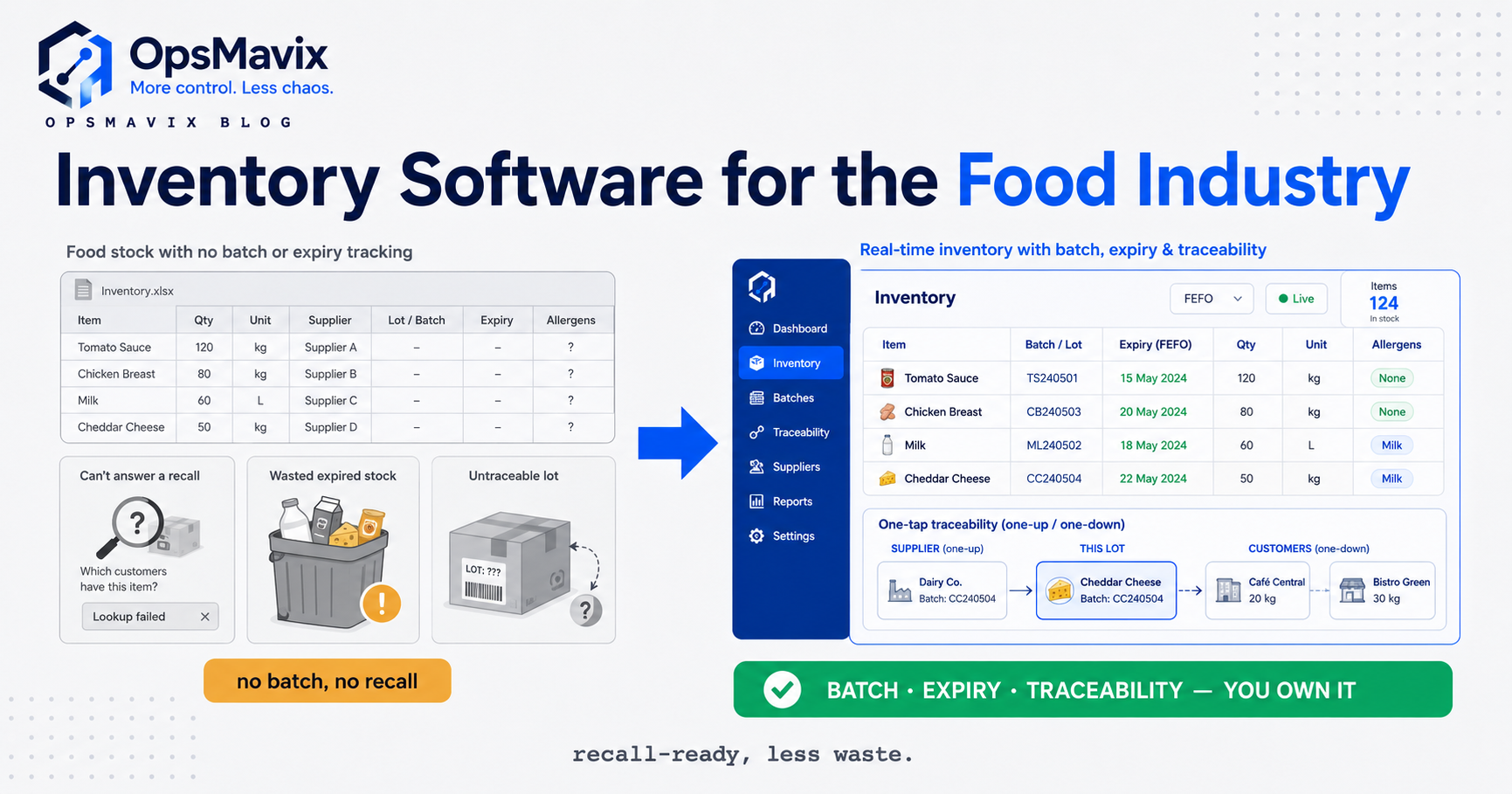
Inventory Management Software for the Food Industry
A generic stock app counts units. Inventory management software for the food industry has to track batches, expiry dates and allergens, drive first-expired-first-out picking, and trace one-up and one-down for a recall. This guide covers what food inventory software must do differently, and the right-sized owned alternative to bending your business around a heavy food ERP.
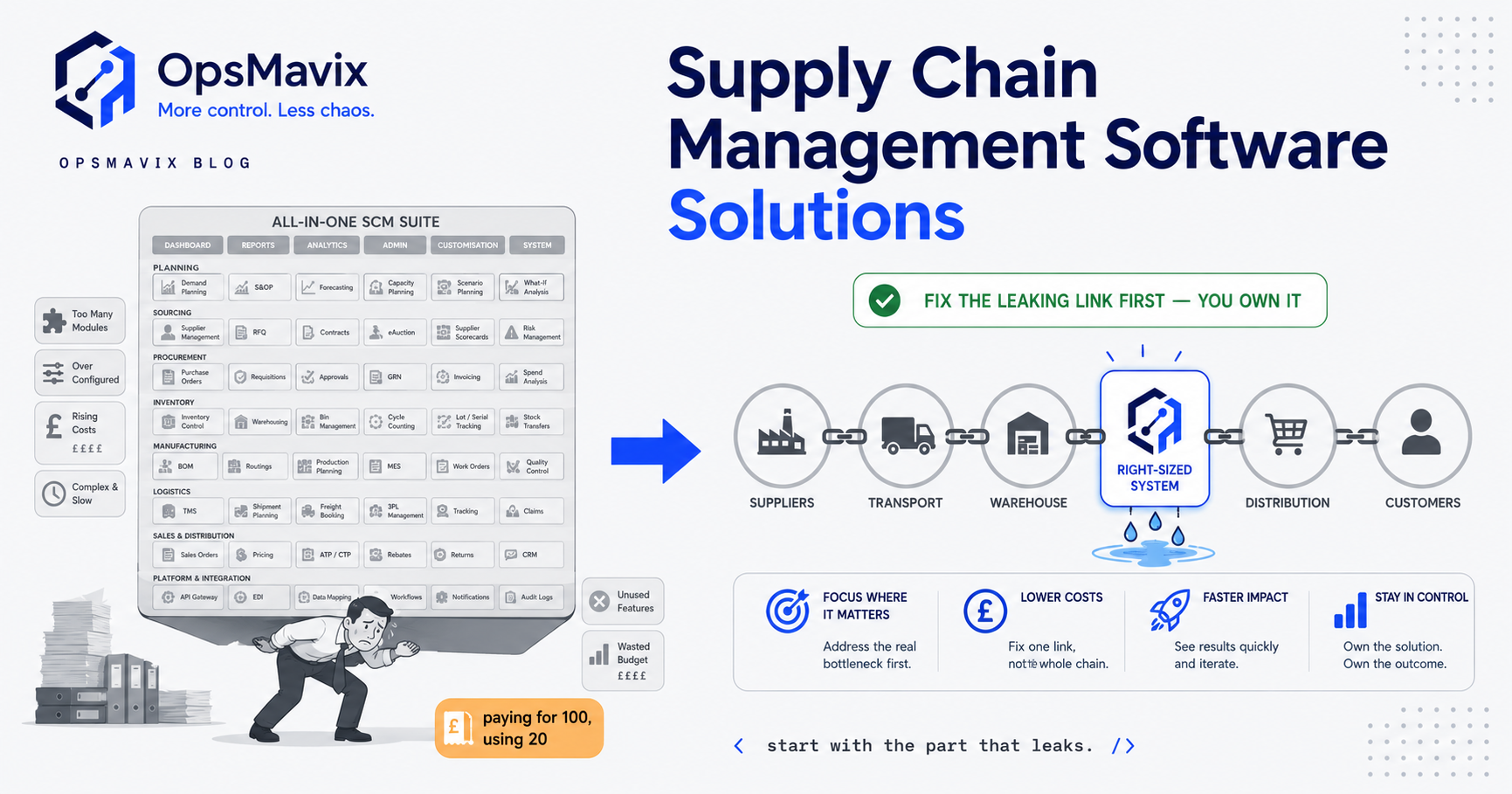
Supply Chain Management Software Solutions: What to Buy and What to Skip
Supply chain management software solutions range from a single point tool to a full enterprise suite, and most growing businesses get sold far more than they need. This guide breaks down the real categories, explains why buying the whole chain rarely pays off, and shows how a right-sized owned system fixes the one link that is actually leaking.