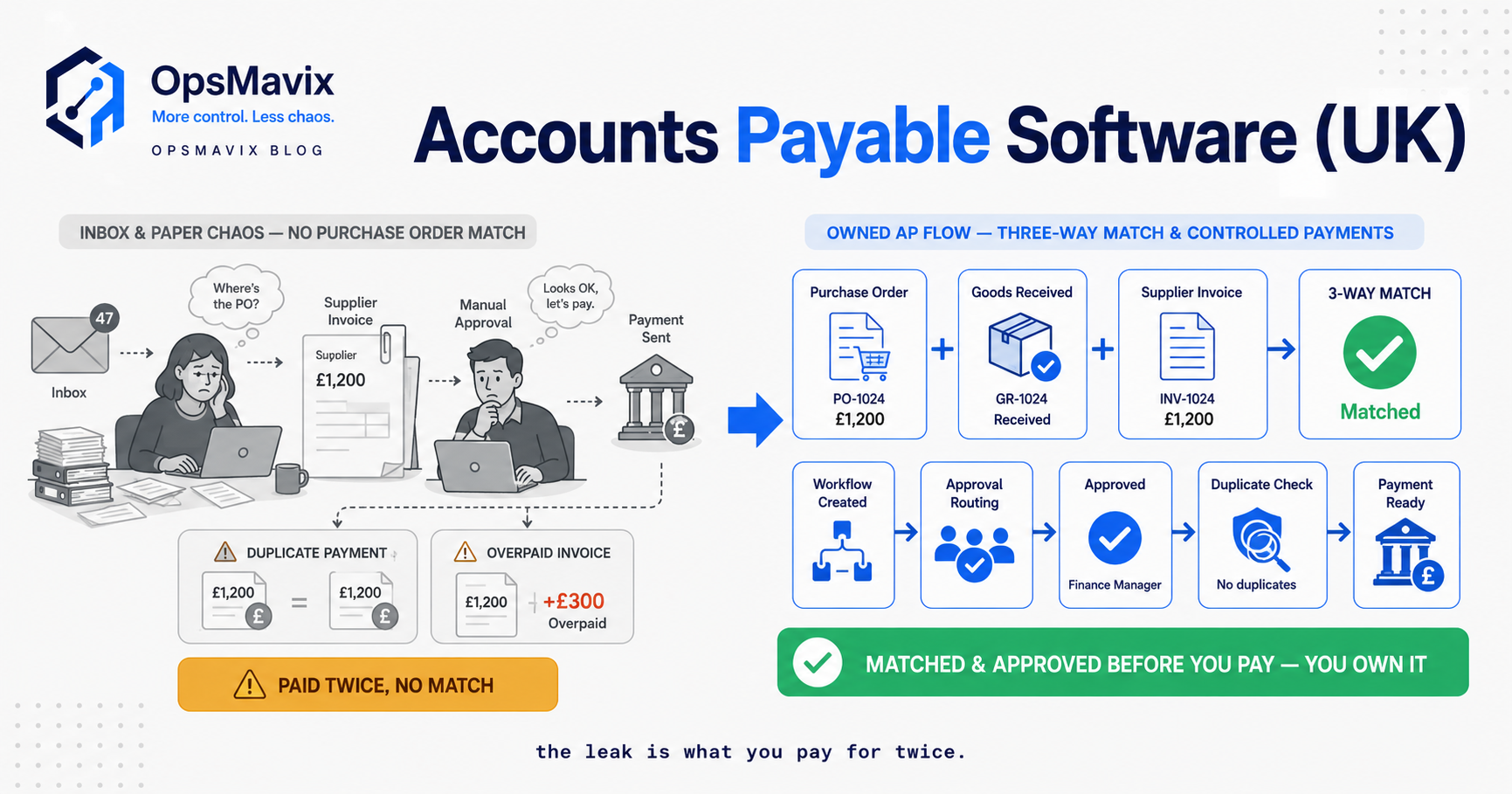
Accounts Payable Software UK: Stop Paying Invoices by Hand
A plain guide to accounts payable software for UK businesses: what it captures, routes, matches and pays, where off-the-shelf AP tools stop fitting, and why a business that has outgrown spreadsheets and disconnected tools is often better served by a right-sized owned system wired to its own accounts.
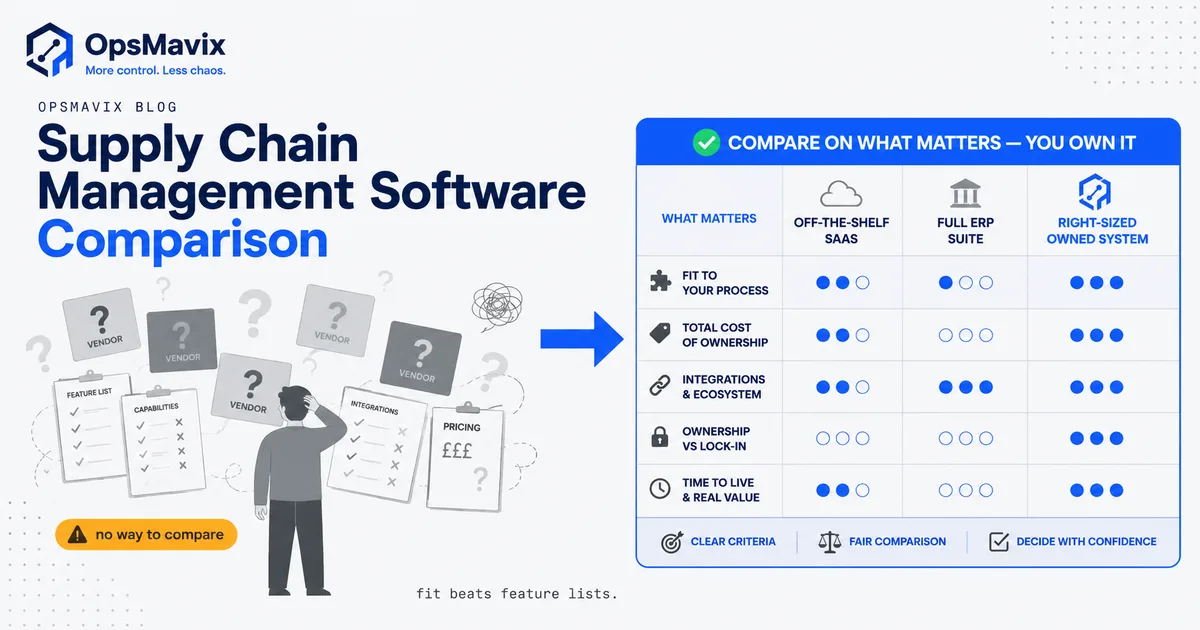
Supply Chain Management Software Comparison: The Five Criteria That Actually Decide It
Most feature-by-feature SCM comparisons miss the point. This guide scores software on the five things that actually decide the outcome — process fit, true cost of ownership, integrations, ownership vs lock-in, and time to live — then maps the three real options (off-the-shelf SaaS, full ERP, and a right-sized owned system) to who each one genuinely suits.
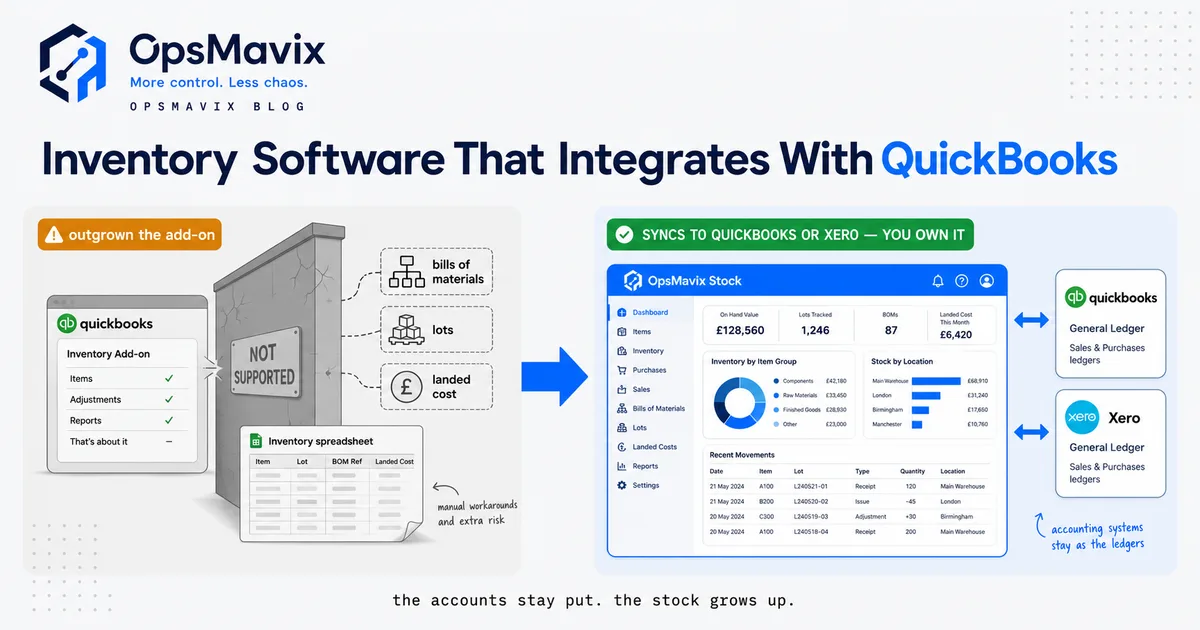
Best Inventory Software That Integrates With QuickBooks (and When You Outgrow the Add-On)
Inventory software that integrates with QuickBooks lets stock live in a proper stock system while QuickBooks stays your ledger, with movements, COGS and valuation flowing between them automatically. This is the honest guide to the real QB-integrating apps, how they actually connect (native vs middleware), where each caps out, and the pivot when you outgrow the bolt-on: a right-sized owned system that syncs to your accounts, QuickBooks or Xero.
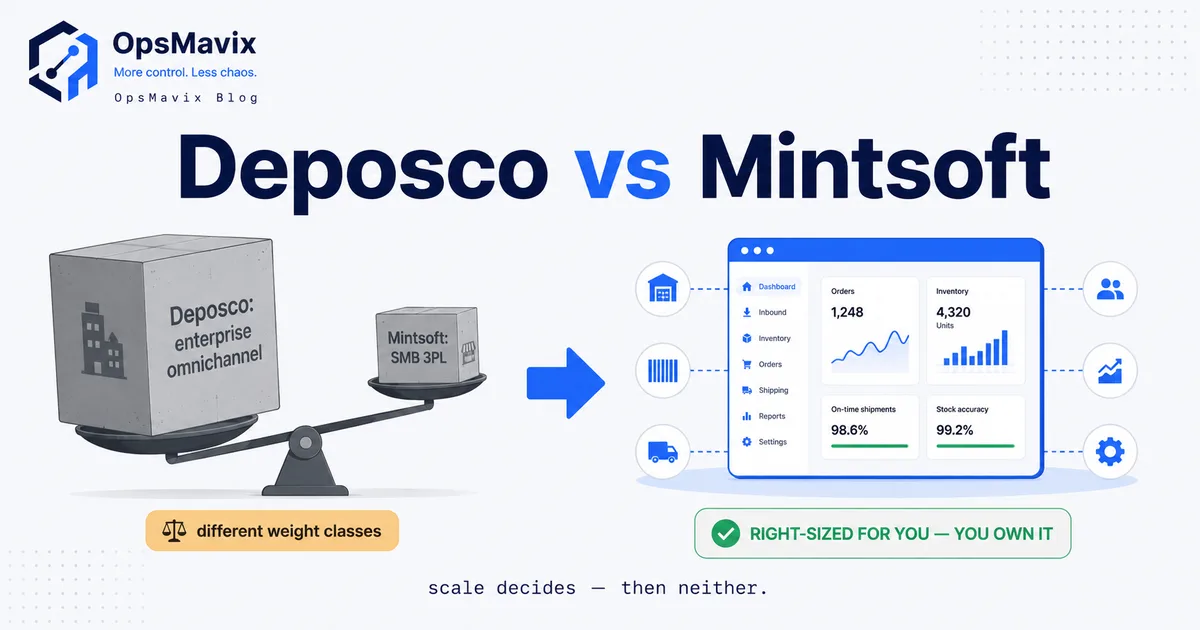
Deposco vs Mintsoft: Two Different Weight Classes, Not Two Rivals
Deposco is enterprise omnichannel fulfilment built for scale and complexity; Mintsoft is SMB and 3PL order-plus-warehouse software built for approachable entry. They are different weight classes, so the real decision is about your scale, complexity and budget — and what to do when Deposco is too heavy but you've outgrown Mintsoft.
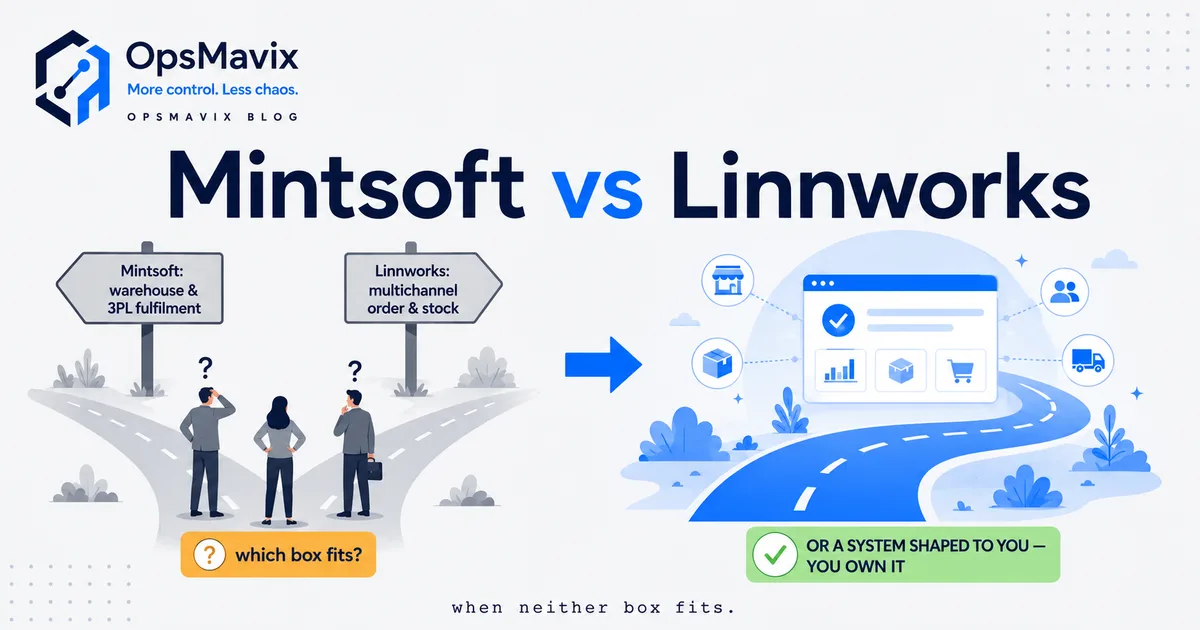
Mintsoft vs Linnworks: Which One Fits How You Actually Sell and Ship?
Mintsoft leans warehouse and 3PL fulfilment with client billing; Linnworks leans multichannel order and stock sync across marketplaces. Here's who each really suits, where each hits its ceiling, how the pricing works, and the third path for teams that fit neither.
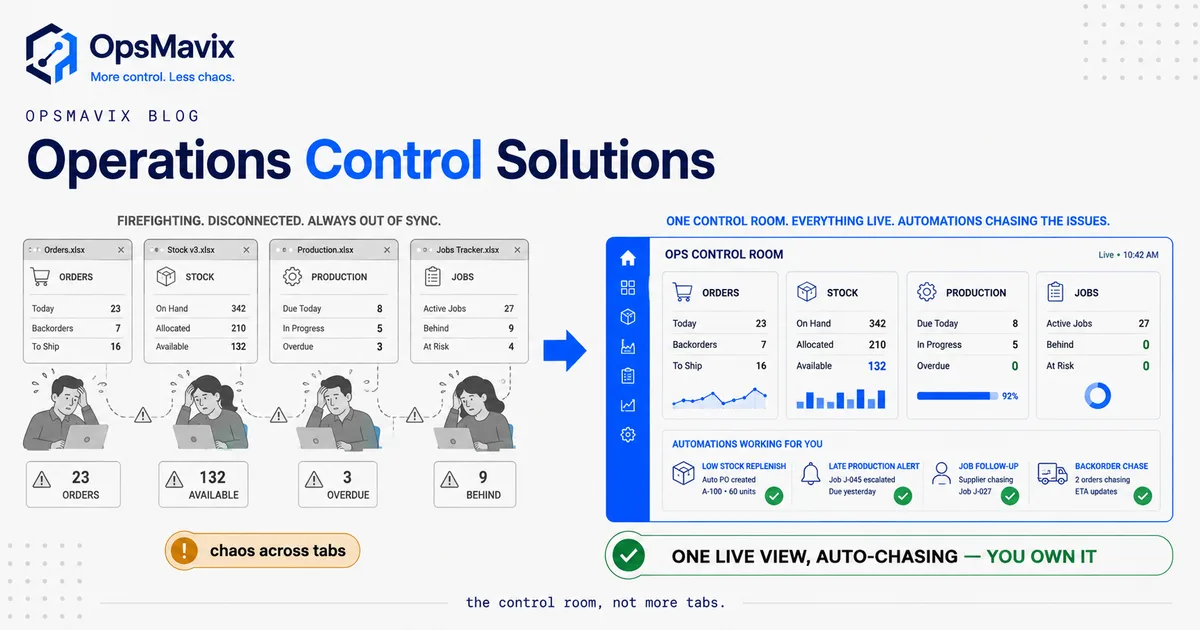
Operations Control Solutions: The Control Room for Orders, Stock, Production and Jobs
Operations control solutions are the single live layer a growing business runs from — orders, stock, production and jobs in one view, with automations doing the chasing instead of your people. This guide explains the control-room concept, when you've outgrown spreadsheets but aren't ready for a full ERP, and how a right-sized owned system ends the daily firefighting.
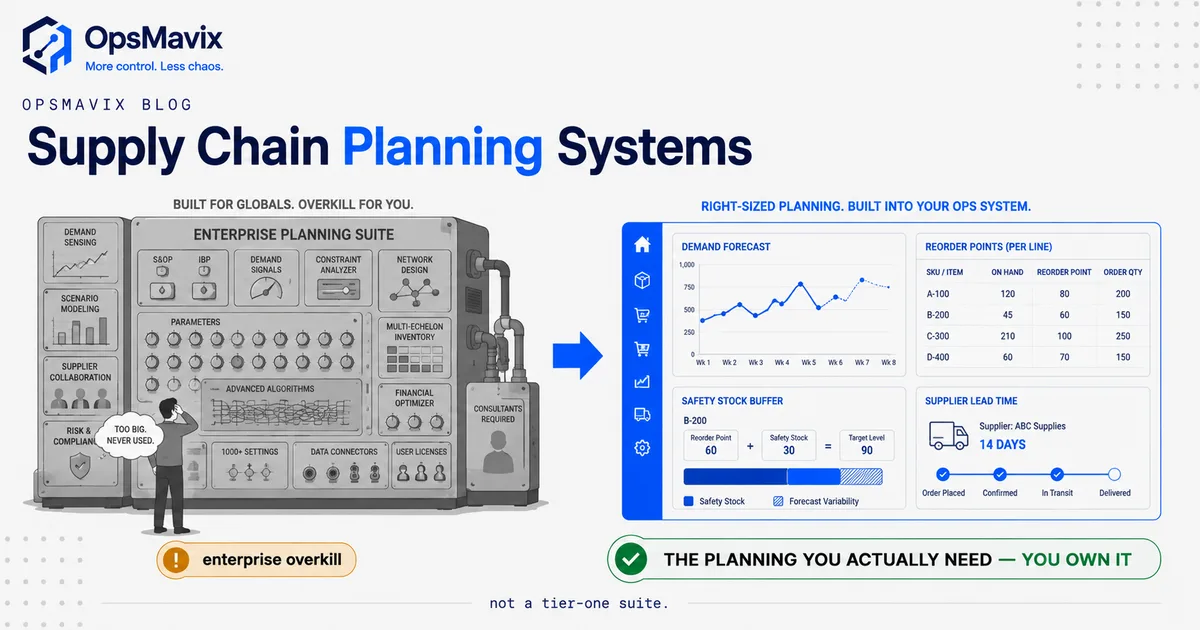
Supply Chain Planning Systems for SMBs: The Planning You Actually Need vs the Enterprise Suite You Don't
Supply chain planning systems sound like enterprise territory — Kinaxis, o9, six-figure suites and a planning department. For a growing product business, the planning you actually need is four connected decisions: what will sell, when to reorder, how much buffer to hold, and how long your suppliers really take. This guide shows UK owners how to get that planning right-sized and built into the ops system they already run, when they're outgrowing spreadsheets and disconnected tools.
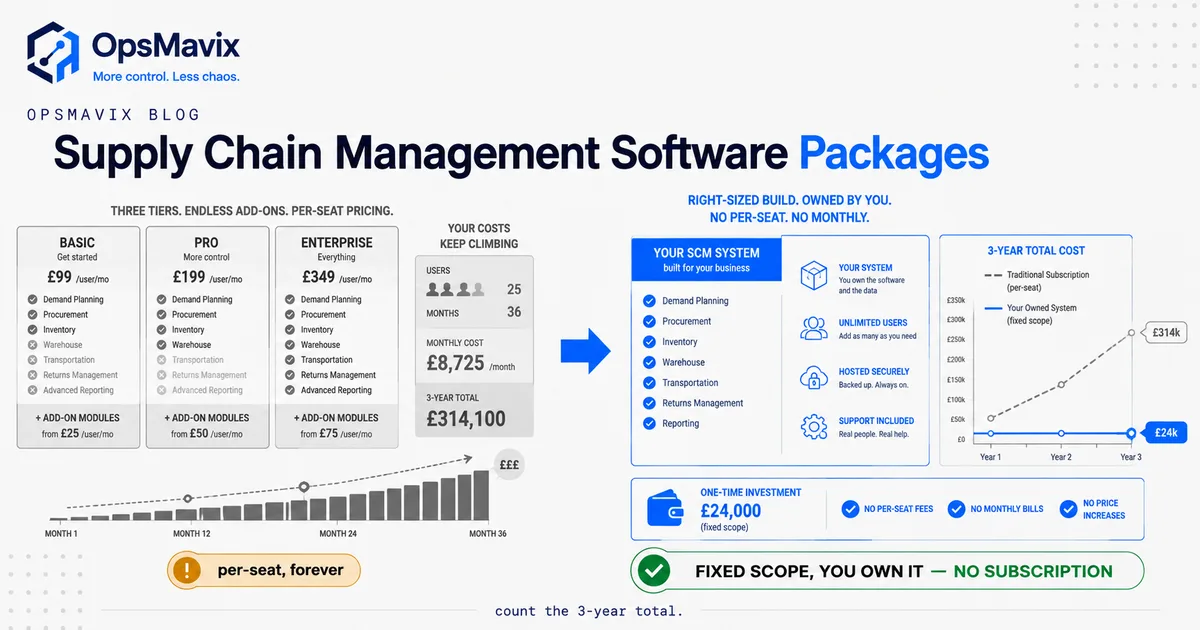
Supply Chain Management Software Packages: What Each Tier Really Costs You
Supply chain management software packages are sold as neat tiers — Starter, Professional, Enterprise — but the price on the page is rarely the price you pay. This guide shows UK operators how the tiers, per-seat fees and module upsells stack up over three years, and when a fixed-scope owned system beats an endless subscription.
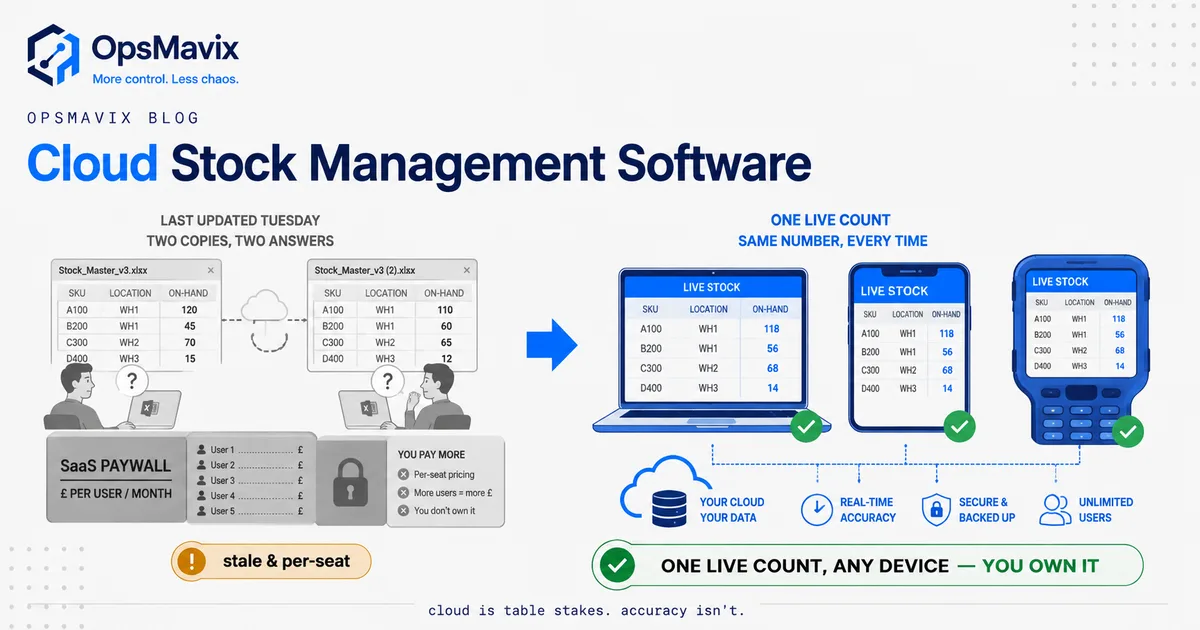
Cloud Stock Management Software: Why One True Count Beats Anywhere-Access
Cloud stock management software puts one live stock count in front of everyone, on any device, from anywhere. But 'cloud' is the easy part — the thing that actually saves you money is whether that count is accurate and whether you own it. This guide separates the marketing from the mechanics for UK teams that have outgrown spreadsheets and disconnected tools.